Every organization manages the employee lifecycle, whether intentionally or by default. From recruitment and onboarding to development, retention, and offboarding, each stage shapes how employees experience your workplace and how effectively your organization operates.
As teams become more distributed and expectations around employee experience rise, managing these stages through disconnected tools creates friction. Information lives in silos. Processes vary by department. Employees struggle to find what they need, and leaders lack visibility into what is working and what is not.
Employee lifecycle management software brings structure and consistency to this reality. It centralizes people processes, connects systems, and creates a clear experience for employees at every stage of their tenure. When done well, it supports engagement, productivity, and alignment across the organization.
The challenge is choice. The market includes HR platforms, intranets, and people operations tools that all claim to support the employee lifecycle. Each takes a different approach, and not all will align with how your organization works today or plans to grow.
This guide breaks down what employee lifecycle management software is, what to consider when evaluating options, and how leading platforms compare. Whether you are building a stronger onboarding experience, improving internal communication, or creating more consistency across HR processes, the right platform makes a measurable difference.
Top 12 employee lifecycle management software for 2026
- Axero
- BambooHR
- HiBob
- Workday HCM
- SAP SuccessFactors
- UKG Pro
- ADP Workforce Now
- Rippling
- Trinet Zenefits
- Namely
- Gusto
- Lattice
What is employee lifecycle management software?
Employee lifecycle management software supports employees from their first interaction with your organization through their departure. It provides digital systems that help manage hiring, onboarding, development, engagement, performance, and offboarding in a structured and connected way.
Instead of relying on separate tools for HR administration, internal communication, and knowledge sharing, lifecycle management software brings these touchpoints together. Employees gain a consistent experience, while HR teams and leaders gain visibility and control.
At its core, this type of software focuses on people, not just processes. It ensures employees can access the right information at the right time, understand expectations, and stay connected to the organization. For managers, it provides clarity into progress, feedback, and engagement signals across teams.
Some platforms emphasize HR records and compliance. Others focus on experience, communication, and culture. The most effective solutions balance both, creating a central hub that supports operational needs while reinforcing engagement and alignment throughout the employee lifecycle.
What to consider when choosing the right employee lifecycle management software
Selecting the right platform starts with understanding how your organization manages people today and where gaps exist. The following considerations help guide that evaluation.
Employee experience and accessibility
The platform should be easy to use and intuitive. Employees should quickly find policies, tasks, announcements, and resources without training or repeated support requests.
Lifecycle coverage
Not all tools support every stage equally. Look for clear support across onboarding, development, engagement, and offboarding rather than isolated features.
Centralization and consistency
A single source of truth reduces confusion. Centralized content, processes, and communication help ensure employees receive consistent information regardless of role or location.
Integration capabilities
The software should integrate with existing HR, payroll, and productivity tools. Strong integrations reduce duplication and keep data accurate across systems.
Customization and scalability
Your organization’s structure and culture matter. The platform should adapt to your workflows, branding, and growth without becoming complex to manage.
12 best employee lifecycle management software
1. Axero
Axero is a comprehensive employee lifecycle management platform built around a modern intranet experience. It supports employees from onboarding through long-term engagement by centralizing communication, knowledge, and collaboration in one place.
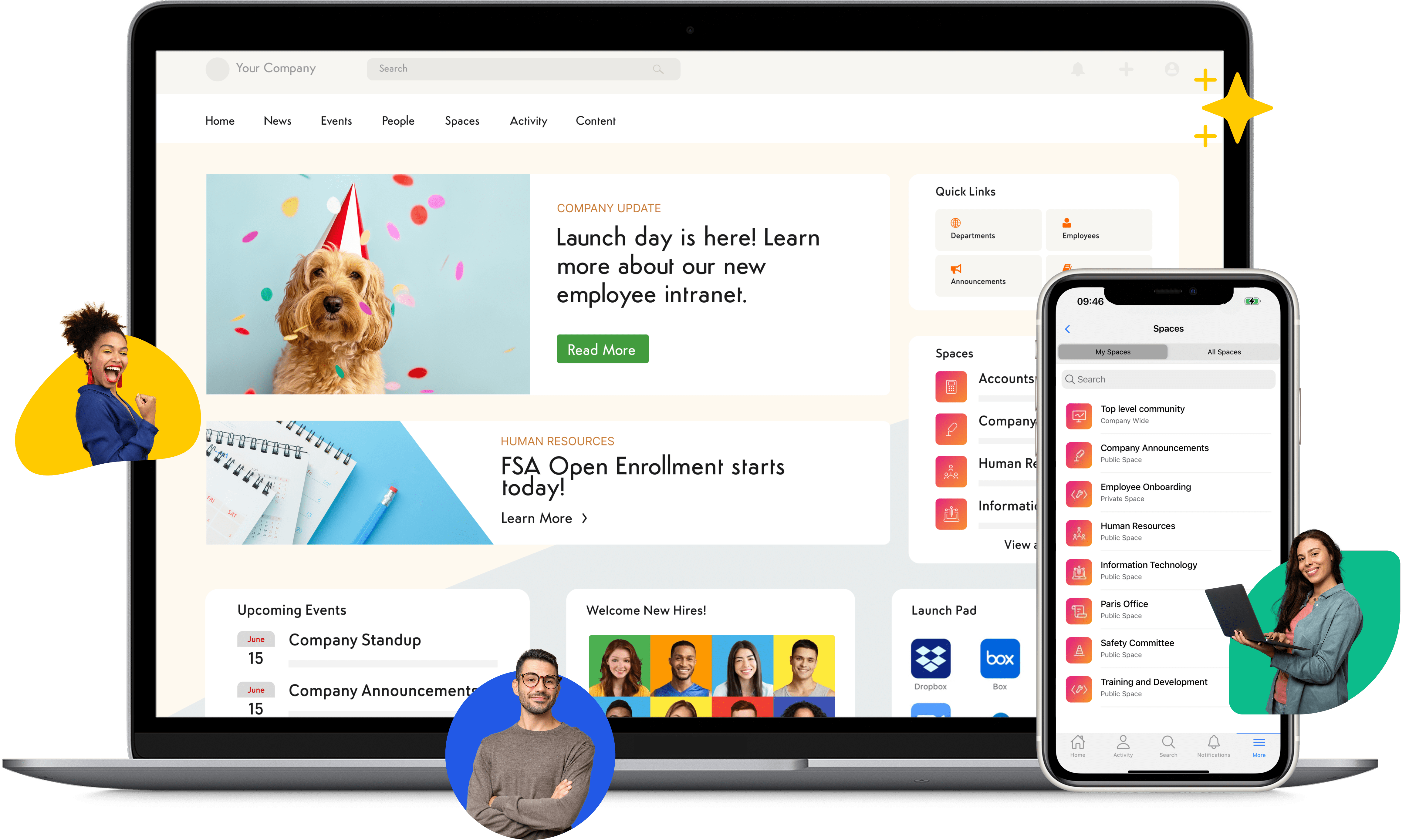
Rather than focusing solely on HR administration, Axero prioritizes how employees experience work. New hires receive structured onboarding through guided content, task lists, and role-based resources. Existing employees stay informed through targeted communications, social features, and easy access to policies and tools.
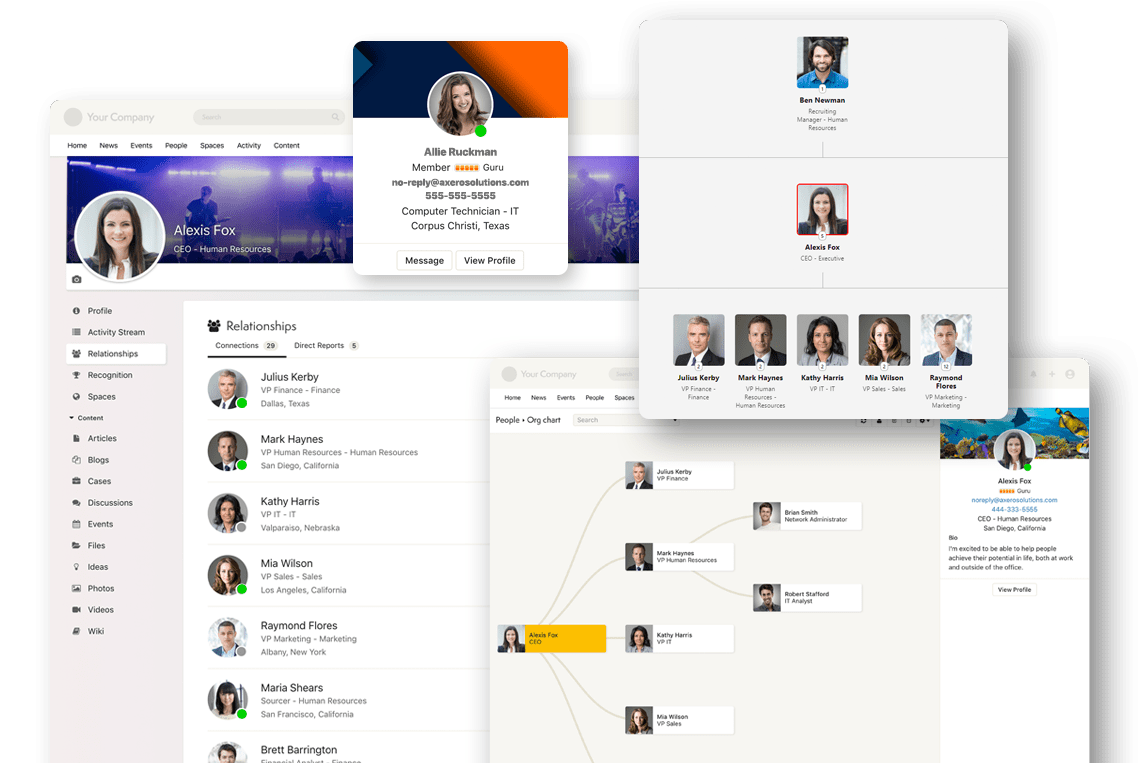
Axero also gives HR and leaders visibility into engagement and usage, helping them understand how employees interact with content and where improvements are needed. Its flexibility allows organizations to design experiences that align with their culture while maintaining consistency across teams. With strong governance controls and integrations, Axero fits into existing ecosystems without adding complexity. It serves as a central hub that connects people, information, and processes throughout the employee lifecycle.
Key features of Axero
- Employee onboarding hub: Structured onboarding pages and task workflows help new hires get productive faster.
- Centralized knowledge base: Policies, documents, and guides stay accessible and up to date in one location.
- Targeted internal communication: Audience-based messaging ensures employees receive relevant updates without noise.
Best for: Organizations seeking a people-centered platform that unifies communication, knowledge, and engagement across the employee lifecycle.

2. BambooHR
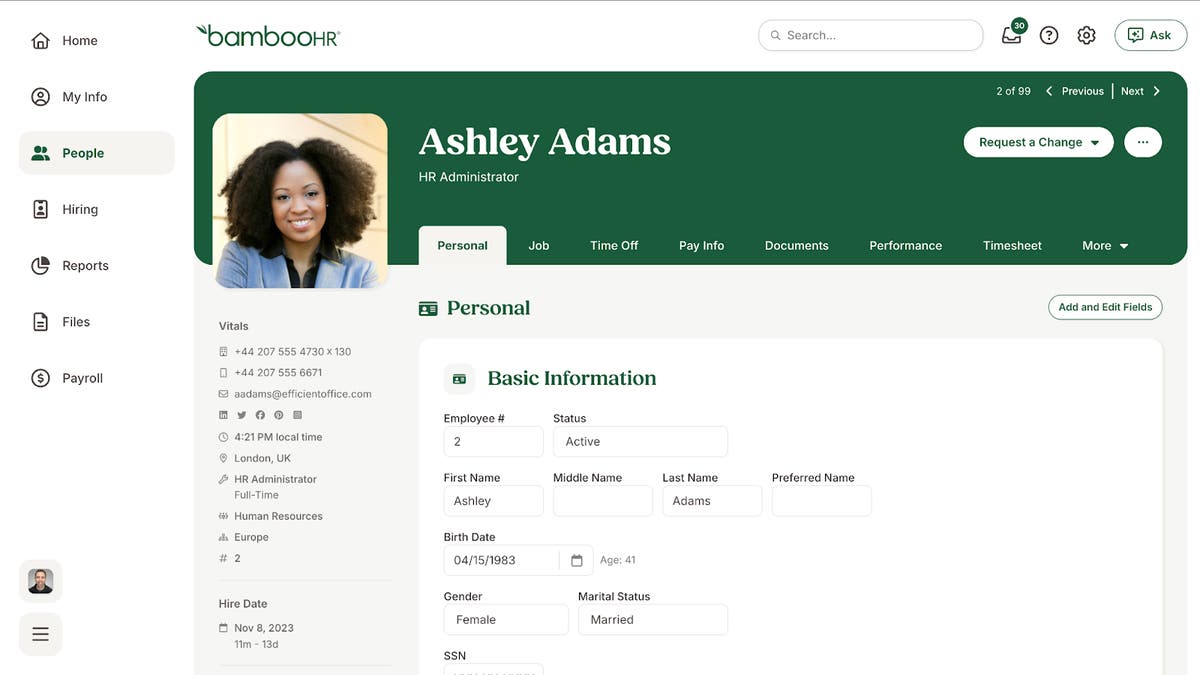
BambooHR is a widely used HR platform focused on core employee data and lifecycle tracking. It helps HR teams manage hiring, onboarding, performance, and employee records through a clean and approachable interface.
The platform excels at organizing employee information and automating administrative tasks. Onboarding checklists, document management, and e-signatures help standardize early employee experiences. Performance tools support goal tracking and feedback cycles.
BambooHR also provides reporting that helps HR teams understand turnover, engagement trends, and workforce changes. While it does not function as a full employee communication hub, it integrates with other tools to extend its capabilities.
For organizations prioritizing HR efficiency and compliance, BambooHR offers a structured foundation that supports key lifecycle stages without unnecessary complexity.
Key features of BambooHR
- Central employee database: All employee records stay organized and accessible.
- Onboarding workflows: Automated tasks and documentation streamline new hire setup.
- Performance tracking: Goals and reviews support ongoing development conversations.
Best for: Small to mid-sized organizations focused on simplifying HR administration and lifecycle tracking.
3. HiBob
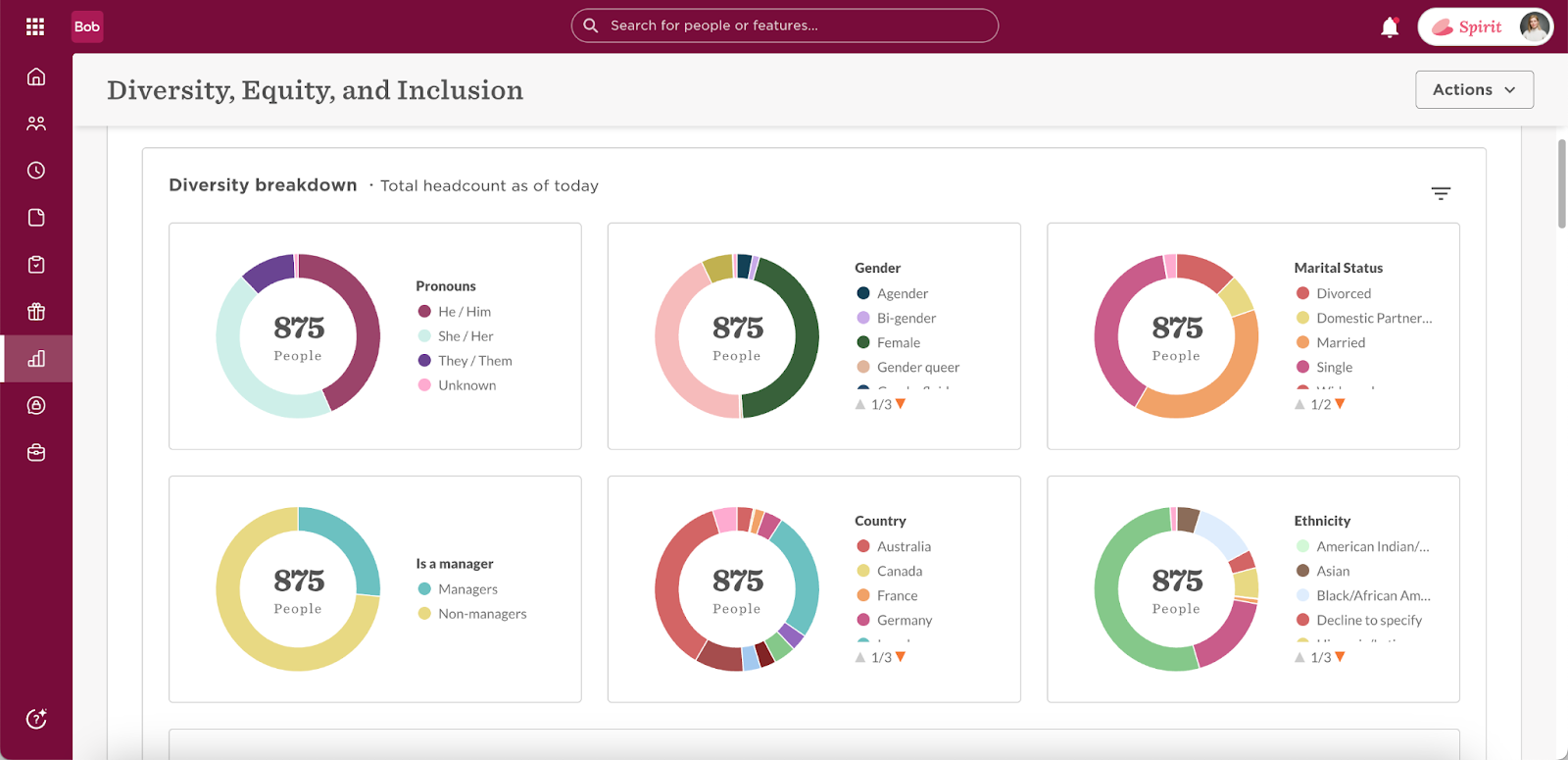
HiBob positions itself as a people-focused HR platform designed for modern, growing organizations. It combines HR management with engagement and culture features that support the full employee lifecycle.
The platform emphasizes visibility and connection. Employees can view personal milestones, company updates, and organizational changes in one place. Onboarding experiences feel personalized, helping new hires integrate faster.
HiBob also includes performance management, compensation tracking, and analytics that give leaders insight into workforce trends. Its configurable workflows allow organizations to adapt processes as they scale.
While it may require integrations for deeper knowledge management or communication needs, HiBob offers a strong balance between HR operations and employee experience.
Key features of HiBob
- Personalized onboarding: Role-based workflows guide new employees from day one.
- Employee engagement tools: Social feeds and updates support connection and visibility.
- Workforce analytics: Dashboards help leaders understand people data at a glance.
Best for: Growing organizations that want an HR platform with a strong focus on engagement and culture.
4. Workday HCM

Workday HCM is an enterprise-grade human capital management platform designed to support complex organizations. It covers the full employee lifecycle, from recruitment and onboarding to development, compensation, and offboarding.
The platform is known for its depth and scalability. It supports global workforces, complex reporting, and advanced analytics. Lifecycle processes are highly structured, which helps maintain consistency across large teams.
Workday also integrates learning, talent management, and financial data, giving leaders a comprehensive view of workforce performance. Implementation and administration require dedicated resources, but the payoff is a highly controlled and data-rich environment.
For organizations with advanced HR requirements and global operations, Workday provides a robust lifecycle management framework.
Key features of Workday HCM
- End-to-end lifecycle management: Covers hiring, development, and transitions in one system.
- Advanced reporting and analytics: Data-driven insights support strategic decisions.
- Global workforce support: Handles complex structures, regions, and compliance needs.
Best for: Large enterprises requiring a scalable and data-driven employee lifecycle platform.
5. SAP SuccessFactors
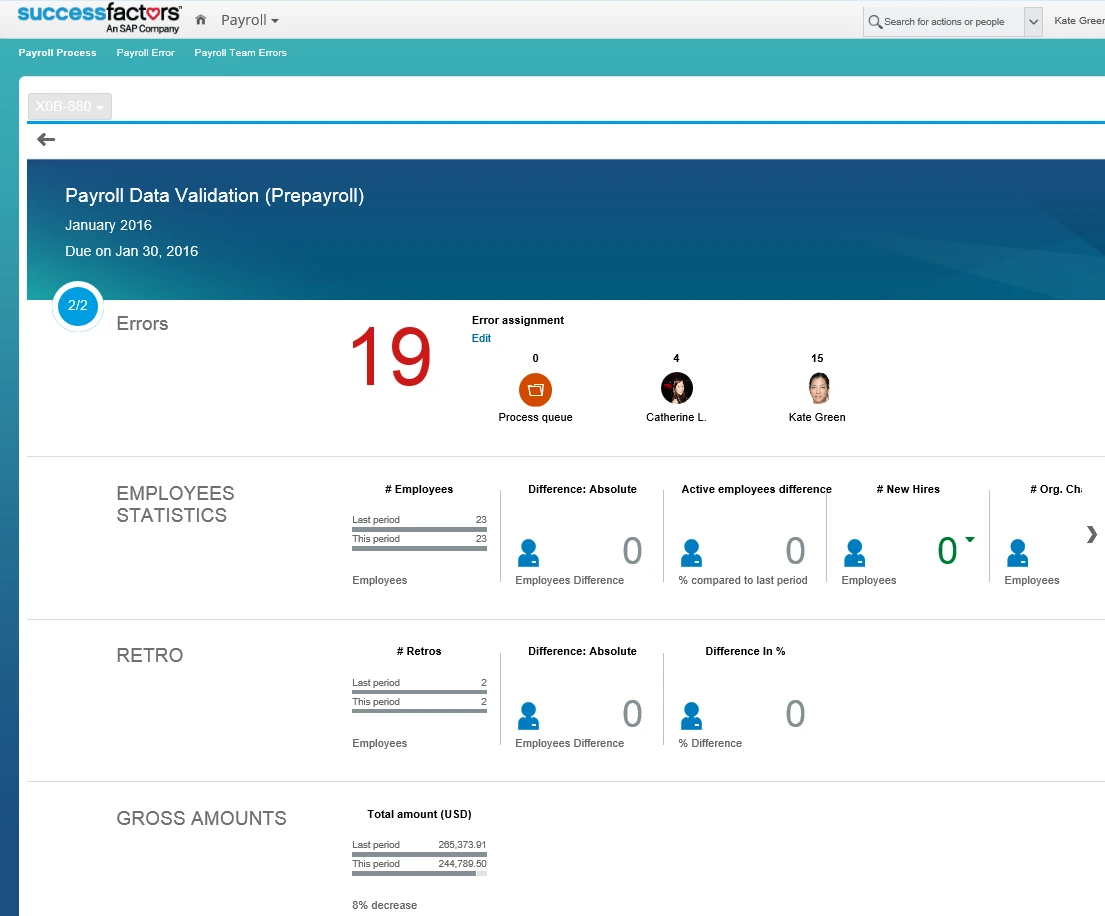
SAP SuccessFactors is a comprehensive employee lifecycle management platform designed for large and global organizations. It supports the full spectrum of the employee lifecycle, from recruiting and onboarding to performance, learning, and succession planning.
The platform is highly structured and process-driven, which helps organizations maintain consistency across regions and departments. HR teams can standardize onboarding, manage ongoing development programs, and align performance with organizational goals. Its learning and talent modules support long-term employee growth and internal mobility.
SuccessFactors integrates deeply with other SAP products, making it a strong fit for organizations already using SAP for finance or operations. While configuration requires planning and expertise, the result is a centralized system that supports complex workforce needs at scale.
Key features of SAP SuccessFactors
- Talent management suite: Supports performance, learning, and succession planning.
- Standardized onboarding: Ensures consistent experiences across teams and locations.
- Enterprise integrations: Works seamlessly within the SAP ecosystem.
Best for: Large organizations needing structured, enterprise-level lifecycle management.
6. UKG Pro

UKG Pro focuses on people operations across the entire employee lifecycle, with a strong emphasis on workforce management and payroll integration. It combines HR, talent, and time management into a unified platform.
The software supports onboarding, performance reviews, learning, and compensation management. Its workforce analytics provide insight into retention, engagement, and labor trends, helping leaders make informed decisions.
UKG Pro is particularly strong in industries with complex scheduling and compliance needs. While it offers lifecycle coverage, organizations often pair it with intranet or communication platforms to support broader employee engagement.
Key features of UKG Pro
- Workforce analytics: Provides visibility into employee trends and performance.
- Integrated payroll and time tracking: Keeps employee data accurate and connected.
- Talent development tools: Supports learning and performance management.
Best for: Mid-sized to large organizations with complex workforce and payroll requirements.
7. ADP Workforce Now
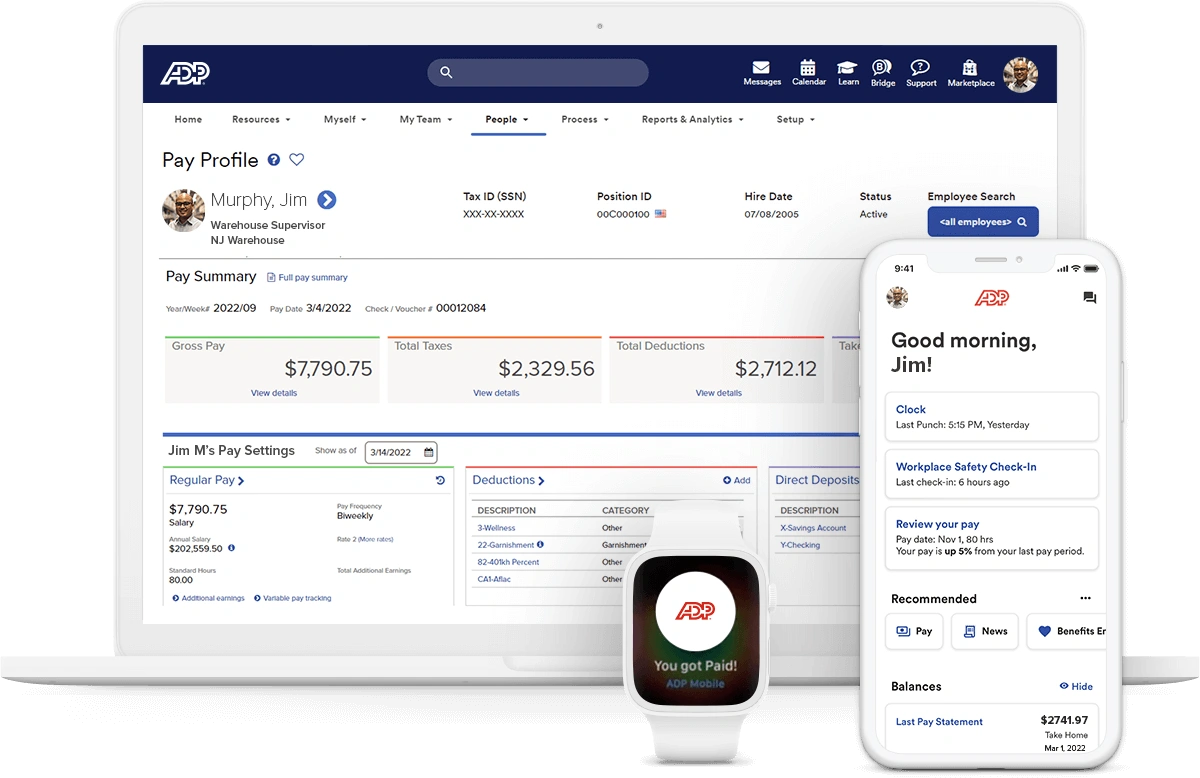
ADP Workforce Now is a well-known HR platform that supports employee lifecycle management through payroll, benefits, and talent tools. It centralizes core HR functions and provides compliance support across regions.
The platform simplifies onboarding with digital forms and task management. Performance and learning modules support development, while reporting tools help HR teams monitor turnover and engagement indicators.
ADP’s strength lies in reliability and compliance. While its user experience focuses on administration rather than engagement, integrations help extend its lifecycle capabilities into communication and collaboration tools.
Key features of ADP Workforce Now
- Payroll and benefits management: Keeps employee compensation accurate and compliant.
- Onboarding automation: Reduces manual setup for new hires.
- HR reporting: Supports visibility into workforce data.
Best for: Organizations prioritizing payroll, compliance, and HR administration.
8. Rippling
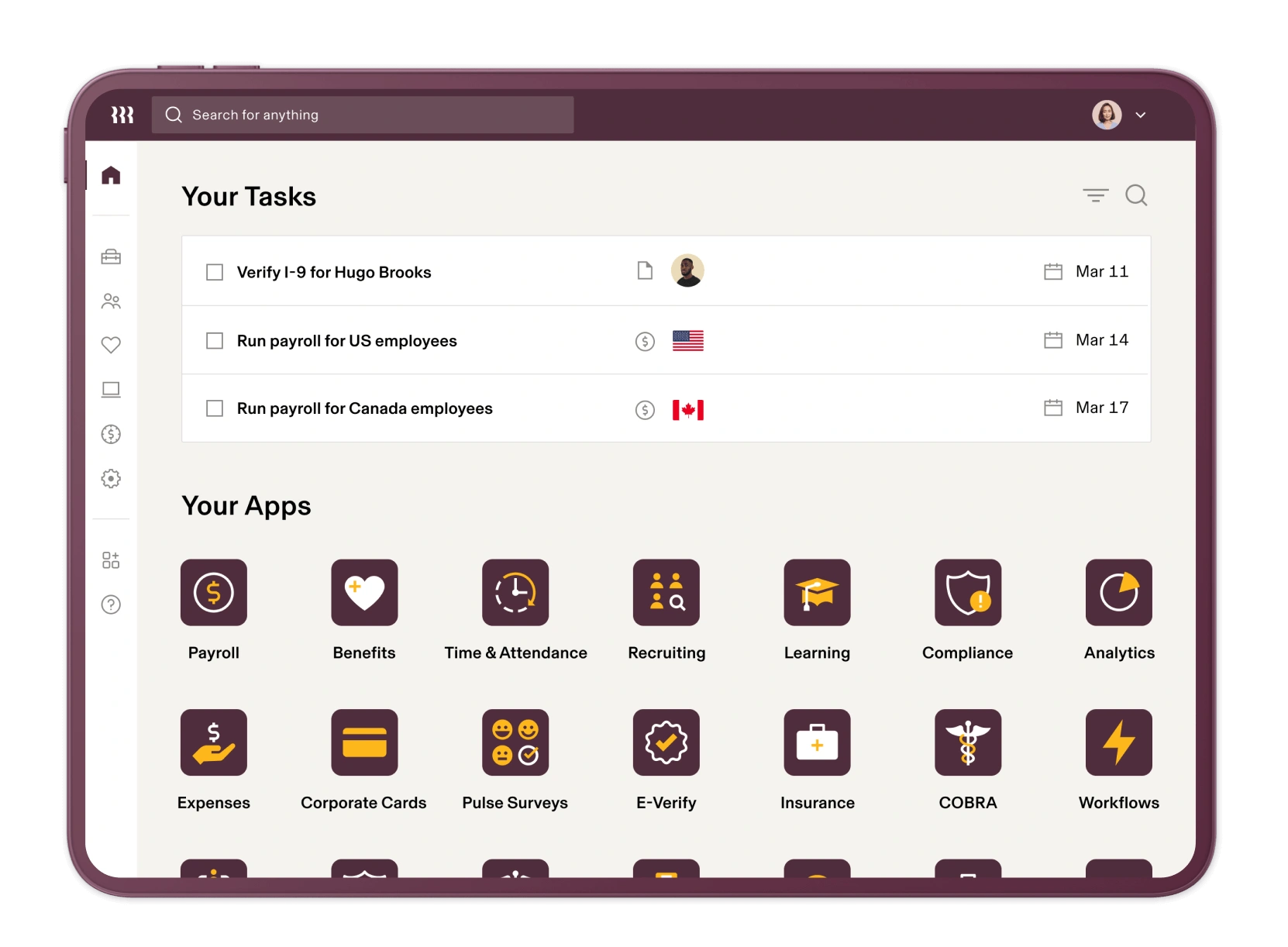
Rippling combines HR, IT, and operations into a single employee lifecycle platform. It manages onboarding, device provisioning, payroll, and app access from one system, reducing manual coordination between teams.
New hires can be fully set up on day one, including accounts and equipment. As employees move through the organization, Rippling updates access and permissions automatically. Offboarding processes also follow the same structured approach.
While Rippling excels at operational efficiency, organizations often complement it with platforms focused on communication and knowledge sharing to support engagement and culture.
Key features of Rippling
- Unified HR and IT workflows: Automates employee setup and changes.
- Lifecycle automation: Ensures consistency from onboarding to offboarding.
- App and access management: Reduces risk and administrative overhead.
Best for: Organizations seeking operational control across HR and IT processes.
9. Trinet Zenefits
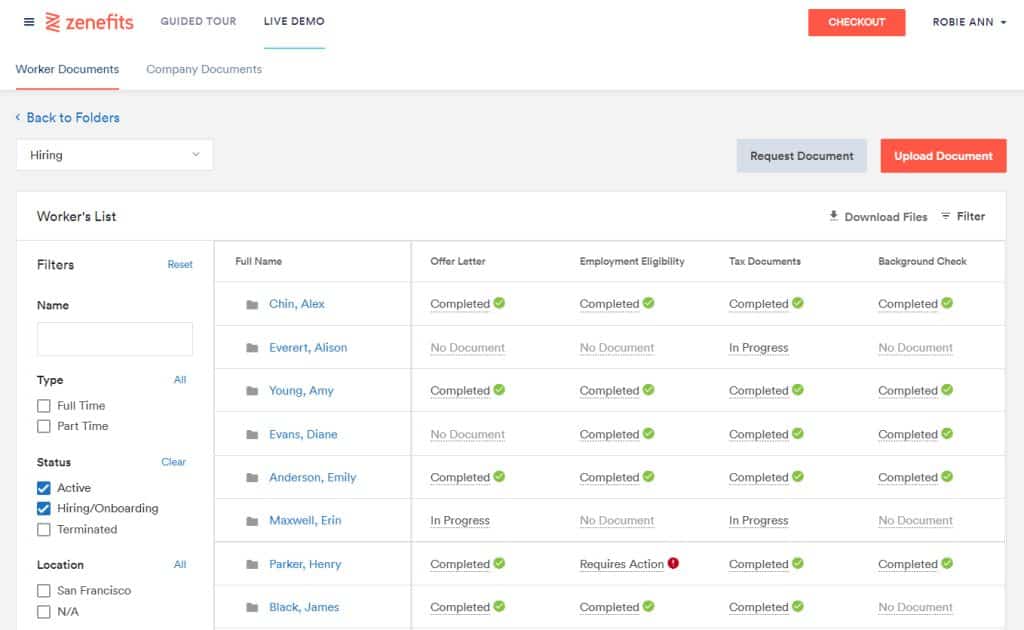
Zenefits is an HR platform designed to simplify core people operations across the employee lifecycle, with a strong focus on benefits administration and compliance. It supports hiring, onboarding, payroll, and employee management in a single system.
The platform streamlines onboarding through digital documentation and automated workflows, helping new hires complete required tasks quickly. Benefits enrollment is tightly integrated, giving employees clear visibility into options and changes throughout their tenure.
Zenefits also includes performance management and reporting tools, allowing HR teams to track engagement signals and workforce trends. While it does not function as a centralized communication or knowledge hub, it integrates with other tools to support broader lifecycle needs.
Key features of Zenefits
- Benefits administration: Simplifies enrollment and ongoing benefits management.
- Onboarding automation: Reduces manual HR tasks for new hires.
- Compliance support: Helps organizations manage regulatory requirements.
Best for: Small to mid-sized organizations prioritizing benefits and HR efficiency.
10. Namely
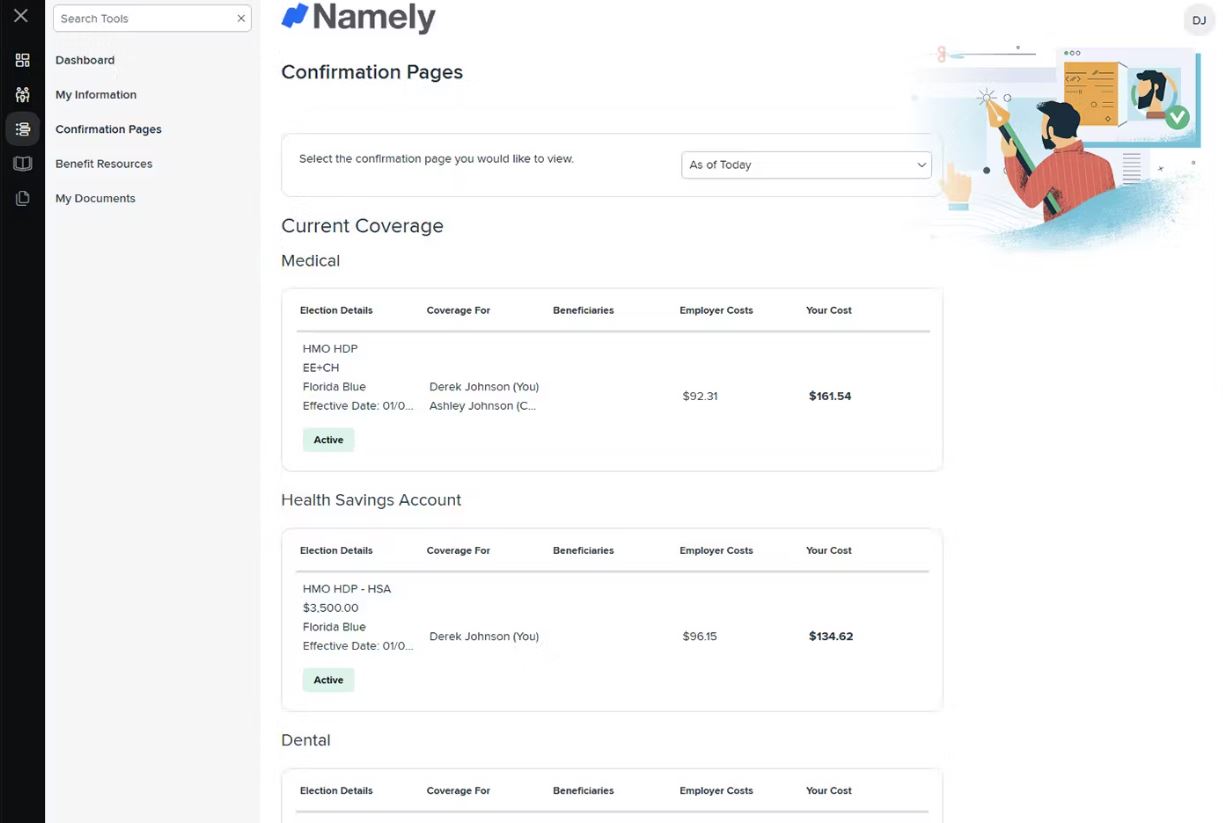
Namely is a human capital management platform focused on mid-sized organizations. It combines HR, payroll, benefits, and talent management to support employees throughout their lifecycle.
The platform emphasizes configurability, allowing organizations to adapt workflows to their structure. Onboarding processes help new hires feel supported, while performance management tools support goal setting and feedback.
Namely also includes social features that encourage recognition and visibility across teams. For organizations seeking a balance between structure and flexibility, it provides a centralized foundation for managing people operations.
Key features of Namely
- Configurable HR workflows: Adapts to organizational needs.
- Performance and goal tracking: Supports ongoing development.
- Employee engagement tools: Encourages recognition and connection.
Best for: Mid-sized organizations seeking flexible HR lifecycle management.
11. Gusto
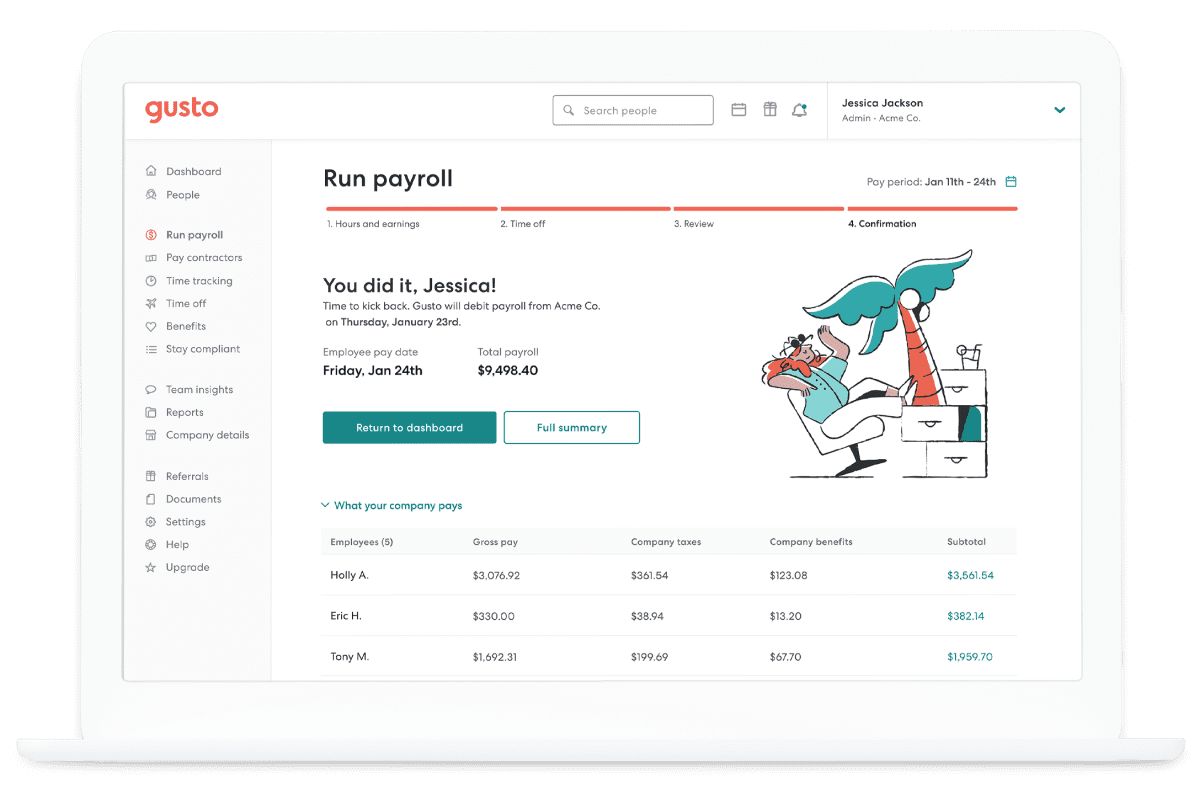
Gusto is an HR and payroll platform designed for small organizations. It focuses on simplicity and ease of use, helping teams manage hiring, onboarding, and employee administration without complexity.
The platform guides new hires through digital onboarding and benefits enrollment. Payroll, tax filings, and compliance tasks are automated, reducing administrative burden for small teams.
While Gusto does not offer deep engagement or knowledge management features, it integrates with other tools to support broader lifecycle experiences as organizations grow.
Key features of Gusto
- Automated payroll and taxes: Keeps compensation accurate and compliant.
- Simple onboarding: Helps new hires get set up quickly.
- Benefits integration: Provides access to competitive benefits options.
Best for: Small organizations needing straightforward HR and payroll support.
12. Lattice
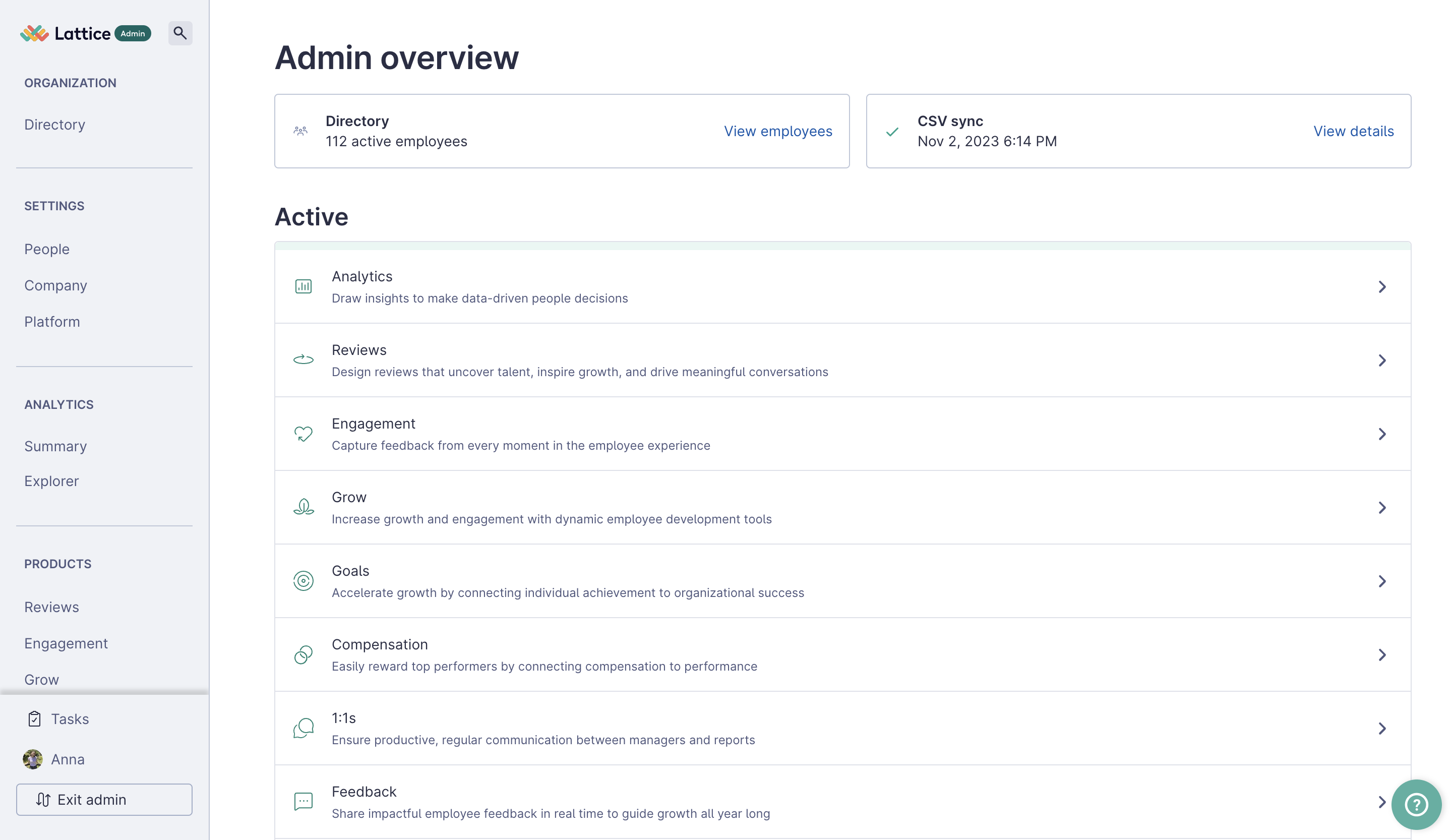
Lattice focuses on performance management and employee engagement within the employee lifecycle. It supports continuous feedback, goal alignment, and development conversations.
The platform integrates with core HR systems to layer engagement and performance insights on top of existing employee data. Managers can track progress, conduct reviews, and support growth through structured check-ins.
Lattice excels at development and alignment but relies on integrations for onboarding, payroll, and broader lifecycle processes. It works best as part of a connected ecosystem rather than a standalone solution.
Key features of Lattice
- Performance management: Supports reviews, feedback, and goal tracking.
- Employee engagement surveys: Captures sentiment and insights.
- Development planning: Aligns growth with organizational goals.
Best for: Organizations prioritizing performance and continuous feedback.
Choosing the right employee lifecycle management platform
Employee lifecycle management software shapes how people experience your organization, from their first day to their last. The right platform creates clarity, consistency, and connection across every stage, while the wrong one introduces friction and silos.
As you evaluate options, focus on how well each platform supports employee experience alongside operational needs. Tools that centralize communication, knowledge, and processes reduce confusion and increase adoption. Platforms that integrate cleanly into your existing stack will also scale more effectively over time.
Axero approaches employee lifecycle management through the lens of experience. By combining structured onboarding, centralized knowledge, and targeted communication, we help organizations create a workplace employees understand and trust.
If you are ready to create a more connected and consistent employee lifecycle, book a demo with Axero and see how a single hub can support your people at every stage.




 info@axerosolutions.com
 1-855-AXERO-55