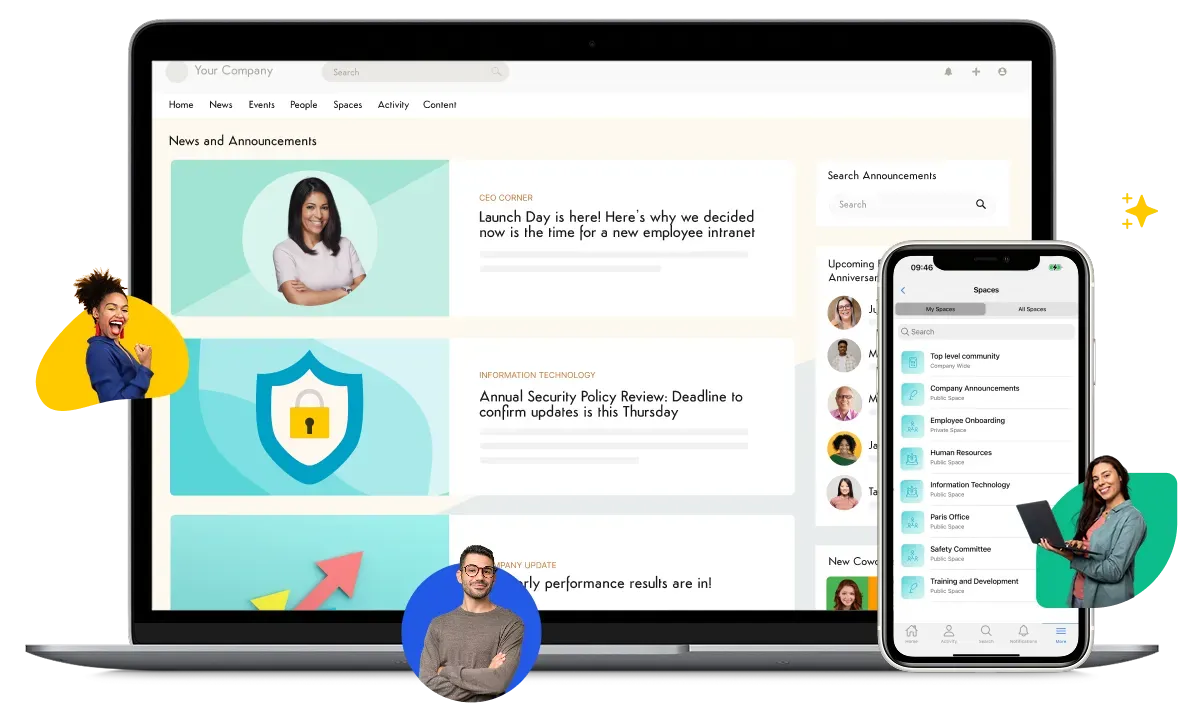
“Platform to provide communications to employees and central repository for knowledge based content. Ability to provide private or public spaces which allows us to control what content is visible”
Intranet for schools, colleges, and universities
Neither a university nor a boarding school is one organization — both are dozens of departments, offices, and buildings that each grew their own way of communicating. Axero gives faculty and staff one place to find the current policy, meet the new hire, and see what's actually happening this week — across colleges, universities, and K-12 and independent schools.
Trusted by schools, colleges, and universities


An education intranet is the internal hub for the people who run an institution — faculty, staff, administrators, facilities, athletics, advancement — where policies, procedures, department pages, directories, and daily communication live in one findable place.
The distinction that matters most to anyone evaluating this: a staff intranet is not an LMS and it is not a student portal. Your LMS handles courses, assignments, and grades. Your student portal handles registration, billing, and student records. Neither is designed for the question a new department coordinator has at 9am on their second day: where is the current travel-reimbursement policy, and who approves it? That's the job an intranet does, and it's why intranet software for educational institutions is bought separately from academic systems.
The reason institutions come looking is usually one of two failures. Either there's nothing — departments run on email lists, shared drives, and paper — or there's something nobody uses: a SharePoint site or static internal website that went stale years ago and that nobody outside IT can update. Both produce the same result. Faculty and staff miss critical updates, and institutional knowledge lives in individual inboxes until the person leaves.

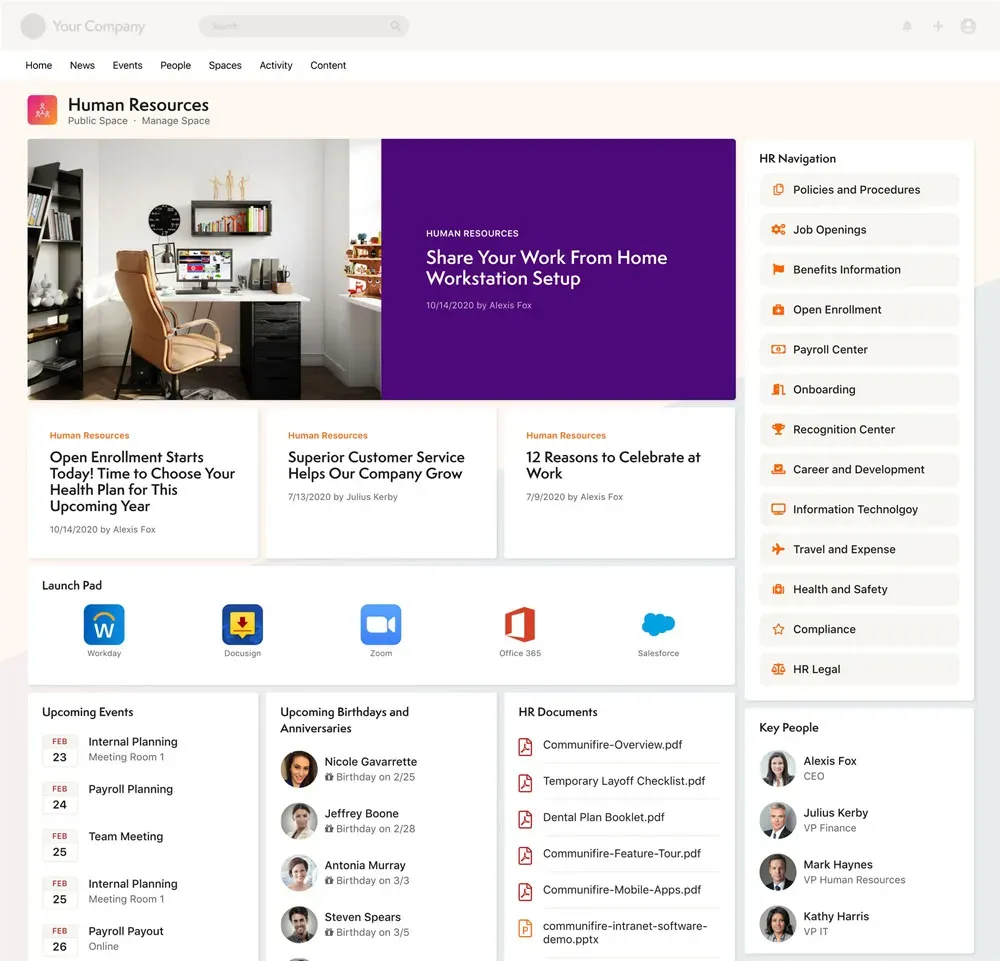
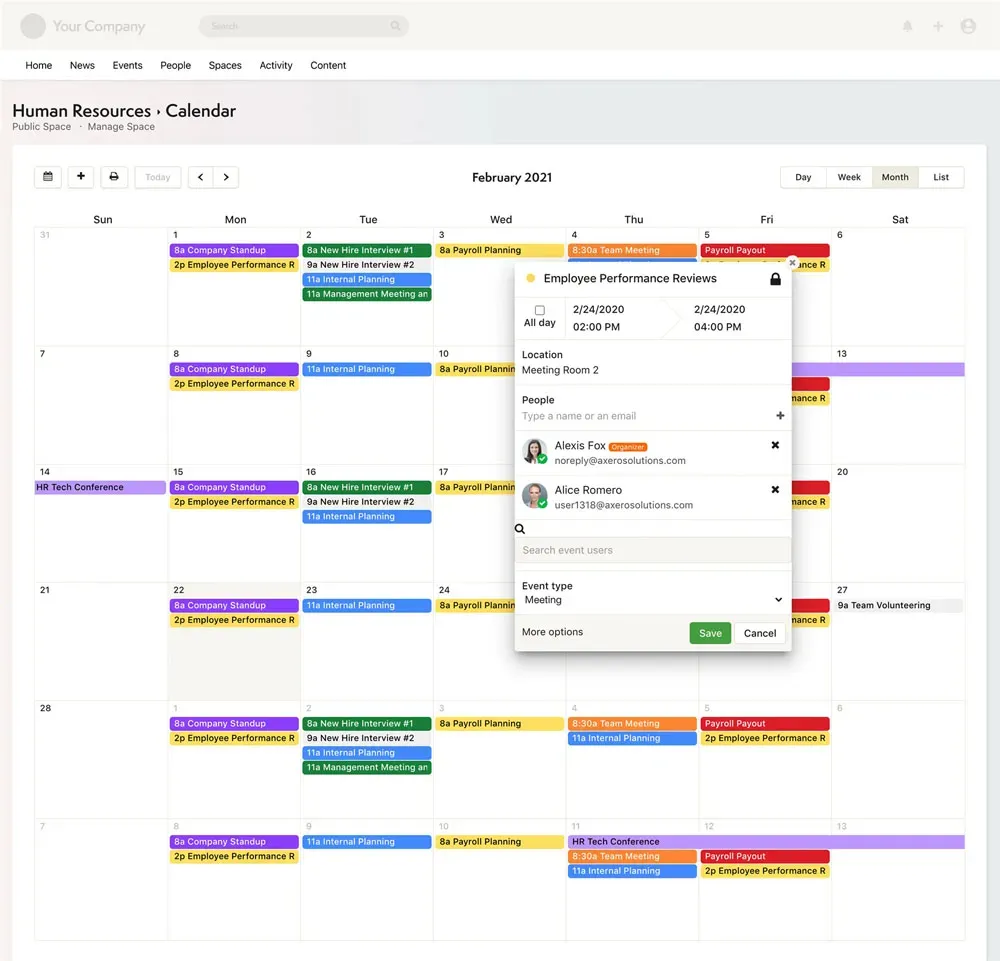
A registrar, an advancement office, a facilities team, and a faculty committee do not need the same page or the same permissions. In Axero each gets a space it runs itself, with its own pages, files, calendars, and announcements — while IT keeps control of the permission model and a clean line between staff content and anything student-facing. Before: a ticket to IT and a four-day wait to change one phone number on a department page. After: the department coordinator changes it in a minute.
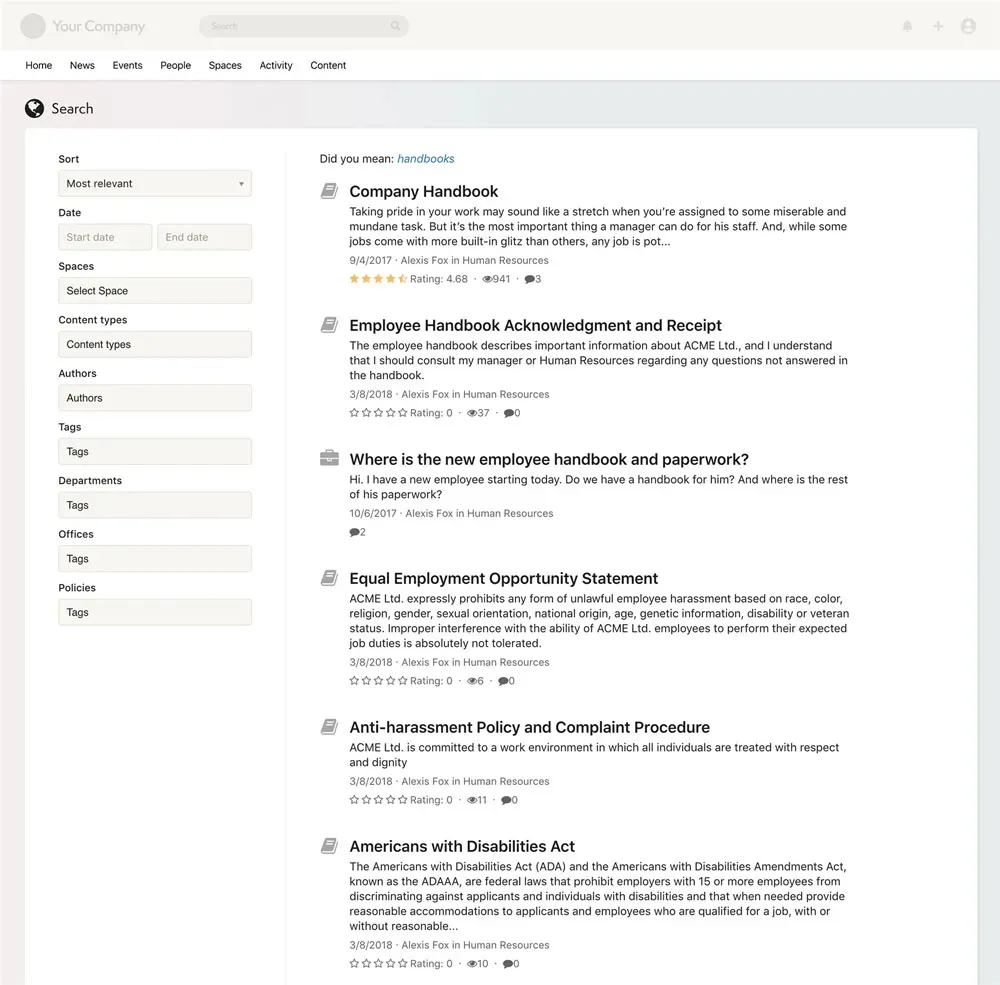
Adjunct faculty, admissions, and advancement turn over; the people who know how things actually work often don't write it down. Axero's knowledge base and search turn policies, procedures, committee history, and the practical how-to that lives in someone's head into content the next person can find. Before: a buried policy nobody can locate, so a new coordinator asks three colleagues and gets two answers. After: one searchable answer with a named owner and a review date on it.
New hires arrive in waves at the start of a semester or academic year, and they all need the same things: policies, systems access, who's who, and what happens first. Axero replaces the binder and the maze of PDFs with a self-serve onboarding space — role-based checklists, the documents that need acknowledging, and a directory that makes a decentralized institution navigable. Before: a new hire lost for two weeks and a department administrator answering the same questions each September. After: they self-serve their first week.
Whether it's a university with satellite campuses or a boarding school with academic, residential, and athletic buildings, staff need one hub that works the same everywhere rather than a patchwork of local tools. Institution-wide announcements reach everyone; targeted announcements reach one campus, one building, or one employee group. Shared calendars coordinate academic, administrative, and event schedules without the email chain. Adoption reporting is segmented by department and location, so you can see the office that quietly stopped logging in.
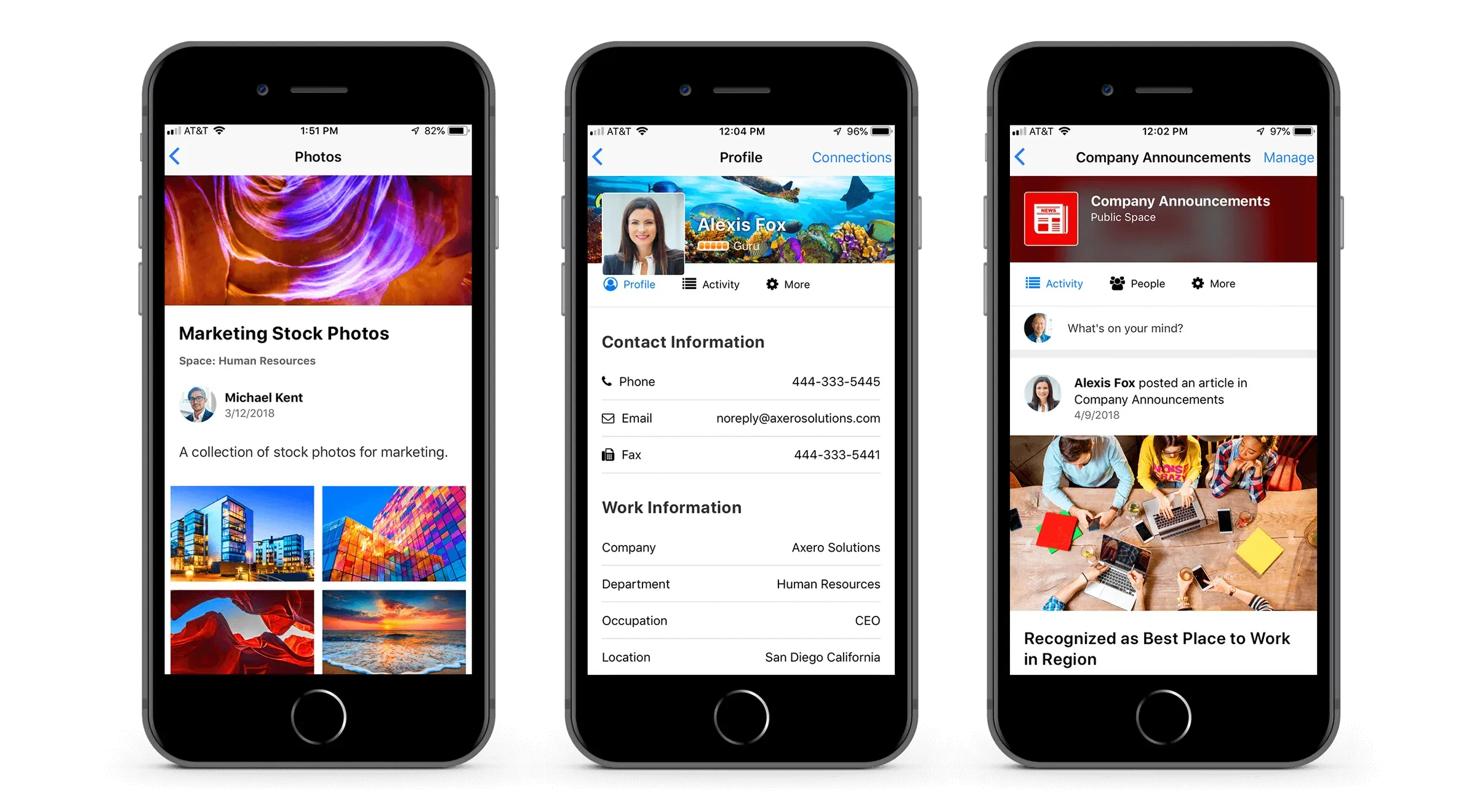
A meaningful share of any institution's employees don't have a desk. Grounds crews, custodial staff, dining services, athletics, and residential life are the people for whom a missed schedule change or safety notice matters most, and they're the ones a desktop-only intranet never reaches. Native iOS and Android apps with push notifications put announcements, the directory, and procedures on a phone.
Real results: 90% staff adoption and 60% less email at a top Massachusetts boarding school · 92% employee adoption at Algoma University · 88% adoption at the Wisconsin School of Business. See how they did it →
Why educational institutions choose Axero
Policies, procedures, and department information in one searchable place with named owners and review dates — so staff stop asking a colleague and getting a different answer each time.
Adjuncts, admissions, and advancement turn over. Documented procedures and committee history mean the institution keeps what leaves with the individual.
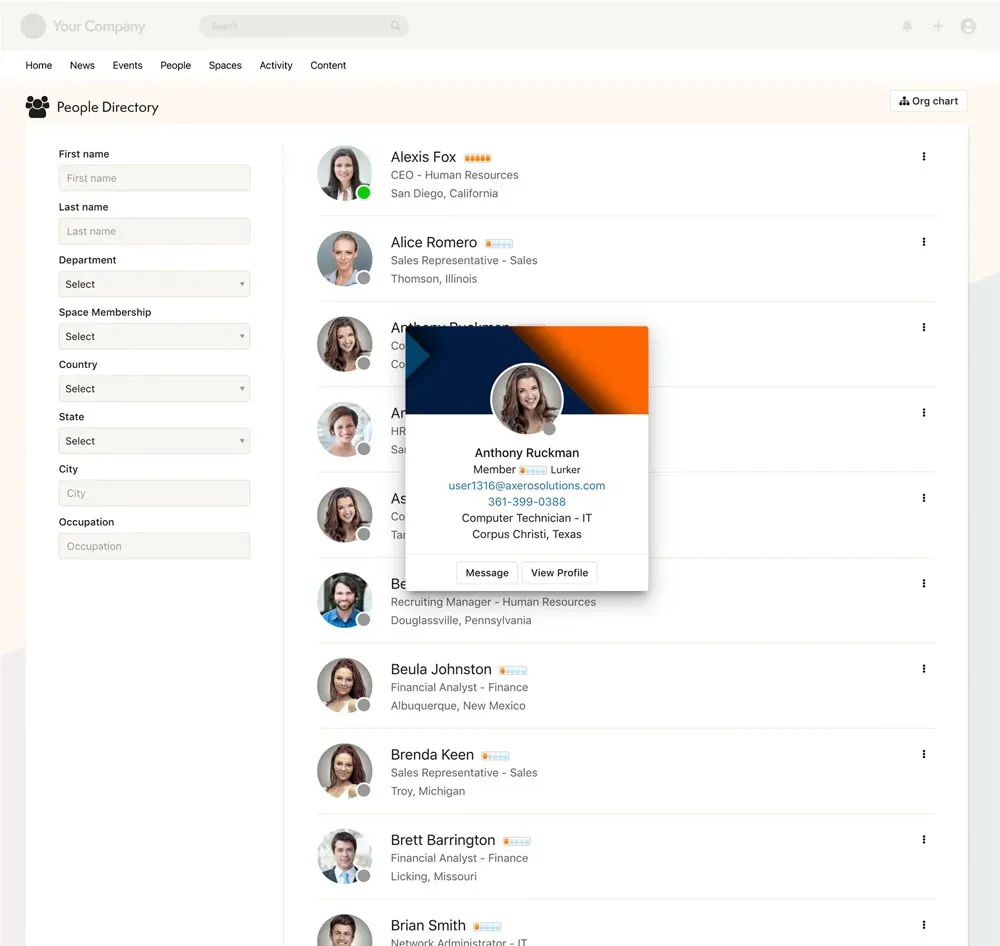
A staff directory that makes a large, decentralized campus findable — new hires and student-facing staff reach the right office without three forwarded emails.
Registrar, HR, facilities, and the business office maintain their own pages through drag-and-drop page building. No IT ticket for a routine change.
Role-based onboarding spaces with checklists and document acknowledgment, so September doesn't mean answering the same twelve questions forty times.
Native iOS and Android apps with push notifications put schedules and notices in front of facilities, athletics, dining, and residential-life teams.
Role- and space-level permissions keep the staff intranet separate from student-facing systems, with SOC 2 Type II and ISO 27001 attestations behind it.
Quoted against your actual seat count and deployment model, which makes it straightforward to take to a board, a grant, or a multi-year procurement cycle.
Who it's for
Axero's education customers range from a 200-employee independent school to a research university with satellite campuses. Here's how each type uses it.
The core problem in higher ed is decentralization: dozens of departments, colleges, athletics, facilities, and administration, each historically running on its own email lists and shared drives. Axero gives each unit a space it owns while institution-wide communication still reaches everyone, and delegated permissions let IT hand out publishing rights without handing out access control. Roosevelt University, Algoma University, Seneca College, and the Wisconsin School of Business all run on it — Algoma reached 92% employee adoption and Wisconsin 88%.
An independent or boarding school has the same structural challenge in miniature: a business office, an academic division, residential life, athletics, facilities, and dining, spread across buildings, with a small IT team and no appetite for a platform that needs a developer. Phillips Academy Andover is an Axero customer, and a top Massachusetts boarding school reached 90% staff adoption while cutting email volume by 60% — the clearest proof point we have that this works outside higher ed. Scenarios like multi-building coordination, department pages, and new-staff onboarding read the same for a boarding school's business office as for a university provost's.
School districts, community college systems, and ed-focused nonprofits and service organizations need the same staff hub without the research-university complexity. The Arkansas Small Business & Technology Development Center went from scattered files to one collaborative hub on Axero — useful evidence that the platform fits education-adjacent service organizations, not only degree-granting institutions.
The most common reason an education intranet fails is that maintaining it became one overloaded person's side responsibility. Axero is built so non-technical department admins — registrar, HR, facilities, the business office — maintain their own pages through a drag-and-drop page builder, with IT owning identity, permissions, and structure rather than content requests.
Axero is the front door for staff, not a replacement for the systems your institution already runs:
For IT, and for procurement
The rest of this page speaks to communications, HR, and academic administration. This section is for the people who have to approve it.