


Strong communication is imperative. Especially in a work environment, understanding the right and not-so-right ways of communicating helps us successfully collaborate, bring alignment to departments, and build a positive workplace.
When it comes to work, we spend a lot of our time talking. According to the 2024 State of Business Communication report from Grammarly and the Harris Poll, people spend 88% of their workweek communicating with each other and 84% of leaders are communicating in more channels than ever before. Especially in a workplace where there are so many different ways to communicate and goals on the line, effective communication is one of the most powerful skills to have.
I’ll add my own observation to those numbers: after years of running Axero and reading thousands of customer emails, internal updates, and support threads, I can usually tell within a few sentences whether a team communicates well — and it shows up in everything else they do.
We’re going to dive into the world of business communication and look at why it’s so important to get it right. Whether you’re working with a coworker on a project, a manager overseeing a team, or talking to customers or external parties, effective business communication is how you’ll successfully reach your end goal.
What is business communication?
Business communication is the process of sharing information within an organization and between the organization and outside parties such as customers, partners, and the public. It includes everything from a project status update and a company-wide announcement to a customer newsletter — and its purpose is to keep people informed, aligned, and able to act.
There are many types of business communication, which makes it a large and varied medium. A message to external stakeholders will require very different language than one for colleagues in a team group chat. Nailing the right tone and use of language is key to maintaining a company’s professional brand voice.
The importance of business communication
Why do we need good business communication? Most well-run organizations treat internal communication as a priority, not an afterthought. When communication is effective, there are fewer business silos and teams tend to be more productive — which contributes to a more engaged and aligned workforce. The importance of business communication shows up in all areas of a business — how news is shared throughout the organization, how teams work together, and how the business communicates to customers — and the right internal communication tools make each of those easier to get right.
We all know how to communicate (though communication skills need to be developed, just like any other!), but business communication is not a one-size-fits-all affair. We need business communication to help fulfill several key tasks:
Share information
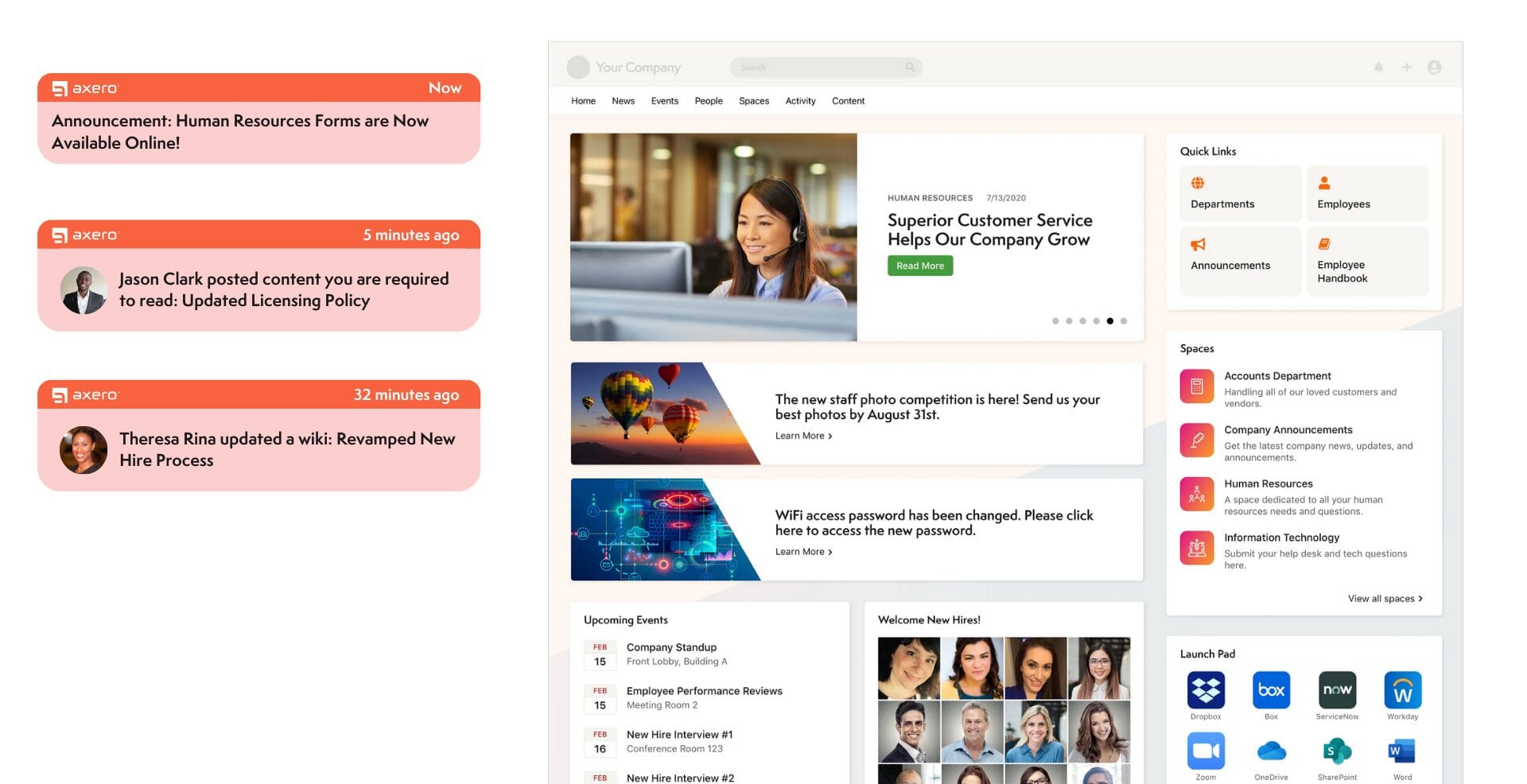
One of the main purposes of internal business communication is to share information between employees and teams within a company. This includes the technology used to distribute information, how managers communicate to their teams, and how high-level updates are shared with everyone. Using a platform like a company intranet, employees can easily be notified with announcements and updates without losing details. The intranet works best as the governed, searchable home for official updates, policies, and durable knowledge — the things people need to find again later — while faster back-and-forth stays in chat. When each type of message has a clear home, fewer details slip between the cracks.
Maintain consistent messaging
Messaging needs to be consistent across all platforms. Whether it is internal or external, going from staff to customers or management to employees, different messaging will only cause confusion. Having guidelines and a clear corporate communications strategy in place helps ensure that all communications maintain uniformity.
Improve clarity
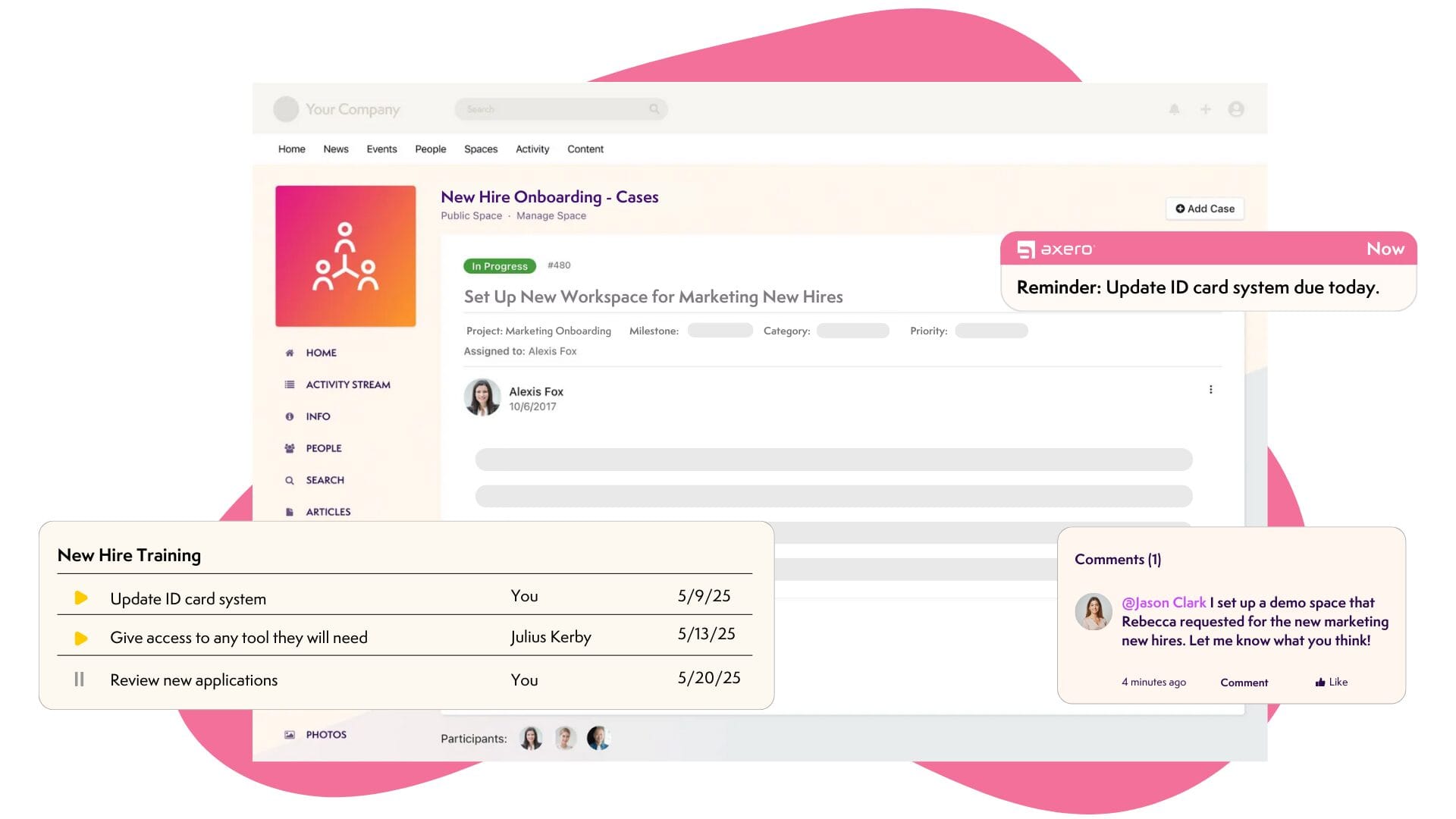
Again, mixed messaging can result in confusion. When you have a piece of information missing, or one person saying one thing and someone else another, there is no clarity, only confusion, misalignment, and communication gaps. With set rules and an understanding of how business communication should be conducted, everyone can feel much clearer about their path forward.
Types of business communication
Business communication is usually grouped by who is talking to whom — whether the message stays inside the company, and which direction it travels through the org chart. In practice these lenses overlap: internal communication can also be upward, downward, or lateral. It helps to keep the different axes straight:
| Classification axis | Types |
|---|---|
| Audience | Internal / external |
| Direction | Upward / downward / lateral / diagonal |
| Format | Written / verbal / visual |
| Timing | Synchronous / asynchronous |
| Purpose | Inform / coordinate / decide / persuade / document |
The five types below are grouped by audience and direction — the axes most people mean when they talk about “types” of business communication.
1. Internal communication
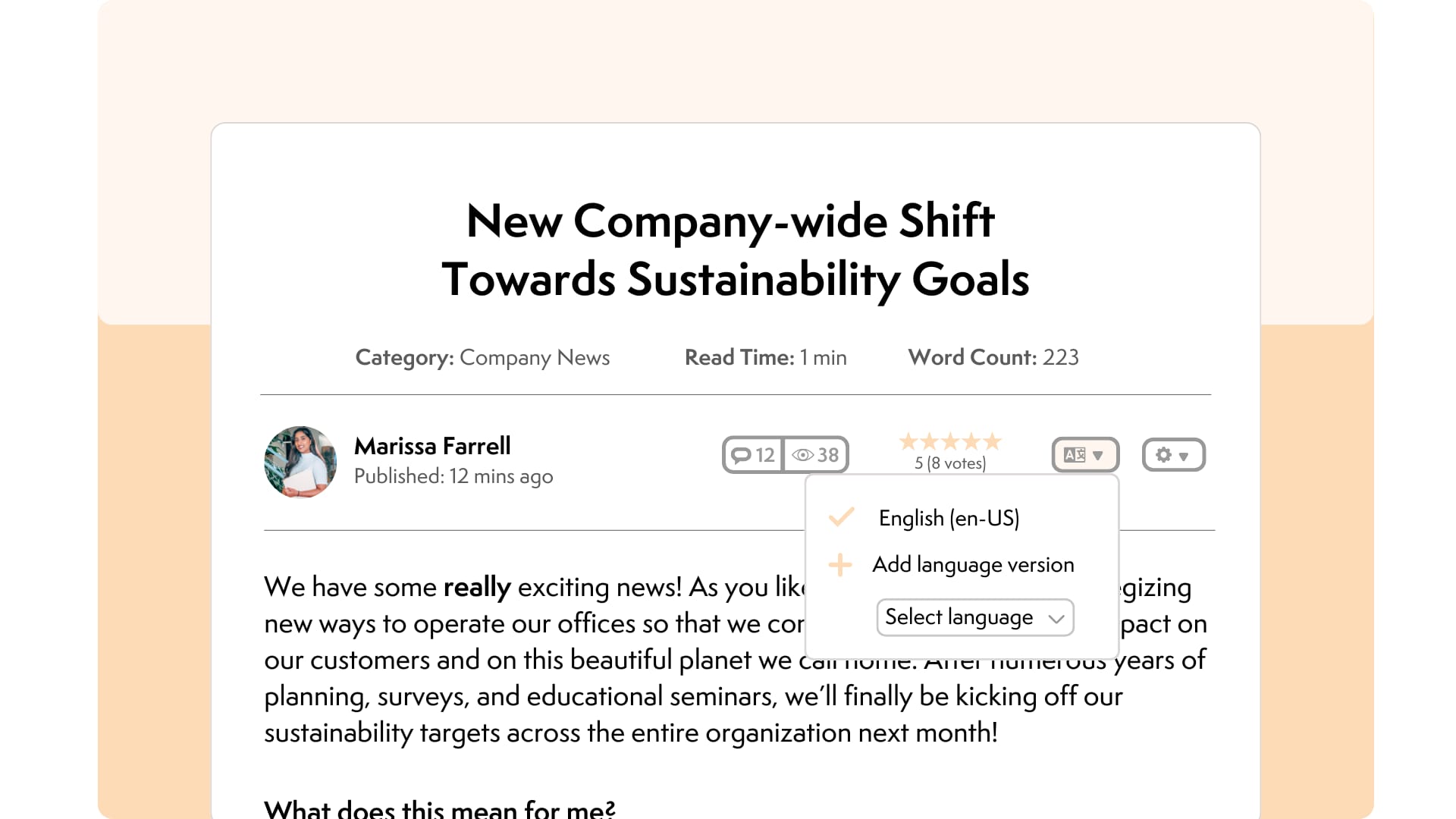
Internal communication is any interaction or discussion that occurs between employees working under the same company. Even if you are in different departments, offices, or continents, sending an email or memo to each other is classed as internal communication. Because it touches every employee every day, it’s one of the most valuable to get right — usually through dedicated internal communications software.
2. External communication
External communication is the interaction between employees and the business’s customers, stakeholders, and the general public. Basically, if you are communicating with anyone who is not employed by your business, regardless of whether they are spending money or have invested interest in your brand, this is external business communication.
3. Upward communication
Upward communication is when a message is sent by one employee to someone above them in the company’s structure. For example, a direct report can email their manager with a project status update, or a manager may deliver an update on their team’s performance in the last quarter to an executive board.
4. Downward communication
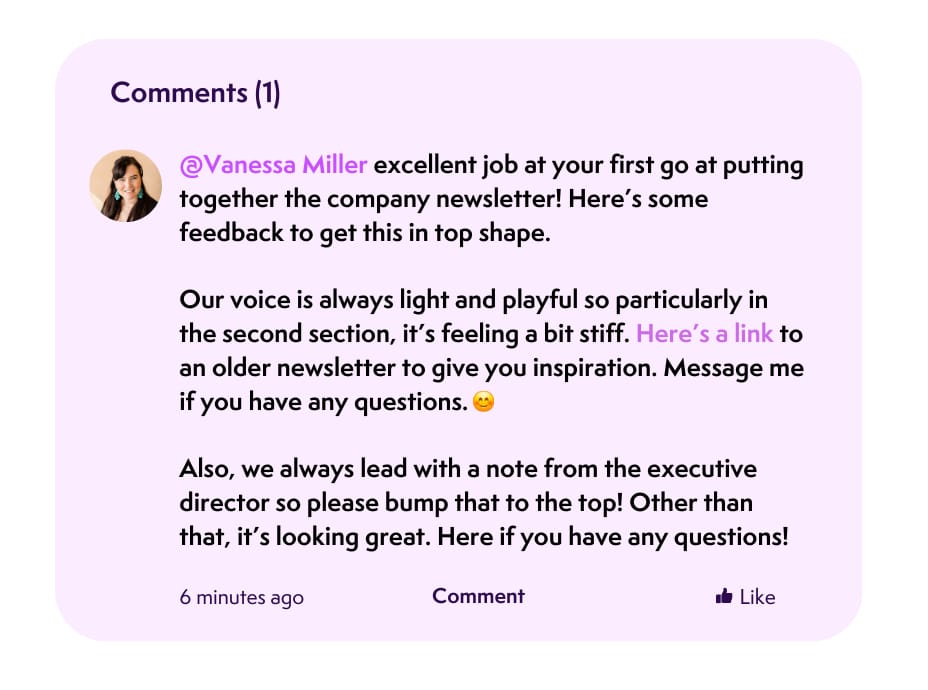
Unsurprisingly, downward communication is the opposite of upward communication. If a manager needs to get in touch with their team, or if the company CEO decides to hold a town hall where they pass on information or announcements to everyone, downward communication is taking place.
5. Lateral communication
Upward and downward communication is pretty self-explanatory, and lateral communication fills in the gap. If two employees are in equal standing in a company, any messages and information shared between them could be considered lateral communication. Whenever you hop on a call to think through a problem with a colleague, you may be communicating laterally!
Business communication examples and formats
So, what are actual real-life examples of business communication? Regardless of what your role is or what industry you work in, employees experience some form of internal business communication everyday — a status update posted to a project space, a quarterly town hall, a customer newsletter, a manager’s feedback conversation. The examples below mix everyday scenarios with the main formats a message can take. Here are some to make it concrete:
1. One-to-one communication
One-to-one communication occurs when two people are having a conversation. Hierarchy does not come into play here; one-to-one communication could look like a manager delivering feedback after a performance review, or it could be an employee checking in with their colleague for a hand-over before a vacation.
2. Written communication
Written communication is anything that is conveyed through text. It could be an email, a blog, a report, or even a little hello message on an intranet’s homepage. Written communication is the bread and butter of business communication, especially in today’s modern world where you can compose and send a message to someone on the other side of the world in seconds.
3. Verbal communication
We all use verbal communication every day. Ordering a beverage at your favorite coffee spot, saying hi to your neighbors when you pass them on the street, and even jumping on a call with colleagues requires talking and communicating verbally. Verbal communication will sometimes see you sitting down to talk through a big problem with your team and collaborate for a solution, but sometimes it can be sociable and just a way to pass the time.
4. Visual communication
Visual communication is the imagery you use to convey messages. Though they may be used alongside verbal or written components, such as videos or infographics, they can technically stand on their own if the messaging is clear enough. They can also be used to bring further clarity to written communication, such as including icons in a menu option on a website to help with navigation.
What business communication channels can we use?
There are many types of business communication, and it’s important to use the right channel for the right situation. In doing so, we can make sure each message lands in the correct place and that nothing is left behind. It is far too easy to mention something in one location and then follow it up in another. The problem with all too common situations like this is that the messaging is scattered and it can be hard to collaborate cohesively. Establishing which channels to use for specific communication is a must.
1. Face-to-face communication
Face-to-face conversations can cover a variety of topics. They can be as simple as chats in passing as you move around the office or could be a series of formal meetings to discuss a candidacy for a role or a performance review.
Ideally, face-to-face communication takes place in person. But, let’s be real, in today’s modern world of business, we don’t always have to be in the same room to have a face-to-face conversation with someone.
The main issue with face-to-face communication is that details can be forgotten or misremembered. It is best if some form of written communication quickly follows the conversation so both parties can confirm the details of the discussion.
2. Written channels: email, chat, and the intranet
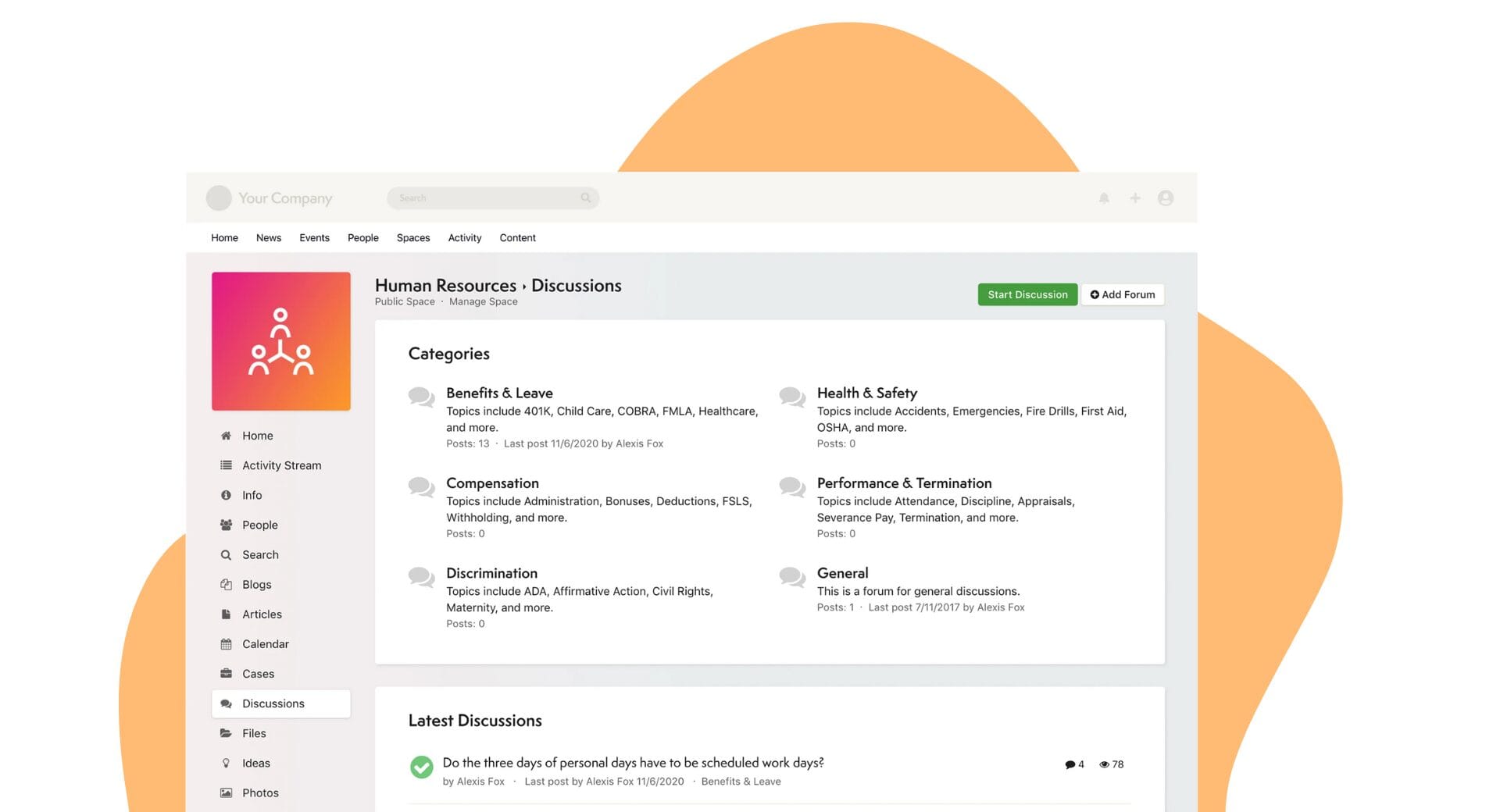
We covered written communication as a form above — here the question is where it should go. Emails and social media posts have become two of the biggest forms of a company’s external communication methods. Internally, emails are also big but are joined by chat functions such as Microsoft Teams or Slack.
Since there are multiple channels a message can go down, teams need to agree on where each message would be appropriate. For example, all updates to a team document should be recorded in the company intranet where that document lives, not in some other chat channel.
Likewise, a social post sharing a picture of your cat might be enjoyed by the wider company, but it should be kept to more informal channels, not the HR database with the onboarding checklists and employee handbook.
3. Synchronous vs. asynchronous
The other lens that matters is timing. Synchronous communication — a call, a meeting, a live chat back-and-forth — happens in real time and suits discussion, decisions, and anything sensitive. Asynchronous communication — an intranet post, an email, a recorded update — lets people respond on their own schedule and leaves a record others can find later.
Most teams need both, and the common mistake is using them backwards: making people sit in a meeting for something that could have been a posted update, or burying an important decision in a fast-moving chat where it’s gone by morning. A good rule of thumb is that anything worth referring back to should end up in a persistent, searchable place — not only in a synchronous channel.
Choosing the right channel
When it isn’t obvious where a message belongs, a few questions usually settle it:
- Who actually needs this — one person, a team, or everyone?
- Is it urgent, or can it wait?
- Does it need to stay findable later?
- Does someone need to acknowledge it?
- Does it need discussion, or just delivery?
- Is it sensitive or confidential?
- Which system should hold the final record?
Answer those and the channel — chat, email, a meeting, or a post on the intranet — usually picks itself.
What are the benefits of good business communication?
Effective communication is a whole lot easier if you have goals and a strategy in place. Trouble begins when corners are cut and people think they can step away from the established guidelines. When we have good communication practices in our organizations, we can expect:
Good employee engagement
Employees need to be able to communicate effectively. Whether you have teams physically in the same office or scattered across their own remote working setups, good communication is a must. In a 2022 Grammarly and Harris Poll survey, business leaders estimated their teams lose an average of 7.47 hours per week to poor communication. Reduce the miscommunication and your team gets that time back for real work.
Positive business culture
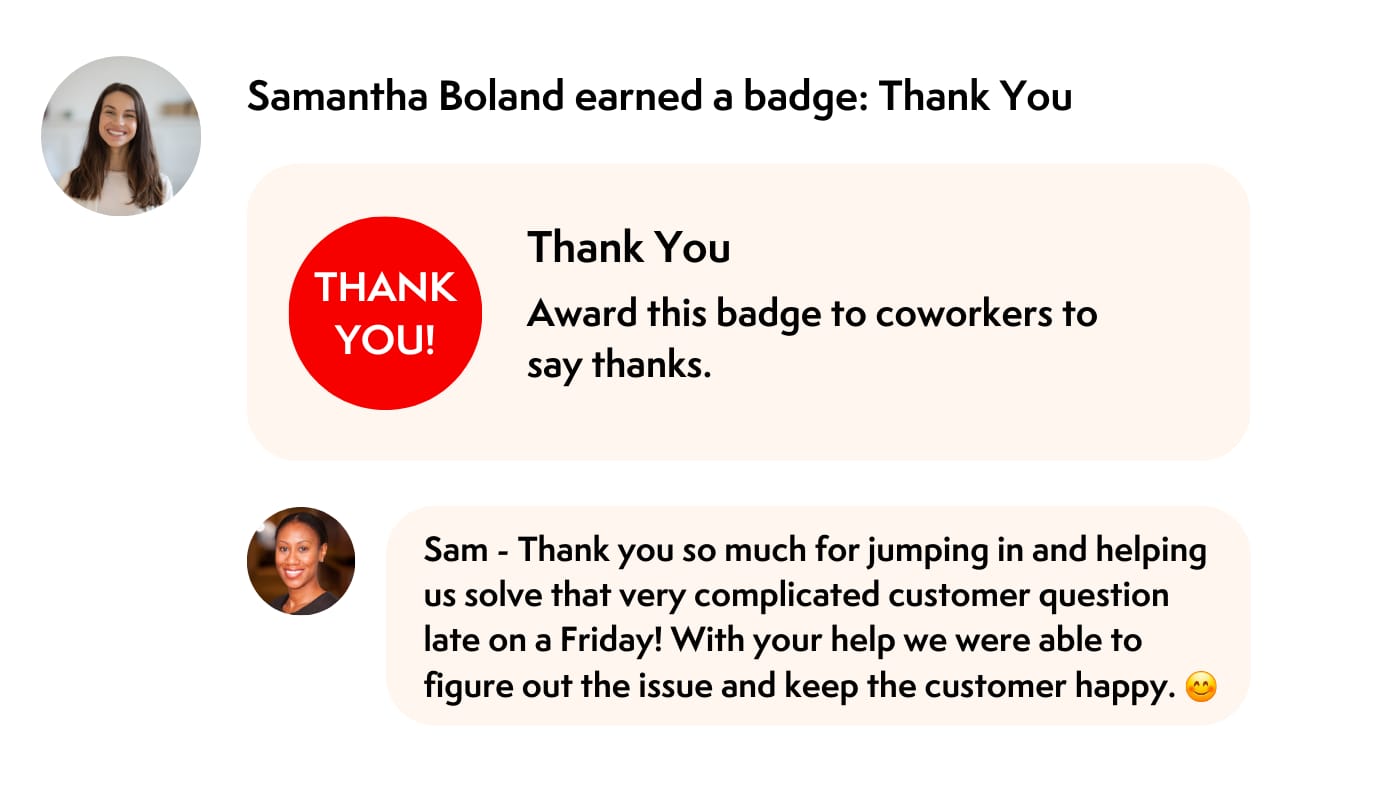
No one wants to work for a company where everyone is too afraid to talk to one another. Marketing campaigns and official communication guidelines are all necessary, but don’t forget to have fun too. Successful communication isn’t just about getting the information where it is supposed to go, it can also mean that people feel more comfortable being social and sharing details from their lives.
Improved operations and innovation
A good communication process supports employee productivity, because people know what they are doing. Operations and processes are less likely to stall, and goals are easier to hit. What’s more, when there are good levels of communication in place, employees tend to feel more comfortable speaking up and voicing ideas for innovation and changes.
Happy customers and clients
This one is fairly intuitive: fewer communication errors make it more likely that orders and projects are delivered on time. Updates are shared throughout, and a problem, when it arises, is flagged and dealt with swiftly. Customers and clients tend to notice — and may even point to your clear communication as a reason they want to keep working with you.
Business communication FAQs
What is business communication?
Business communication is the process of sharing information within an organization and between the organization and outside parties like customers and partners. It covers everything from project updates and company announcements to newsletters and client emails, and its goal is to keep people informed, aligned, and able to act.
What are the main types of business communication?
Business communication is usually grouped by audience and direction: internal communication (between employees), external communication (with customers, partners, and the public), upward communication (employee to manager or leadership), downward communication (leadership to employees), and lateral communication (between peers).
What is business communication with an example?
Business communication is any exchange of information in a work context. A concrete example: a manager posts a quarterly goals update on the company intranet (downward communication), team members discuss it in the comments (lateral), and a summary of team feedback goes back to leadership (upward).
Why is business communication important?
Good business communication reduces wasted time, prevents misalignment, and keeps work moving. In a 2022 Grammarly/Harris Poll survey, business leaders estimated teams lose around 7.5 hours per person each week to poor communication, so clear channels, consistent messaging, and a dependable home for important information have a direct effect on productivity, culture, and customer experience.
Don’t delay, set up good business communication in your team with Axero

Communication gets easier when the important things have one dependable home. Chat, email, and meetings all have their place — but the updates, policies, decisions, and knowledge people need to find again shouldn’t be scattered across five tools where they quietly get lost. That’s the job an intranet does well: the governed, searchable source of truth the rest of your channels point back to.
Axero is built to be that home base. From sharing documents and running projects to giving teams a space to work and get to know one another, it brings your durable internal communication into one place — internal communications software designed around how your company actually works.
Talking with the teams who come to us — whether they’re about to launch a new intranet or already deep into a demo — the pattern is always the same: communication problems are rarely people problems — they’re usually structure problems. Fix where communication lives, and the rest gets a lot easier.
Contact us today and book a demo to find out what we can do for you.