
People data lives in five systems
Names in Active Directory, titles in the HRIS, contact info on a wiki, photos nowhere. No system has the whole picture, so none of them is trusted.
Employee Directory Software
Scattered people data and out-of-date org charts cost everyone time. Axero keeps a searchable directory, a live org chart, and rich profiles accurate — synced from the systems IT already runs, and maintained by the teams who own the data.
Trusted by










A directory is only useful if it's right. Here's what usually keeps it from being right.
Names in Active Directory, titles in the HRIS, contact info on a wiki, photos nowhere. No system has the whole picture, so none of them is trusted.
The chart is a slide deck someone updates once a quarter, if that. By the time anyone looks, the reporting lines are already wrong.
Search matches an exact spelling, not the skill, team, certification, or location you're actually looking for. So people ask around instead.
A new hire, a department move, a title change — each one waits in a queue. Routine updates that HR should own end up on IT's plate.
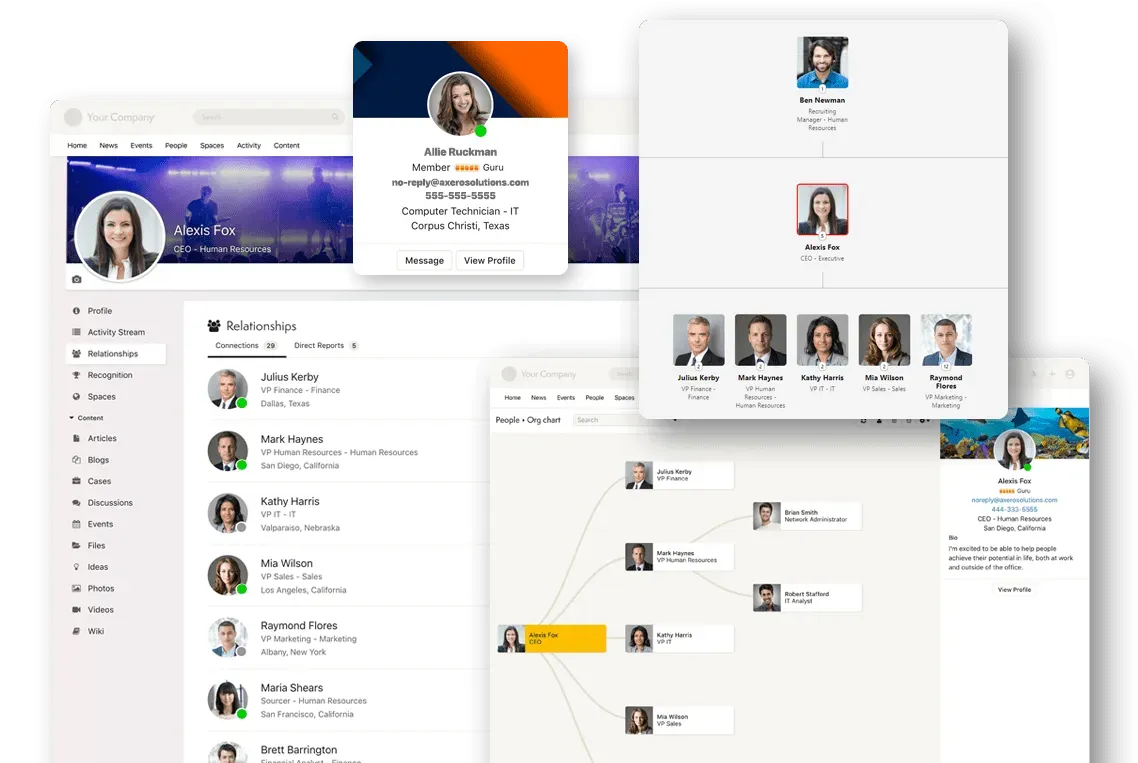
Search and filter by name, team, role, location, or skill, and get to a person in a couple of keystrokes. Profiles populate from Active Directory, your HRIS, or your SSO provider and stay in sync, with self-service filling the gaps — so the directory reflects who works here now, not who worked here last quarter.
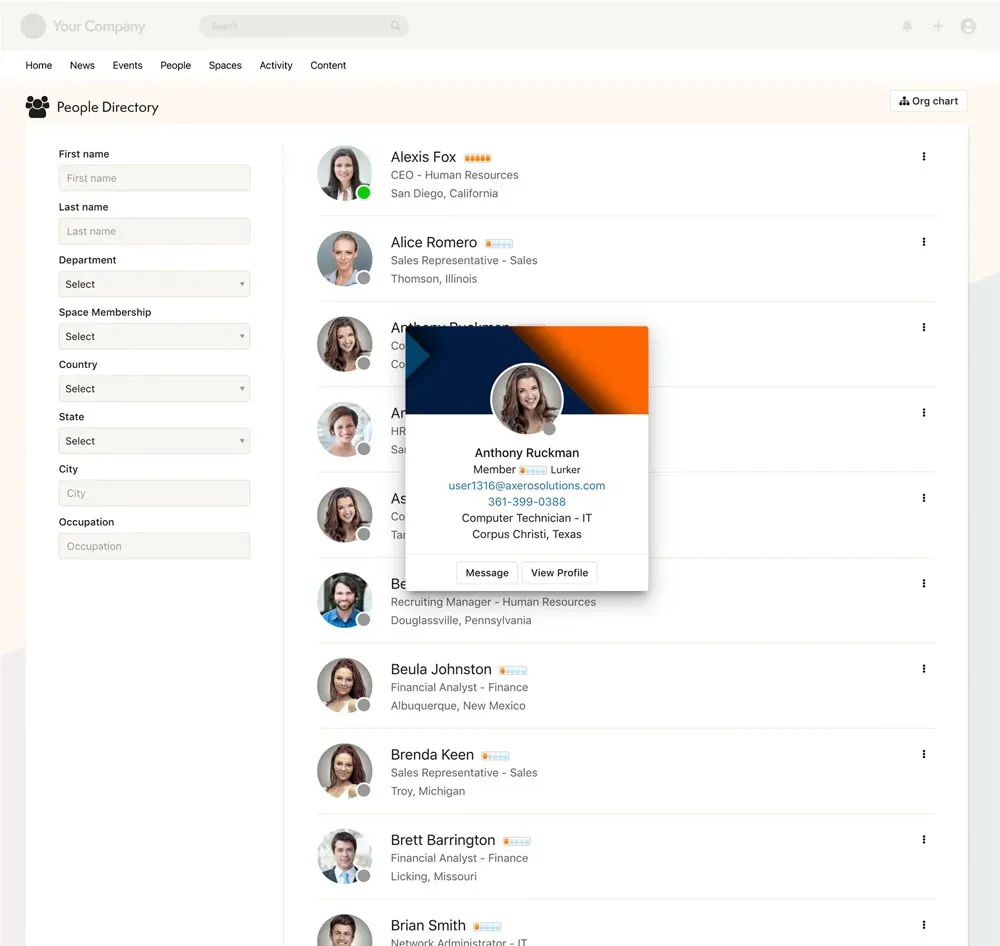
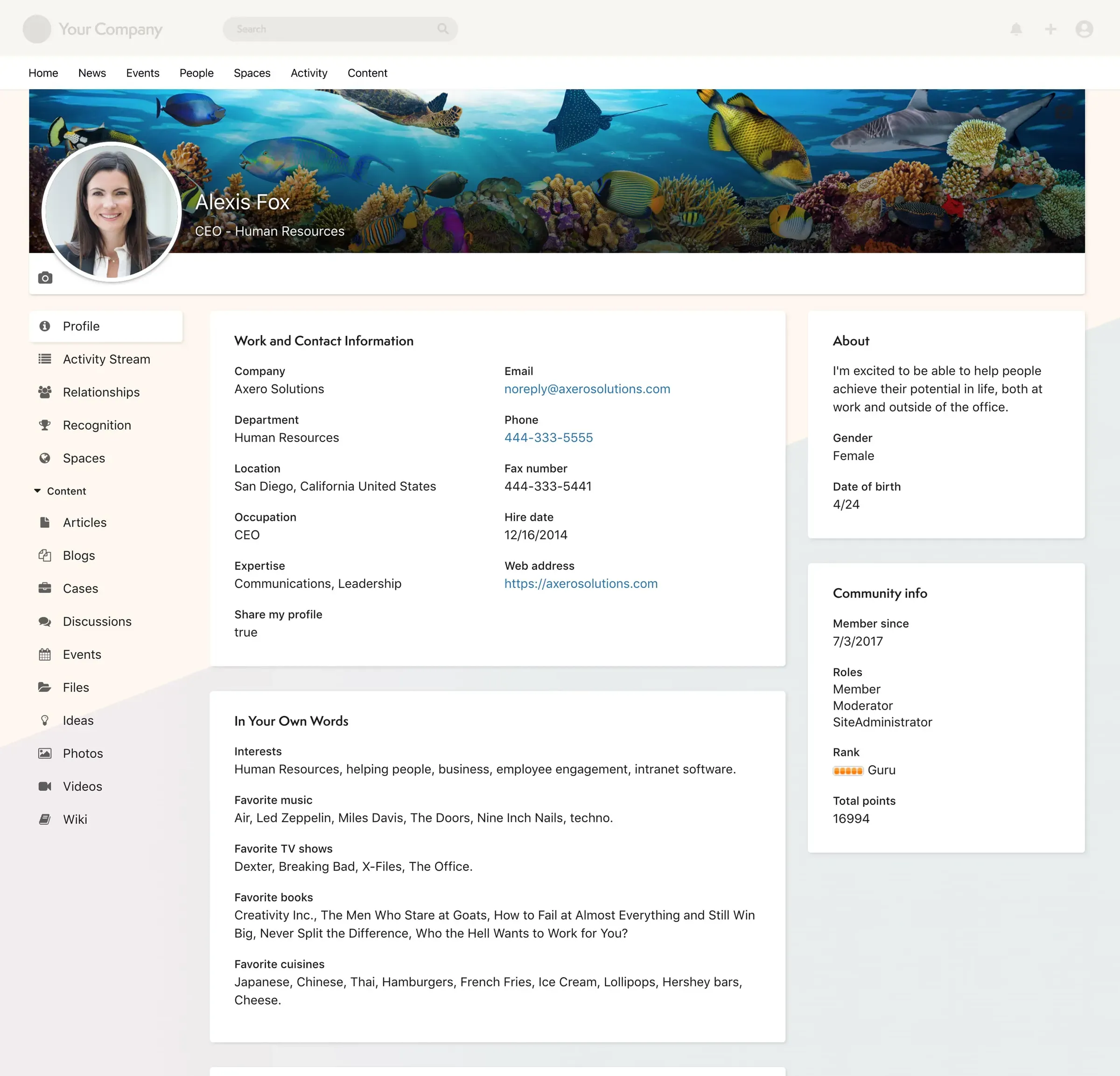
A profile carries work and contact details, reporting line, skills and expertise, current projects, and recent activity. Configure which fields appear and who can edit each one. Expertise, interests, and project context turn the directory into a way to find the person who owns something — not just their phone extension.
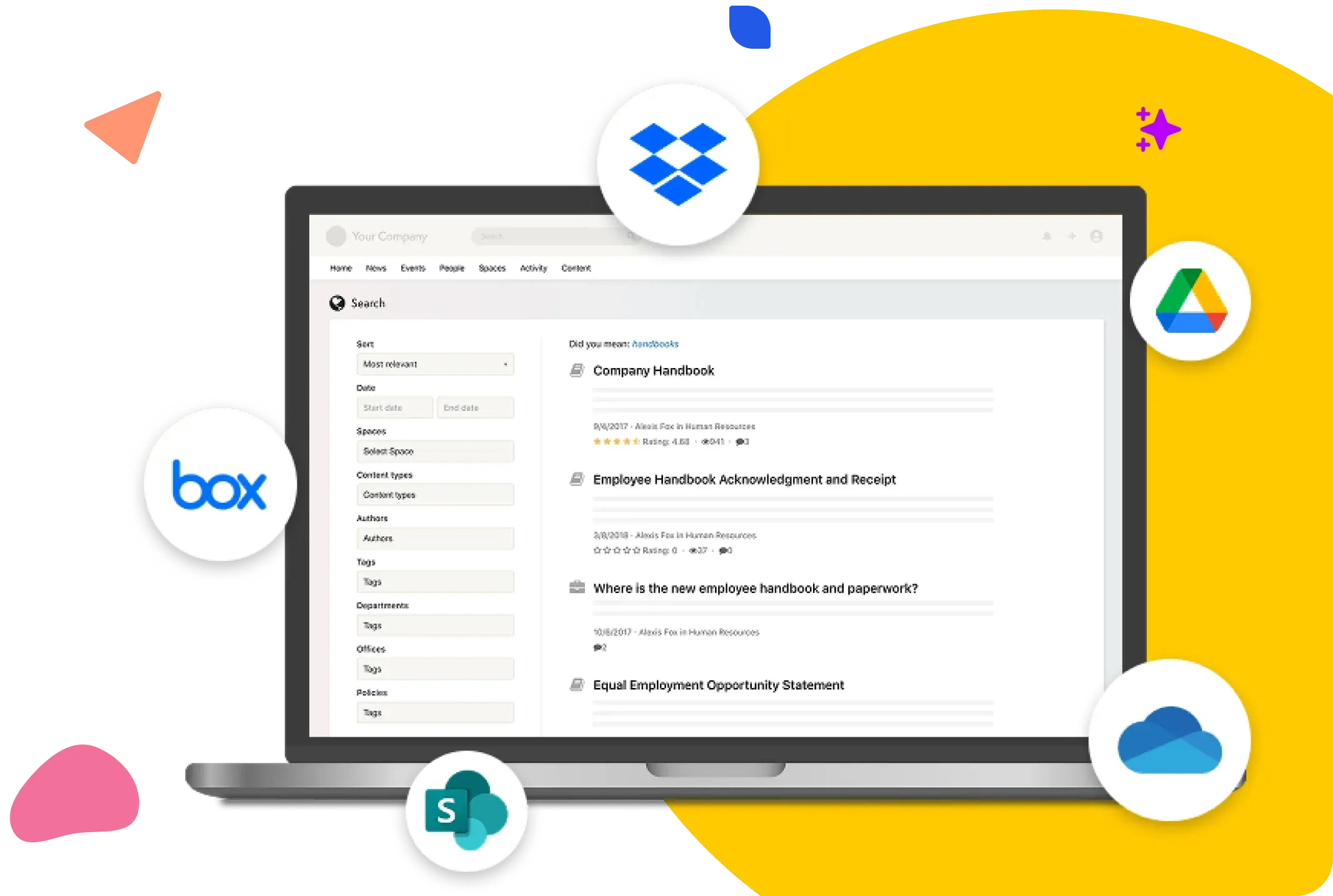
Search is indexed across every profile and field, so a query for a skill, certification, language, or location returns people, not dead ends. For IT, it's the same search infrastructure that powers the rest of the intranet. For everyone else, it's the fastest way to find who to ask.
“Axero allows us to get to know one another. It helps with our culture and community. We have a knowledge management system in Axero. Anything you need, you can find.”

Who keeps it running
Neither team waits on the other to keep the directory right.
Connect the directory to the identity systems you already manage, and keep ownership of access and structure.
Keep profiles, fields, and the org structure accurate from a non-technical admin — no developer required.
Some organizations adopt Axero first as a company people directory and grow into the rest of the intranet over time. It's deep enough to stand on its own — and it's already wired into the communication, knowledge, and collaboration tools your teams will reach for next. See where it fits in the broader HR intranet.
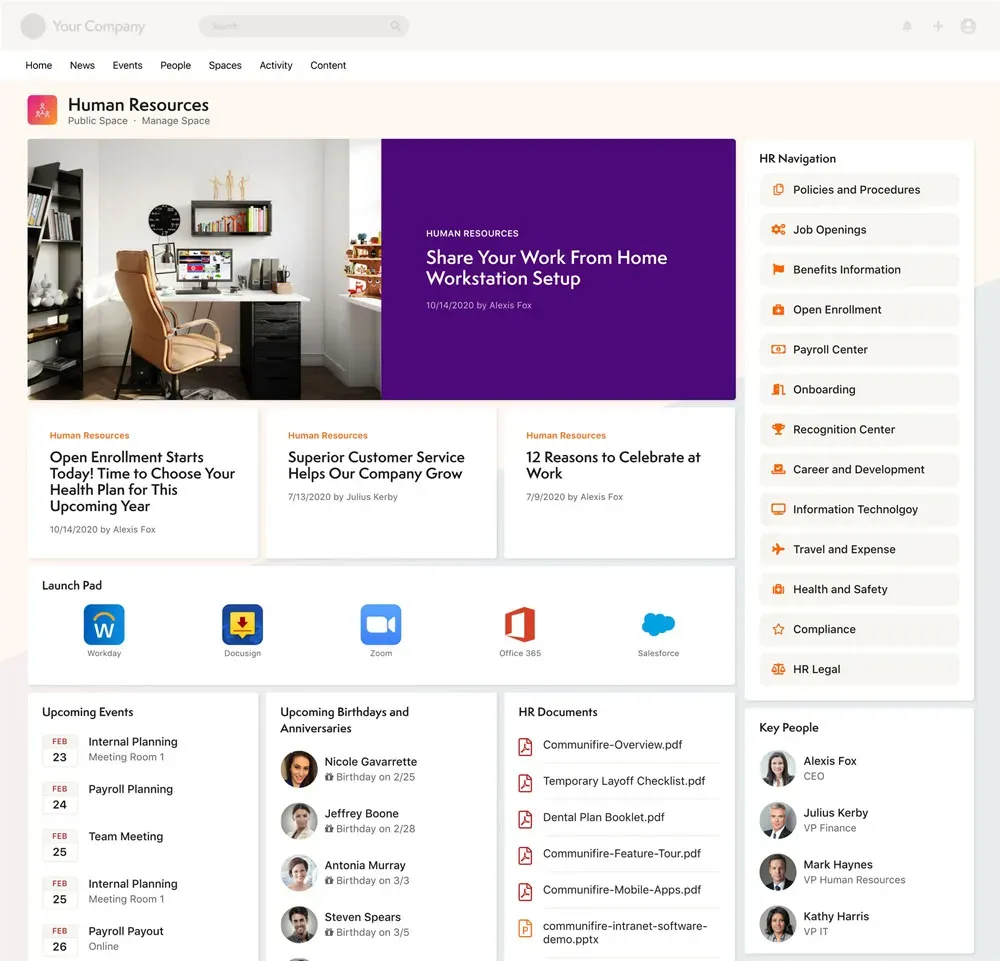
How HR teams run onboarding, the employee handbook, and people data on one intranet — with the directory at its center.
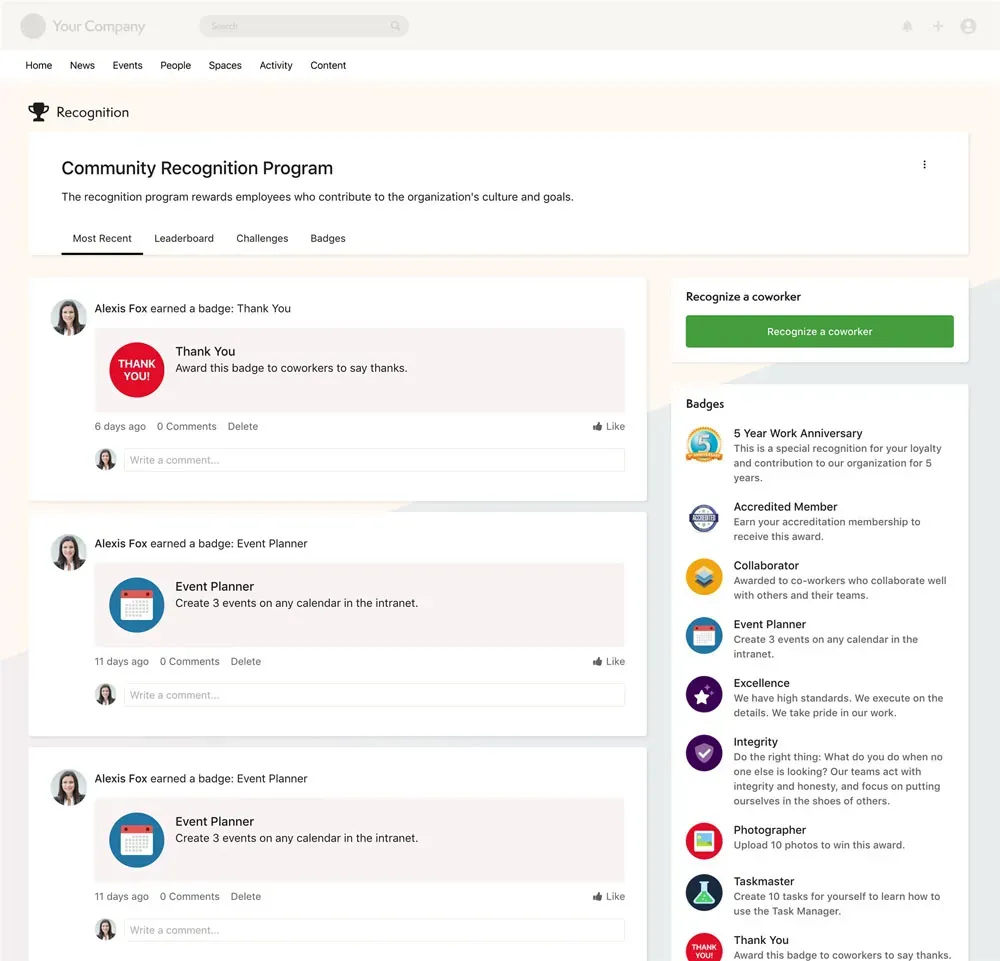
Recognition, profiles, and the social layer that turn a directory of names into a connected workplace.
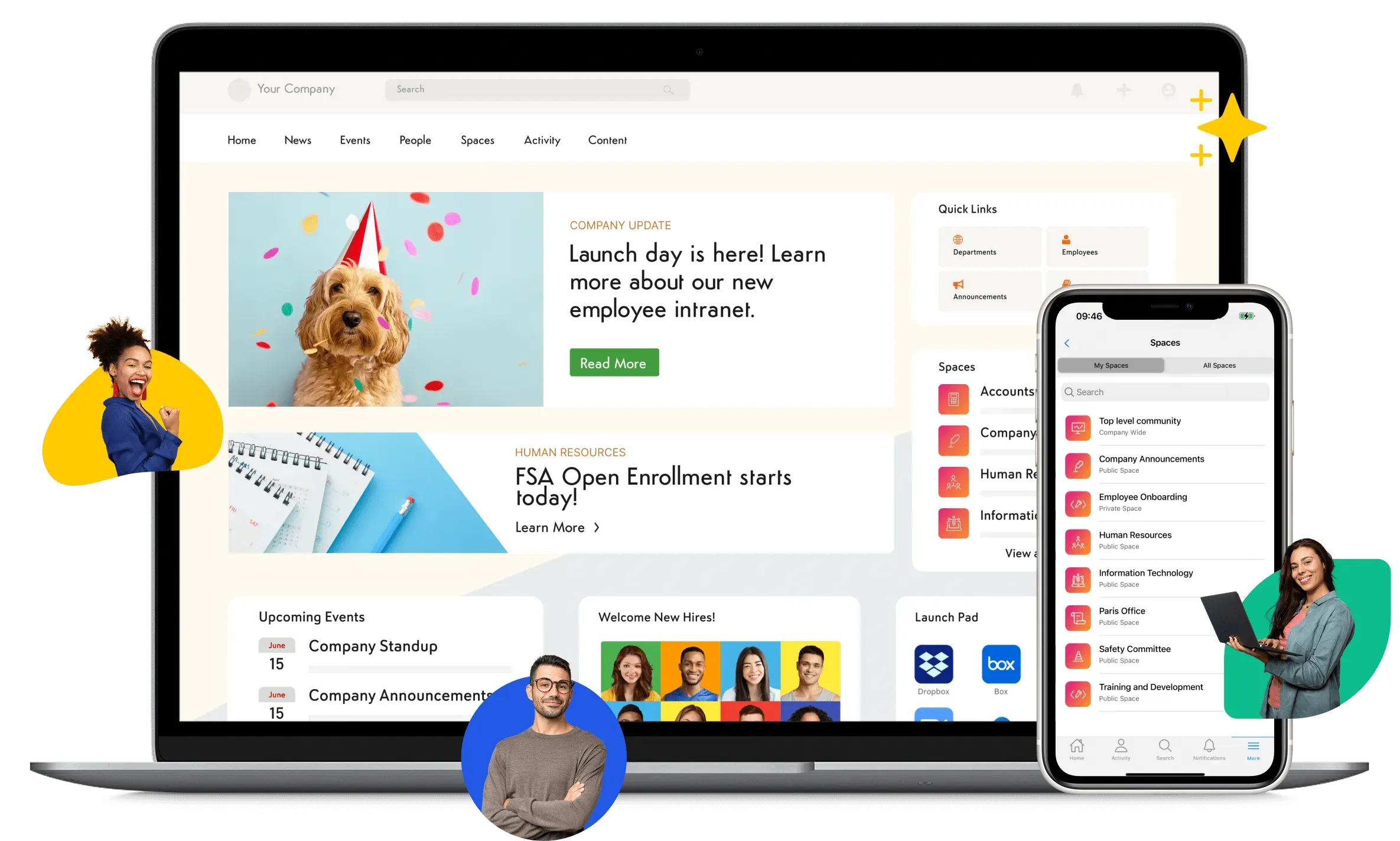
See how the directory, org chart, and profiles fit alongside everything else in the Axero platform.