Enterprise content governance has become a foundational requirement for organizations managing large volumes of internal information. Policies, procedures, training materials, knowledge articles, and internal communications all need structure, oversight, and accountability. Without proper governance, content quickly becomes outdated, duplicated, or inaccessible, creating risk for compliance, productivity, and trust.
As organizations scale, so do the number of contributors, reviewers, and audiences. Content ownership becomes unclear. Approval processes break down. Employees struggle to find the right information, or worse, act on the wrong version. This is why enterprise content governance tools play such a critical role. They give organizations the controls needed to manage content lifecycles while still enabling collaboration.
The best governance tools strike a balance. They provide structure without slowing teams down. They enforce permissions, workflows, and standards while remaining usable for everyday contributors. Most importantly, they ensure that employees always have access to accurate, approved, and relevant information.
In this article, we explore leading enterprise content governance tools, what they do, and how to choose the right platform for your organization, with a focus on internal governance, usability, and long-term adoption.
Two types of content governance
Not every tool labeled “content governance” solves the same problem. Before comparing platforms, it helps to separate two categories that often get grouped together.
Enterprise content and data governance platforms. Tools like Collibra, Microsoft Purview, OpenText, Alfresco, and Hyland Nuxeo govern content and data across an organization’s entire estate. They handle records management, retention schedules, legal holds, metadata governance, and regulatory compliance. These platforms are usually owned by IT, compliance, or dedicated data-governance teams, and they exist to satisfy regulated, cross-system requirements. Even within this group the jobs differ: Collibra and Microsoft Purview lean toward data and information governance, while OpenText, Alfresco, Box, Egnyte, and Hyland Nuxeo focus on enterprise content and records management.
Intranet-based content governance. Tools like Axero and Confluence with add-ons govern internal knowledge, policies, and communications. The priority is employee usability and adoption: making sure the right people can create, review, and find approved content without friction. These platforms are usually owned by HR, communications, or IT and operations teams.
Both categories matter, and larger organizations often run both. A records platform keeps regulated data compliant. An intranet keeps day-to-day policies and knowledge accurate and easy to reach. The list below spans both, so match each tool to the job you actually need done.
One note on the numbering: tools are listed within their group, not ranked head-to-head across groups. A high position for a records or data-governance platform is not a claim that it substitutes for an intranet governance tool like Axero, or the other way around — they solve different problems.
Top 10 enterprise content governance tools for 2026
Enterprise content and data governance platforms:
Intranet-based content governance platforms:
At a glance: which group is each tool in?
| Tool | Group | Best for |
|---|---|---|
| Collibra | Enterprise data/content governance | Advanced data and regulatory governance |
| Microsoft Purview | Enterprise data/content governance | Microsoft 365 compliance and retention |
| OpenText Content Suite | Enterprise data/content governance | Strict regulatory records management |
| Alfresco Governance Services | Enterprise data/content governance | Configurable records and retention with compliance |
| Box Governance | Enterprise data/content governance | File-level governance for Box users |
| Egnyte Governance | Enterprise data/content governance | File governance and risk across distributed teams |
| Hyland Nuxeo Platform | Enterprise data/content governance | Complex content models and lifecycle automation |
| Axero | Intranet-based content governance | Governing internal knowledge, policies, and communications with strong employee adoption |
| Microsoft SharePoint | Intranet-based content governance | Microsoft 365 organizations willing to invest in governance planning (typically paired with Purview) |
| Confluence + add-ons | Intranet-based content governance | Governing Confluence knowledge with added tooling |
What are enterprise content governance tools?
Enterprise content governance tools are platforms designed to control how organizational content is created, reviewed, published, accessed, maintained, and retired. They help organizations apply consistent rules and processes across content while ensuring compliance, security, and accuracy.
These tools typically manage internal content such as policies, procedures, HR documentation, knowledge bases, and corporate communications. Governance capabilities include role-based permissions, approval workflows, version control, audit trails, and retention rules.
Unlike basic document storage systems, governance tools focus on accountability. They define who can create content, who must approve it, how often it should be reviewed, and who can access it. This reduces risk, supports regulatory requirements, and improves operational clarity.
Modern governance platforms also support integration with existing systems. This allows organizations to govern content without forcing employees to change how they work. The most effective tools make governance part of daily workflows rather than an afterthought.
What to consider when choosing enterprise content governance tools
Selecting the right governance platform requires understanding both organizational risk and day-to-day realities.
Governance and approval workflows
Strong governance starts with clear workflows. Look for tools that support structured review, approvals, and scheduled content reviews without creating bottlenecks.
Role-based access and permissions
Not all content is for everyone. Granular permissions ensure sensitive information remains protected while still accessible to the right audiences.
Version control and auditability
Governed content must be traceable. Version history, audit logs, and change tracking support compliance and accountability.
Centralization and discoverability
Governance only works when content is easy to find. Centralized repositories with strong search reduce reliance on shadow systems.
Ease of use and adoption
Overly complex systems fail adoption tests. Governance tools must be intuitive enough for non-technical contributors.
Integration with existing systems
The right platform fits into your ecosystem. Integration reduces duplication and manual processes.
7 enterprise content and data governance platforms
1. Collibra
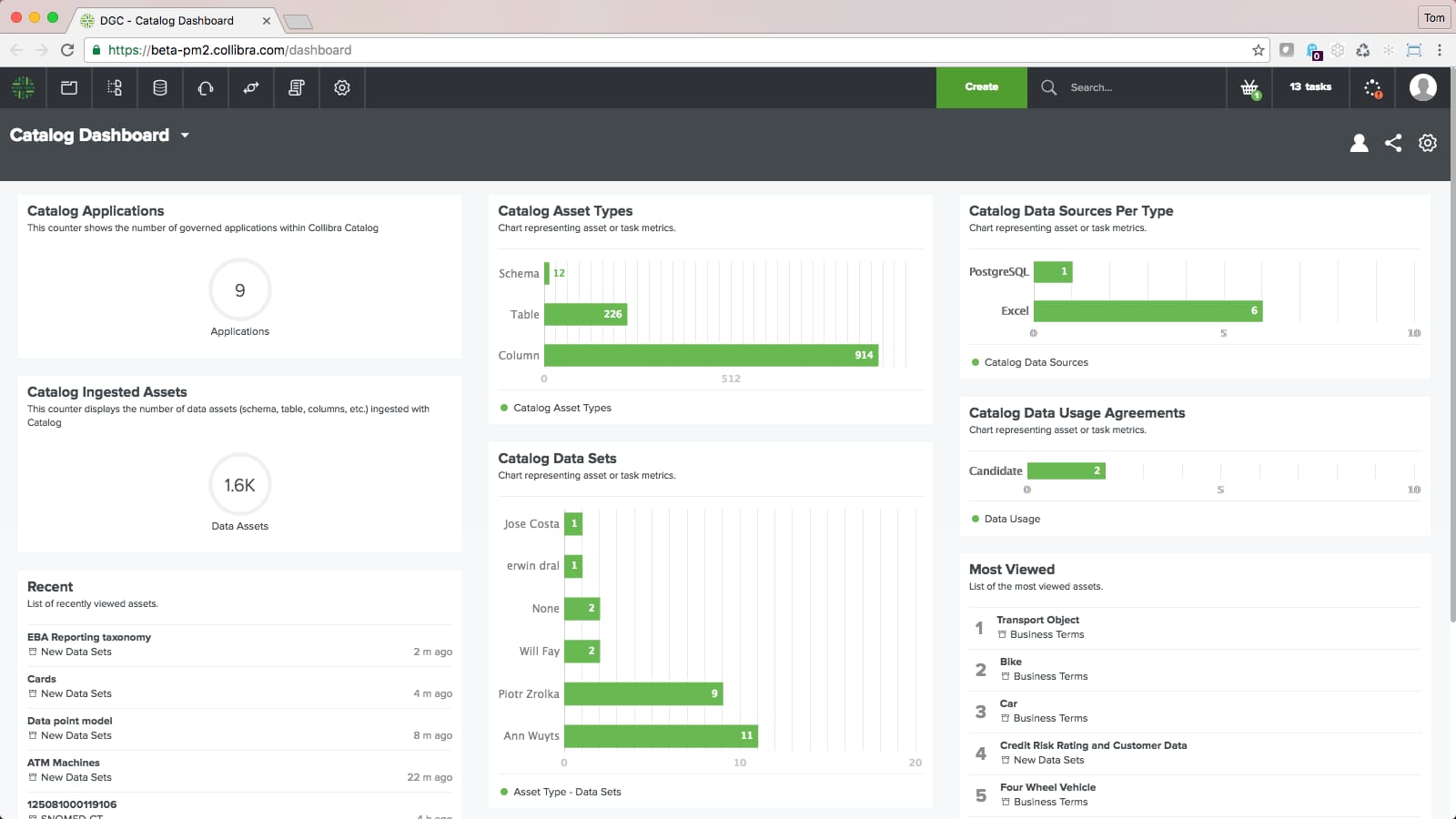
Collibra is a data intelligence and governance platform that focuses heavily on metadata, classification, and policy management. It is widely used in organizations with complex regulatory and data governance requirements.
The platform provides structured workflows for defining ownership, approving changes, and maintaining consistency across content and data assets. Collibra excels in environments where governance must be formalized and auditable.
While powerful, Collibra is primarily oriented toward data governance rather than everyday document collaboration. It is often used alongside other content systems rather than as a primary employee-facing platform.
Key features of Collibra
-
Metadata-driven governance: Supports classification, lineage, and ownership.
-
Policy and workflow management: Enforces structured governance processes.
-
Enterprise reporting: Provides visibility into governance compliance.
Best for: Enterprises with advanced data and regulatory governance needs.
2. Microsoft Purview
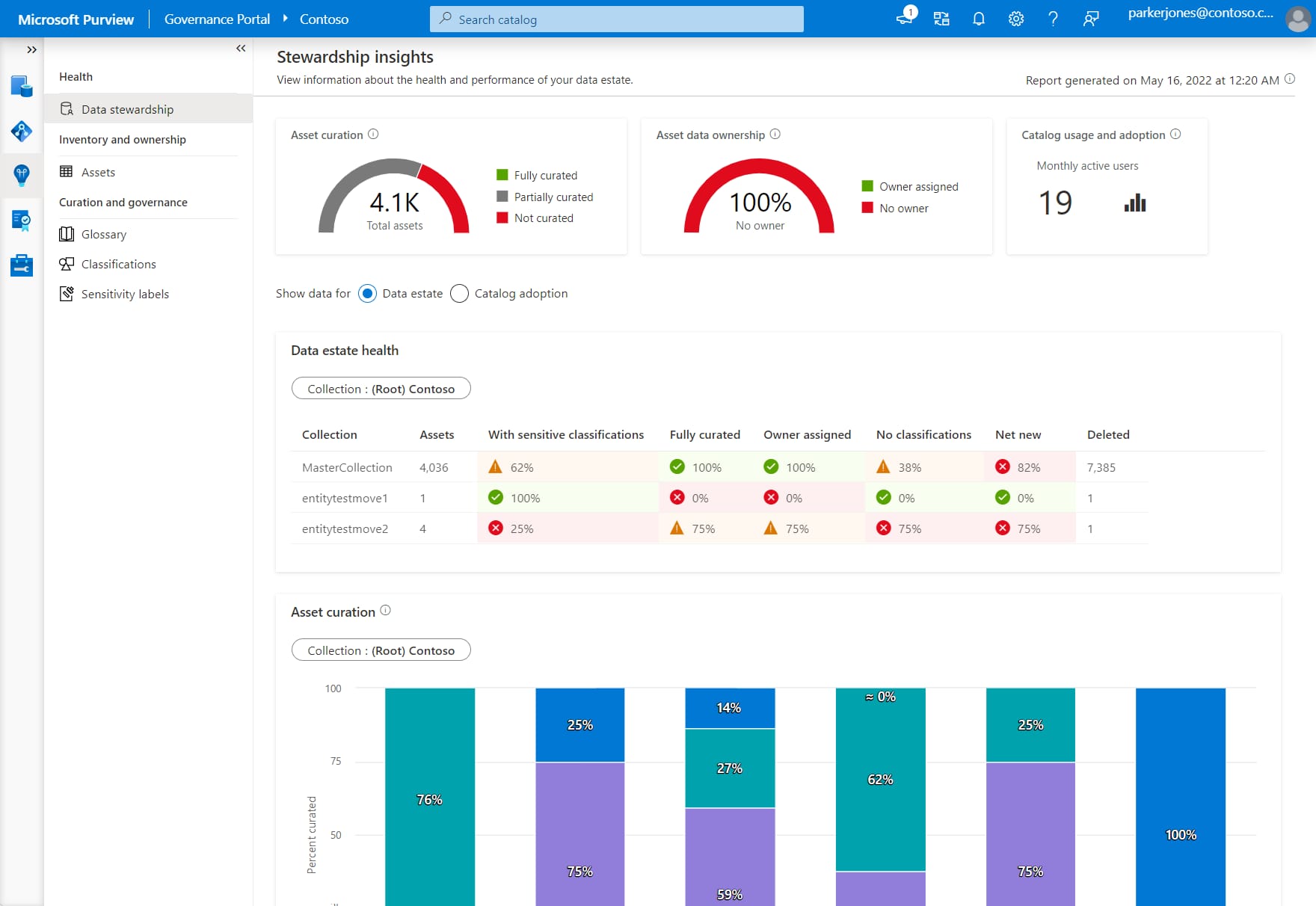
Microsoft Purview is a governance solution designed to manage data and content across the Microsoft ecosystem. It supports information protection, retention, and compliance across tools like Microsoft 365.
Purview enables organizations to define sensitivity labels, retention policies, and access controls at scale. These capabilities help ensure content is handled consistently across SharePoint, Teams, and other Microsoft services.
For enterprises already invested in Microsoft 365, Purview provides deep, native governance. However, configuration and ongoing management can be complex, especially for organizations without dedicated compliance teams.
Key features of Microsoft Purview
-
Information protection: Applies sensitivity labels and policies across content.
-
Retention and compliance: Manages content lifecycle and regulatory requirements.
-
Microsoft ecosystem integration: Governs content within Microsoft tools.
Best for: Enterprises using Microsoft 365 that require centralized compliance and retention controls.
3. OpenText Content Suite
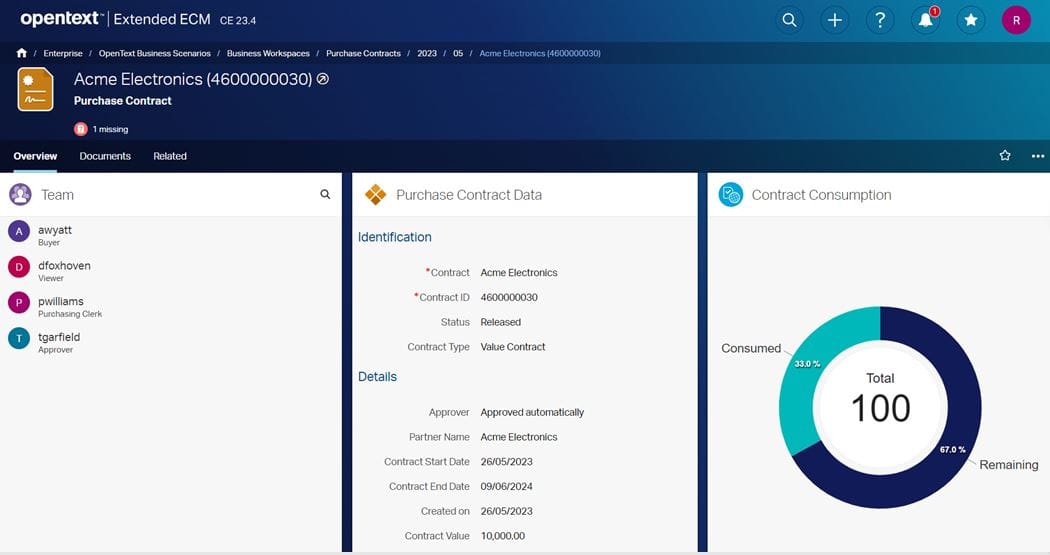
OpenText Content Suite is an enterprise-grade content management and governance platform designed for large organizations with complex regulatory and compliance requirements. It provides deep control over how content is created, stored, classified, and retained across the organization.
The platform supports records management, retention schedules, audit trails, and role-based access controls. These capabilities make it well suited for industries where governance must be formalized and consistently enforced, such as finance, healthcare, and government.
OpenText Content Suite offers extensive configurability, but that flexibility often comes with increased implementation and administrative effort. For many organizations, it functions as a backend governance system rather than an everyday collaboration or knowledge-sharing platform.
Key features of OpenText Content Suite
-
Records and retention management: Enforces lifecycle rules and compliance policies.
-
Role-based security controls: Manages access to sensitive content at scale.
-
Audit and compliance reportin: Provides visibility into content usage and changes.
Best for: Enterprises with strict regulatory requirements and complex governance needs.
4. Alfresco Governance Services
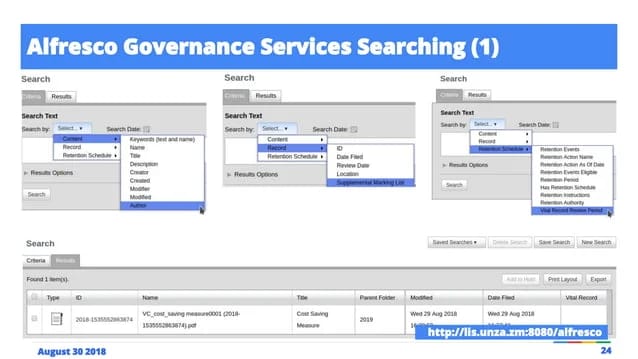
Alfresco Governance Services extends the Alfresco content platform with advanced governance, records management, and compliance capabilities. It is designed to help organizations manage content lifecycle requirements without separating governance from content access.
The platform supports file plans, retention schedules, legal holds, and audit trails. Governance rules can be applied automatically based on metadata and content type, reducing manual effort while maintaining consistency.
Alfresco’s open architecture makes it appealing to organizations that want flexibility and customization. However, effective governance often depends on careful configuration and ongoing administration, which can require technical expertise.
Key features of Alfresco Governance Services
-
Automated records management: Applies retention and disposition rules based on metadata.
-
Compliance and audit trails: Tracks content changes and governance actions.
-
Open and extensible platform: Supports customization and integrations.
Best for: Enterprises that want flexible, configurable content governance with strong compliance support.
5. Box Governance
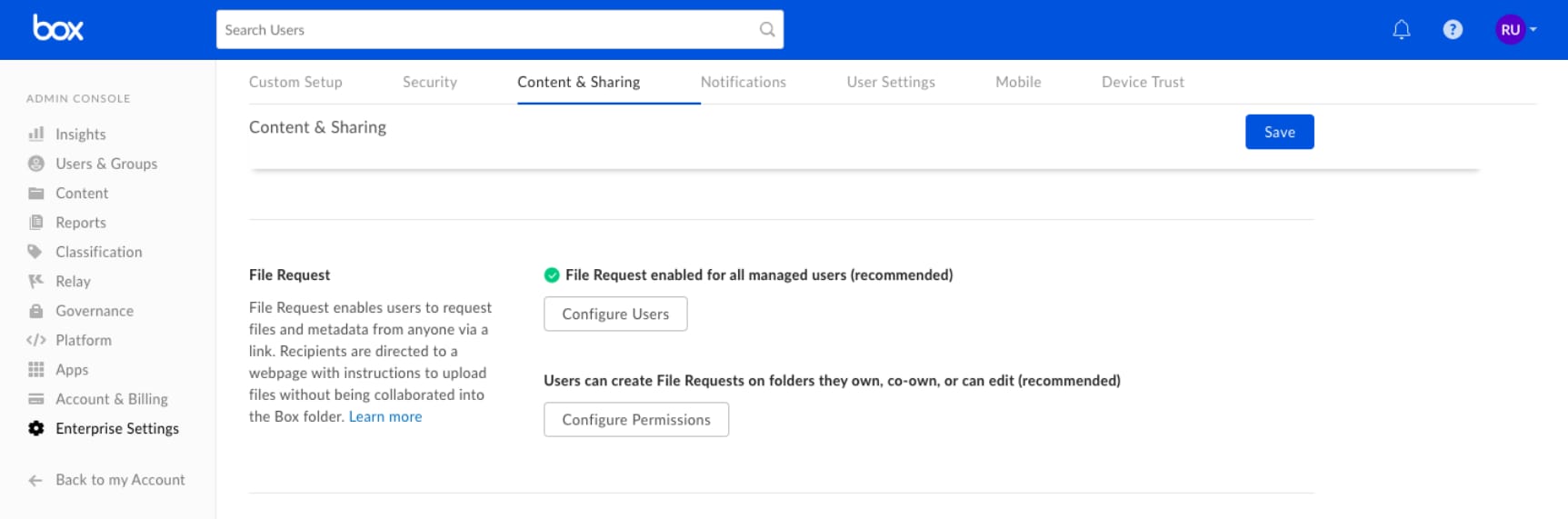
Box Governance adds enterprise content governance capabilities to the Box cloud content platform. It is designed to help organizations apply retention, disposition, and legal hold policies across files stored in Box.
The platform enables administrators to define governance rules that automatically apply to content based on type, ownership, or location. This approach supports compliance without requiring users to change how they store or collaborate on files.
Box Governance works best for organizations that already rely heavily on Box for content collaboration. While it provides strong lifecycle controls, it focuses on file governance rather than broader knowledge management or intranet use cases.
Key features of Box Governancem
-
Retention and disposition policies: Manages content lifecycle automatically.
-
Legal hold capabilities: Supports investigations and compliance requirements.
-
Cloud-native governance: Applies controls without disrupting collaboration.
Best for: Enterprises using Box that need file-level governance and compliance controls.
6. Egnyte Governance
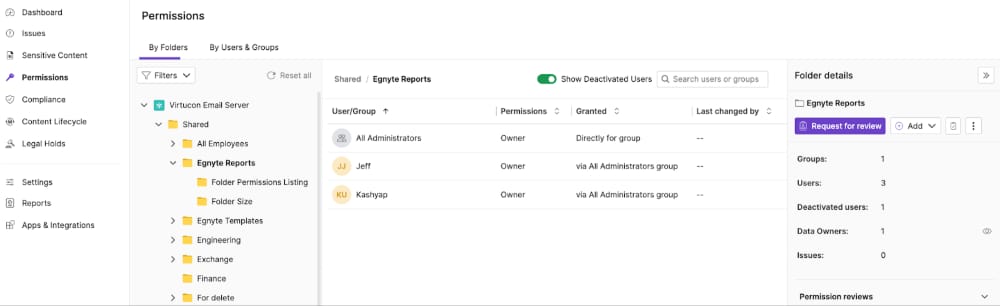
Egnyte Governance extends Egnyte’s content platform with controls designed to manage risk, compliance, and content sprawl. It focuses on visibility and policy enforcement across files stored in the cloud and on-premises.
The platform provides insight into where sensitive content lives, who has access to it, and how it is being used. Governance policies help organizations control sharing, apply retention rules, and reduce exposure from over-permissioned content.
Egnyte Governance is particularly useful for organizations that manage large volumes of files across distributed teams. It excels at securing and governing files, though it is less focused on structured knowledge management or employee-facing content experiences.
Key features of Egnyte Governance
-
Content visibility and risk insights: Identifies sensitive and overexposed files.
-
Access and sharing controls: Helps enforce least-privilege access policies.
-
Retention and compliance tools: Supports regulatory and internal governance needs.
Best for: Enterprises that need strong file governance and risk management across distributed environments.
7. Hyland Nuxeo Platform
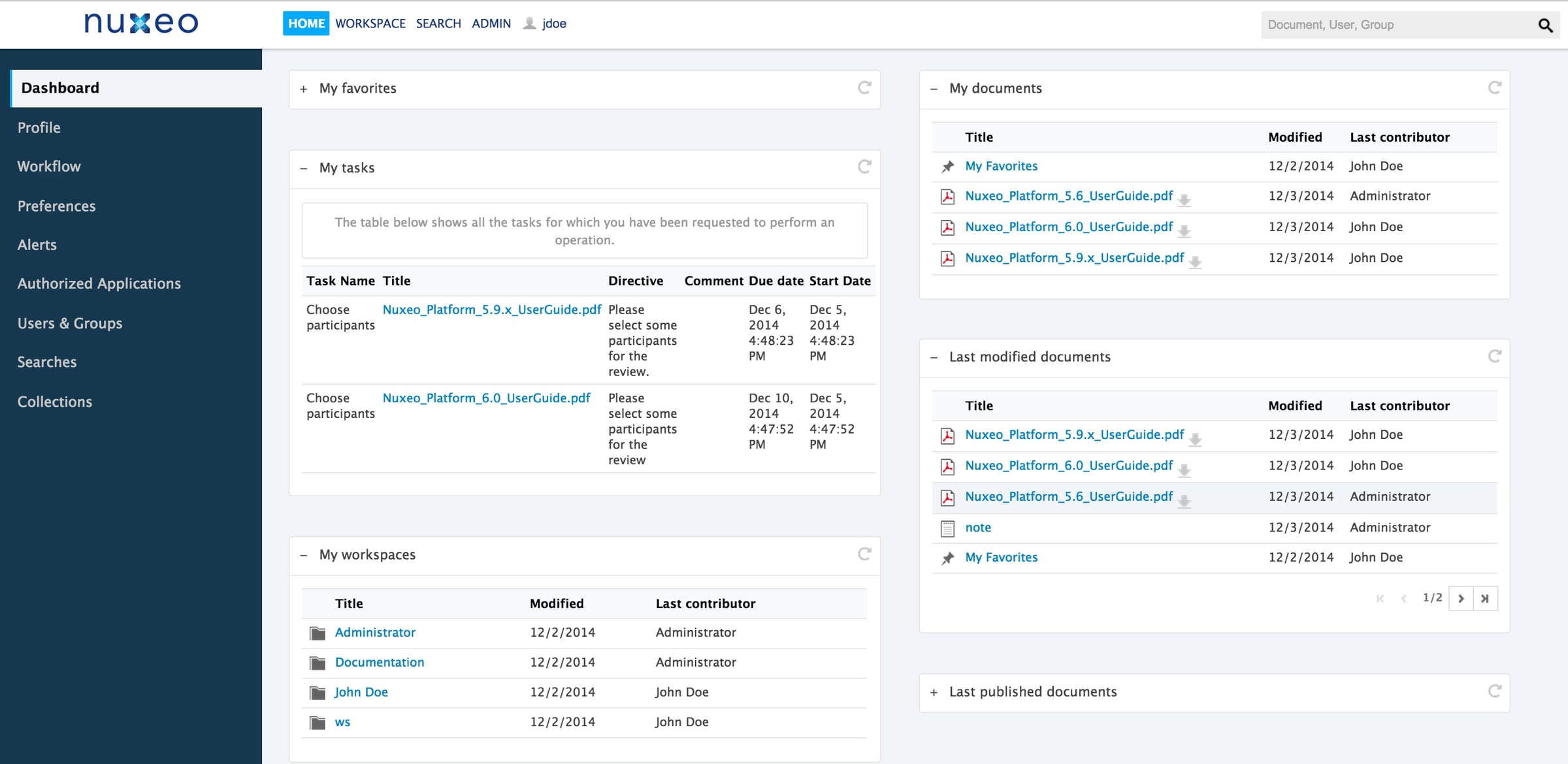
Hyland Nuxeo Platform is a content services and governance solution built for organizations managing complex, high-volume content. It emphasizes metadata-driven governance and automation across the content lifecycle.
The platform allows organizations to define detailed content models, apply governance rules through automation, and integrate with downstream systems. This makes it suitable for industries with specialized content types and compliance requirements.
Nuxeo’s flexibility is a strength, but it often requires significant configuration and technical resources. It is typically used as a backend content and governance layer rather than a primary collaboration or intranet platform.
Key features of Hyland Nuxeo Platform
-
Metadata-driven governance: Applies rules based on rich content models.
-
Lifecycle automation: Supports retention, transitions, and compliance workflows.
-
API-first architecture: Enables deep integration with enterprise systems.
Best for: Enterprises with complex content models and advanced governance requirements.
3 intranet-based content governance platforms
1. Axero
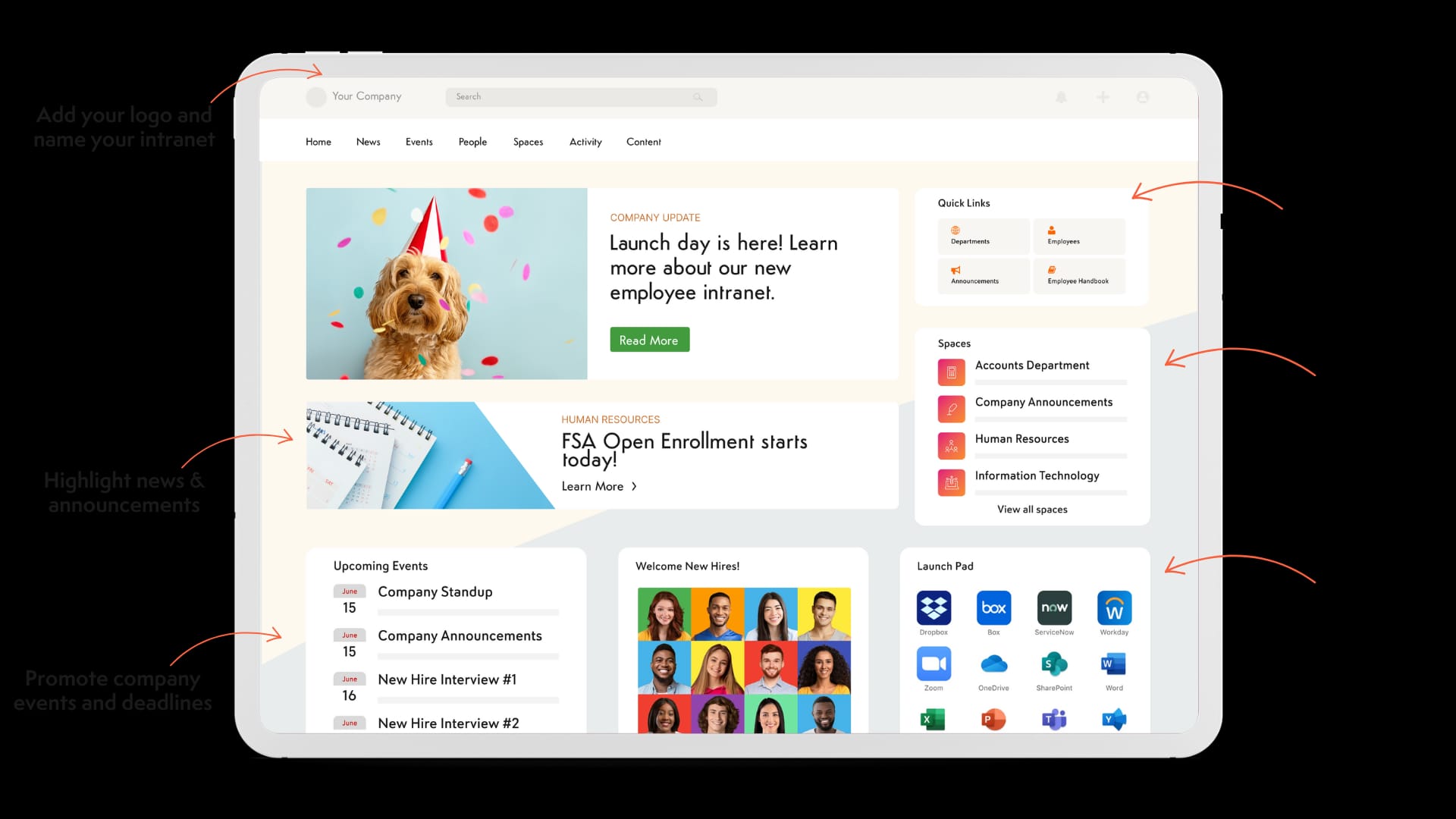
Category: Intranet-based content governance. Best for internal knowledge and policy governance, not enterprise records management or cross-system data governance.
Axero is an enterprise intranet platform built to govern internal content: policies, procedures, knowledge articles, and internal communications. It gives teams a structured way to manage that content with clear ownership and accountability, then puts it in front of employees through a single, trusted hub.
Where records-management platforms focus on retention and compliance across an entire data estate, Axero focuses on the internal content employees actually read and act on. HR, legal, and communications teams can define approval workflows, set role-based permissions, and keep version history and audit trails, while contributors publish without wrestling with a complex admin console.
Governance in Axero fits into everyday work. Content reviews, approvals, and updates happen inside the same tools people use to publish and collaborate, which is what drives adoption and keeps content current.
Key features of Axero
-
Role-based permissions: Control who can create, review, publish, and view content.
-
Approval workflows: Standardize content reviews and policy sign-offs.
-
Version history and audit trails: Track changes and maintain accountability.
-
Centralized knowledge hub: Give employees one place to find approved, current content.
-
Adoption-friendly editing: Intuitive enough for non-technical contributors, which keeps content maintained.
Best for: Governing internal knowledge, policies, and communications with strong employee adoption (intranet-based content governance, not enterprise records management).
2. Microsoft SharePoint
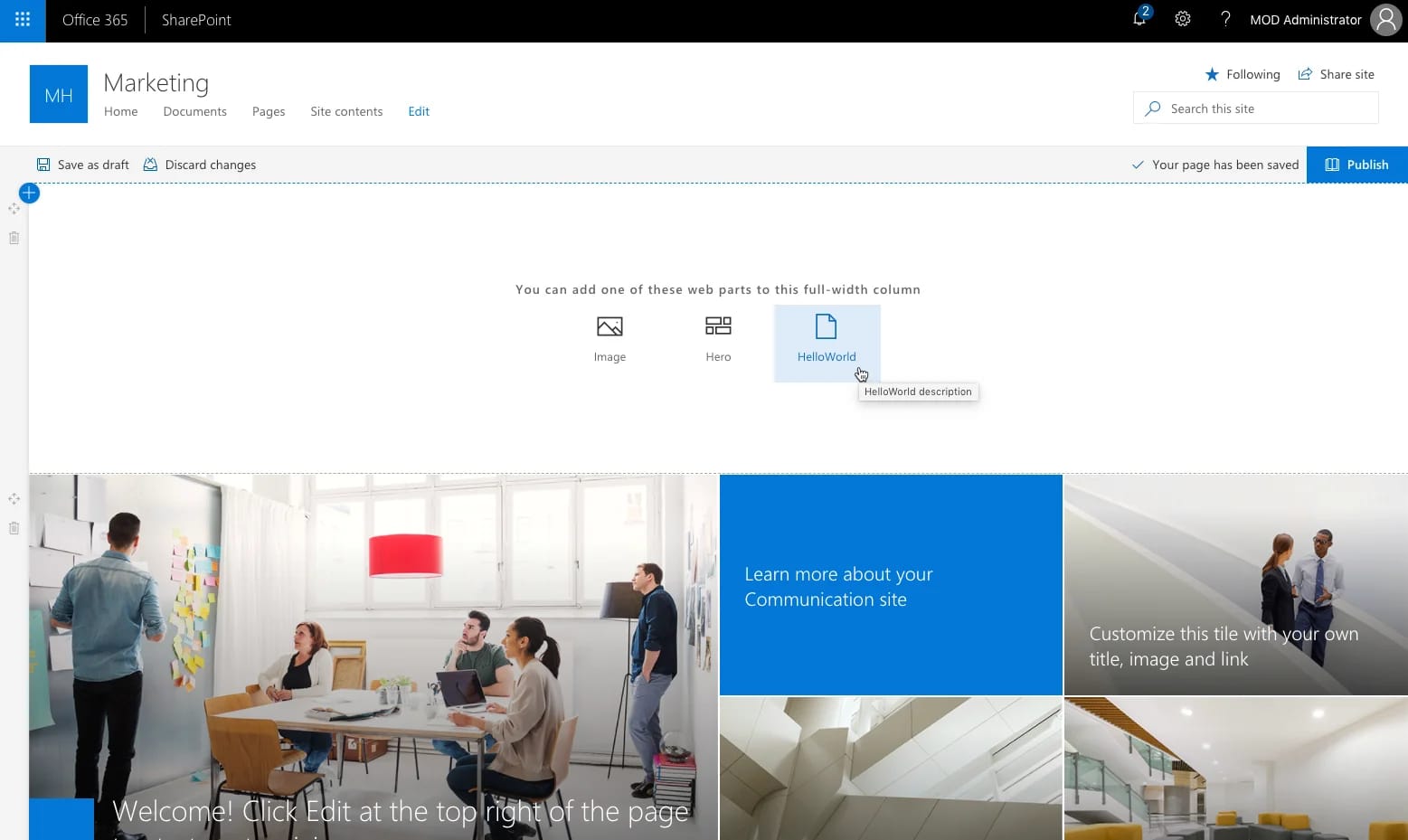
SharePoint is the default intranet and document layer for most Microsoft 365 organizations, and by volume it’s likely the most common place internal content ends up. It supports permissions, versioning, and basic workflow through Power Automate, and can enforce structured governance when paired with Microsoft Purview for retention, legal holds, and sensitivity labeling.
On its own, however, SharePoint’s governance is largely what an organization builds and maintains itself. Site sprawl, inherited permissions nobody revisits, and content ownership gaps are common without a dedicated governance plan and ongoing administration — which is why many organizations pair it with Purview, or look at a platform like Axero, which builds governance and adoption into the intranet layer itself.
Key features of SharePoint
-
Permissions via Microsoft 365/Entra ID: Role- and group-based access control across sites and libraries.
-
Version history: Tracks document changes and allows rollback.
-
Workflow via Power Automate: Custom approval and review flows, built rather than built-in.
-
Deep governance with Purview: Retention, legal holds, and sensitivity labels when paired with Purview.
Best for: Organizations already standardized on Microsoft 365 that are willing to invest in governance planning and (typically) a Purview pairing for compliance-grade controls.
3. Atlassian Confluence with governance add-ons
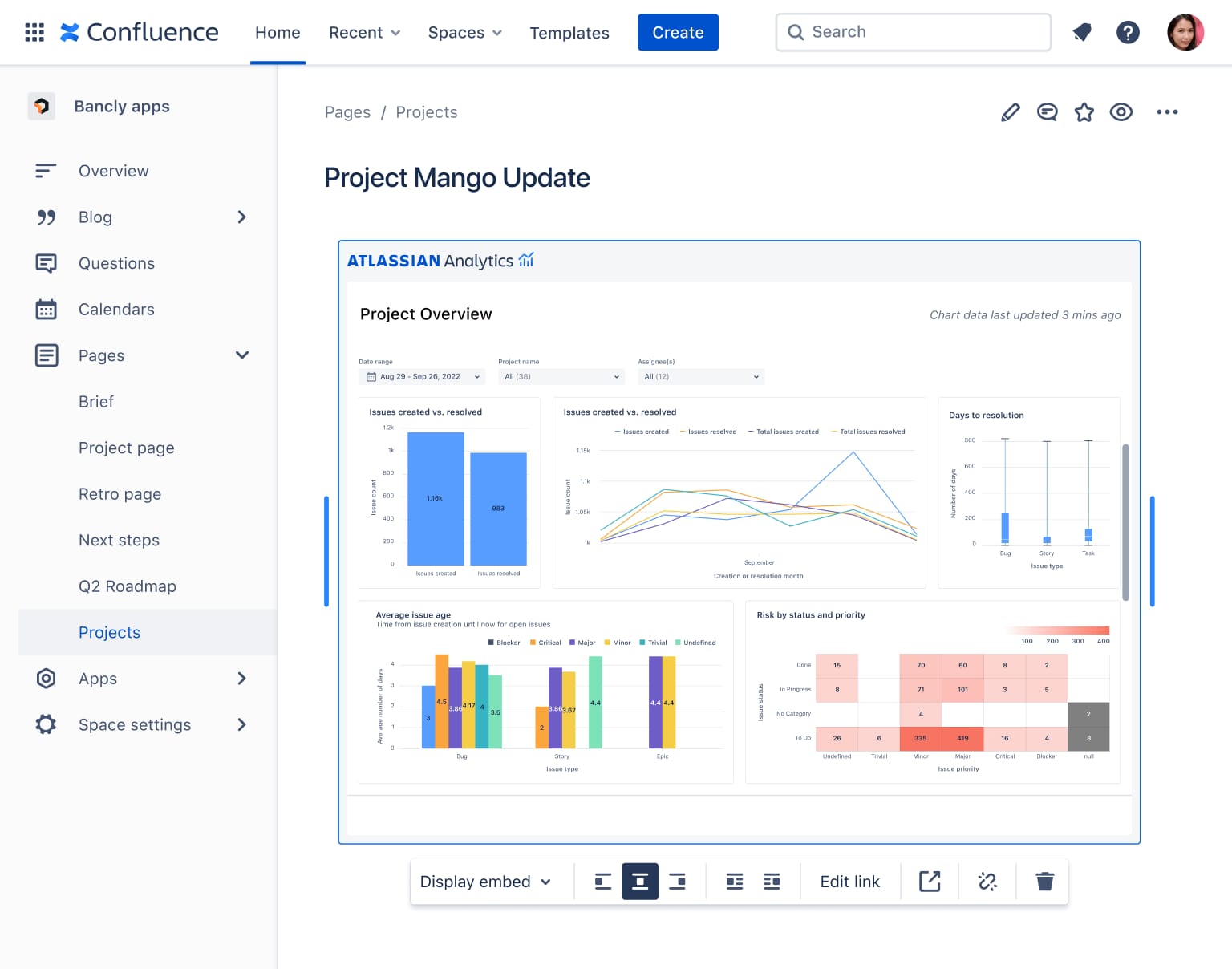
Confluence becomes a content governance solution when paired with governance-focused add-ons and strict administrative practices. Organizations often layer permissions management, workflow tools, and analytics extensions on top of Confluence to improve control.
With add-ons, teams can introduce approval workflows, page ownership tracking, and content reviews. These enhancements help mitigate common governance challenges such as content sprawl and outdated documentation.
However, governance in Confluence relies heavily on configuration discipline and ongoing maintenance. As content scales, managing consistency and discoverability can become resource-intensive without a centralized governance model.
Key features of Confluence with governance add-ons
-
Extensible governance controls: Adds approvals, reviews, and ownership tracking.
-
Collaborative documentation: Supports team-driven content creation.
-
Ecosystem flexibility: Leverages a wide marketplace of add-ons.
Best for: Enterprises already using Confluence that are willing to invest in governance tooling and processes.
Choosing the right enterprise content governance platform
The right platform depends on which governance problem you are solving. If your priority is regulated, cross-system compliance, such as records retention, legal holds, and data governance across your full estate, an enterprise data and content governance platform like Collibra, Microsoft Purview, OpenText, Alfresco, or Nuxeo is built for that work. These systems typically sit with IT, compliance, or dedicated data-governance teams.
If your priority is governing internal knowledge, policies, and communications so employees can trust and find the information they use every day, an intranet-based platform is the better fit. Axero is built for that job. It combines role-based permissions, approval workflows, and version history with the usability that drives real adoption across HR, communications, and operations teams.
Many larger organizations run both, using a records platform for regulated data and an intranet like Axero for the internal content employees actually work with. Whichever you evaluate, focus on how the platform supports real workflows, not just compliance checklists.
Ready to see how governed internal content can still be easy to manage and easy to use? Book a demo with Axero today.