
Every organization needs a reliable way to share updates, align teams, and keep employees informed. Yet many workplaces still rely on email chains, chat messages, or fragmented tools that fail to reach everyone. Important announcements get buried, employees miss updates, and leaders struggle to maintain clarity and consistency across teams.
Internal announcement software addresses this gap by giving organizations a structured, centralized way to communicate. Whether you are sharing leadership updates, policy changes, operational notices, or employee recognition, the right platform ensures your messages reach the right people at the right time. It also supports consistency, accountability, and transparency across departments and locations.
As organizations grow, communication complexity increases. Distributed teams, deskless workers, and hybrid environments demand more than one-size-fits-all messaging. Leaders need targeting, scheduling, analytics, and integration with the tools employees already use. Employees, in turn, need a single place they trust for official updates.
This is where modern internal announcement software shines. It moves announcements out of inboxes and into purpose-built digital spaces that employees actually visit. When implemented correctly, it strengthens alignment, reinforces culture, and reduces confusion. In this guide, we break down what internal announcement software is, what to look for, and which platforms stand out.
Top 11 internal announcement software for 2026
What is internal announcement software?
Internal announcement software is a digital solution designed to help organizations create, publish, and distribute official messages to employees. These announcements can include company news, leadership communications, policy updates, system changes, and time-sensitive alerts.
Unlike email or chat tools, internal announcement software provides structure and visibility. Messages live in a centralized hub where employees can easily find, reference, and engage with them. Most platforms support targeting, which means announcements can be shared with specific departments, roles, or locations rather than everyone at once.
Many solutions also include read confirmations, engagement metrics, and notifications to ensure messages are seen. This gives leaders confidence that important information reaches its intended audience. Over time, the software becomes a trusted source of truth for organizational communication.
When combined with intranet capabilities, internal announcement software supports stronger alignment, reduces reliance on fragmented tools, and helps employees stay informed without feeling overwhelmed.
What to consider when choosing the right internal announcement software
Choosing the right platform depends on how your organization communicates today and how you want it to operate moving forward. Focus on solutions that support clarity, adoption, and long-term scalability.
Targeting and segmentation
Effective announcements reach the right people, not everyone. Look for tools that allow you to target messages by department, role, location, or group. This reduces noise and increases relevance for employees.
Centralized communication hub
Announcements should live in one trusted location. A centralized hub ensures employees know where to find official updates and reduces confusion caused by scattered messages across email and chat tools.
Ease of use and adoption
If publishing announcements feels complex, usage will drop. Choose software with an intuitive interface for both communicators and employees. Simple creation, scheduling, and formatting matter.
Engagement and analytics
Visibility matters. Read receipts, reactions, comments, and analytics help you understand which messages resonate and which ones get missed. This insight supports better communication decisions over time.
Integrations with existing tools
Your announcement software should connect with tools your teams already use. Integrations with Microsoft 365, Google Workspace, HR systems, and collaboration platforms reduce friction and improve reach.
Scalability and governance
As your organization grows, your communication needs change. Look for platforms that support permissions, governance controls, and customization so you can maintain consistency without limiting flexibility.
11 best internal announcement software
1. Axero
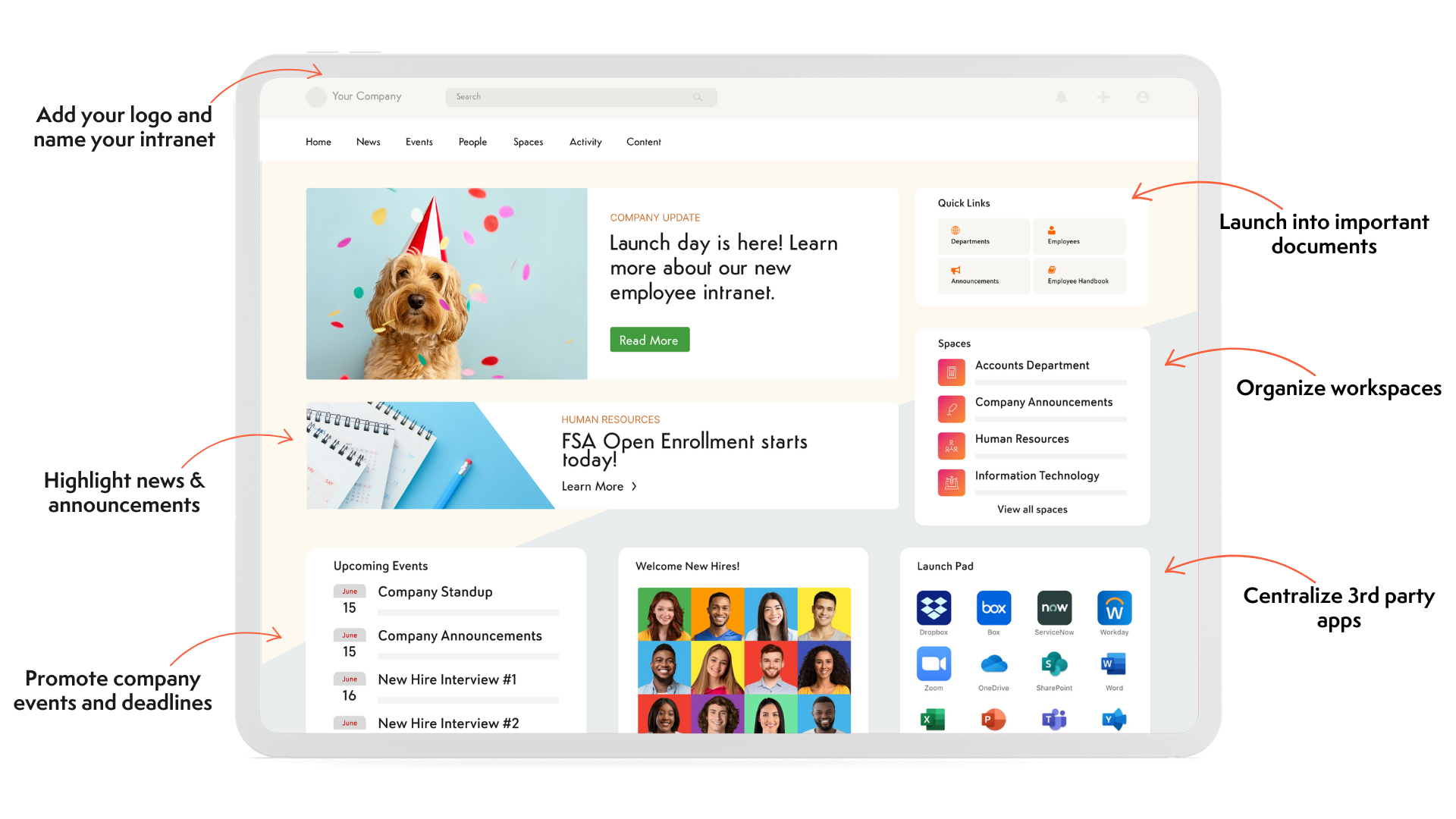
Axero is a comprehensive intranet platform designed to help organizations deliver clear, consistent internal announcements while strengthening alignment and engagement. Announcements live in a centralized, branded hub that employees quickly learn to trust as the source for official updates. Leaders and communicators can publish company-wide news, targeted department updates, or time-sensitive alerts without relying on email overload.
Axero’s announcement tools integrate directly with its broader intranet capabilities, including pages, spaces, employee directories, and knowledge management. This allows announcements to link seamlessly to deeper context, policies, or resources. Targeting ensures messages reach only relevant audiences, while notifications and alerts drive visibility across desktop and mobile experiences.
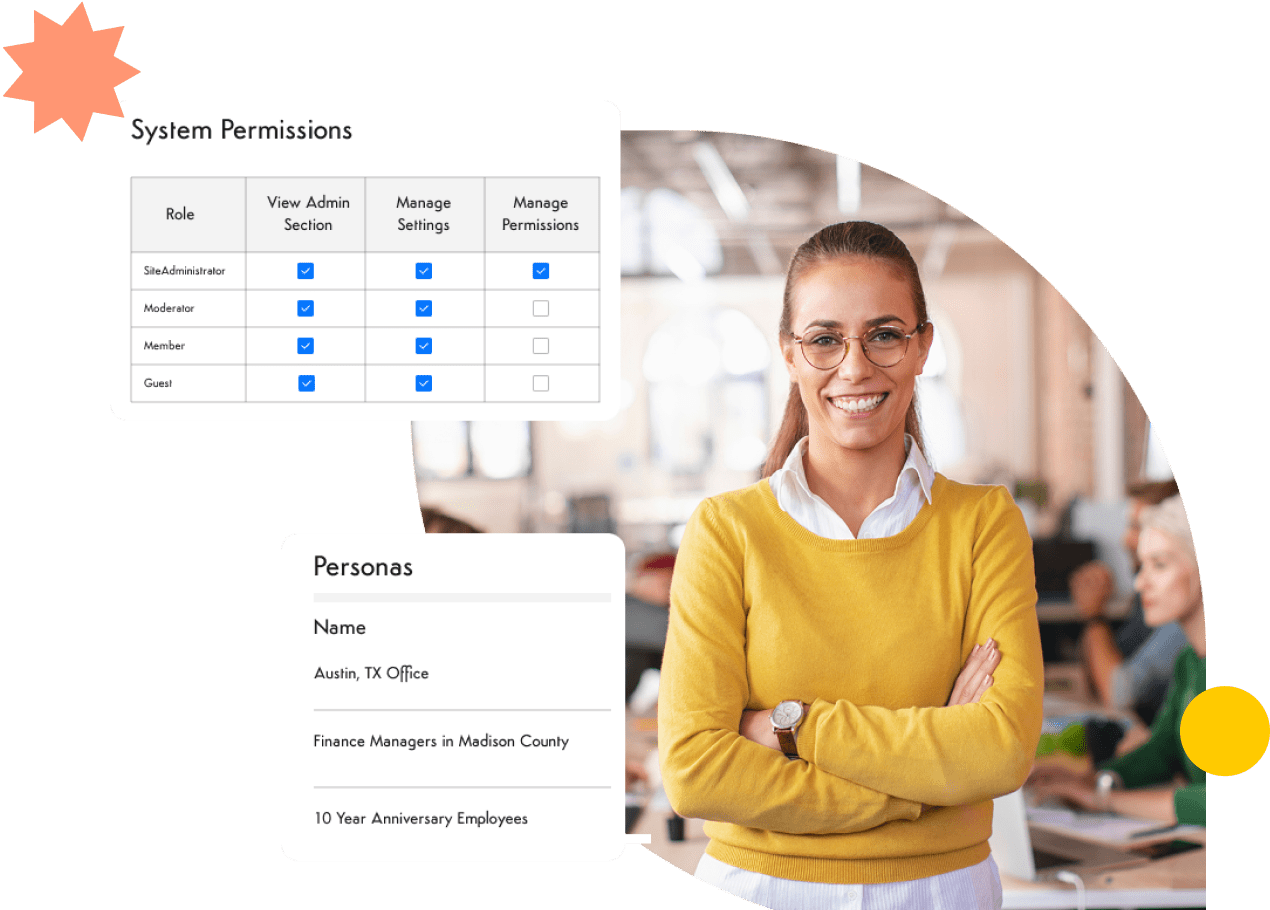
Governance and permissions make it easy to maintain consistency without slowing teams down. Analytics provide insight into reach and engagement, helping communication teams refine their approach over time. Because Axero combines announcements with collaboration and knowledge sharing, employees do not need to jump between systems to stay informed.
Key features of Axero
- Targeted announcements: Deliver updates to specific teams, locations, or roles to reduce noise and increase relevance.
- Centralized intranet hub: Keep all official communications in one trusted location employees return to daily.
- Engagement analytics: Track views and interactions to understand what messages resonate and where follow-up is needed.
Best for: Organizations that want internal announcements embedded within a full-featured intranet experience.

2. Staffbase
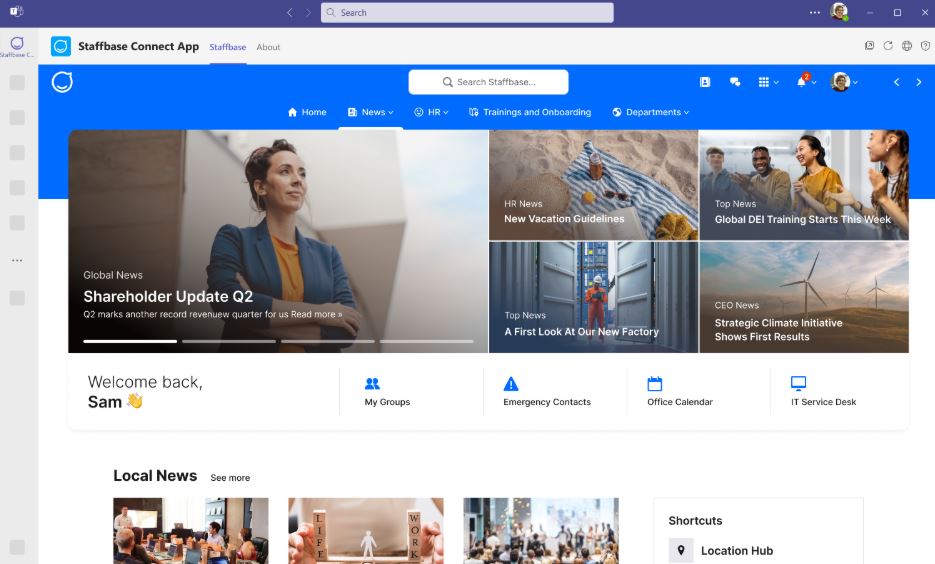
Staffbase focuses heavily on internal communications and employee announcements, particularly for large and distributed organizations. It offers strong tools for creating leadership messages, company updates, and campaign-style communications that can reach employees across locations and roles.
The platform supports multichannel delivery, including mobile notifications, email digests, and intranet-style news feeds. This makes it easier to reach frontline and deskless workers who may not sit at a computer all day. Targeting and segmentation help ensure announcements stay relevant rather than overwhelming employees.
Staffbase also includes analytics to measure reach and engagement, helping communication teams assess effectiveness. While it excels in broadcast-style communication, organizations may need additional tools for deeper collaboration and knowledge management.
Key features of Staffbase
- Multichannel delivery: Reach employees through mobile, email, and web-based announcements.
- Audience segmentation: Target messages by role, location, or group for higher relevance.
- Communication analytics: Measure open rates and engagement to refine messaging strategies.
Best for: Large enterprises prioritizing top-down communication and mobile-first announcements.
3. Simpplr
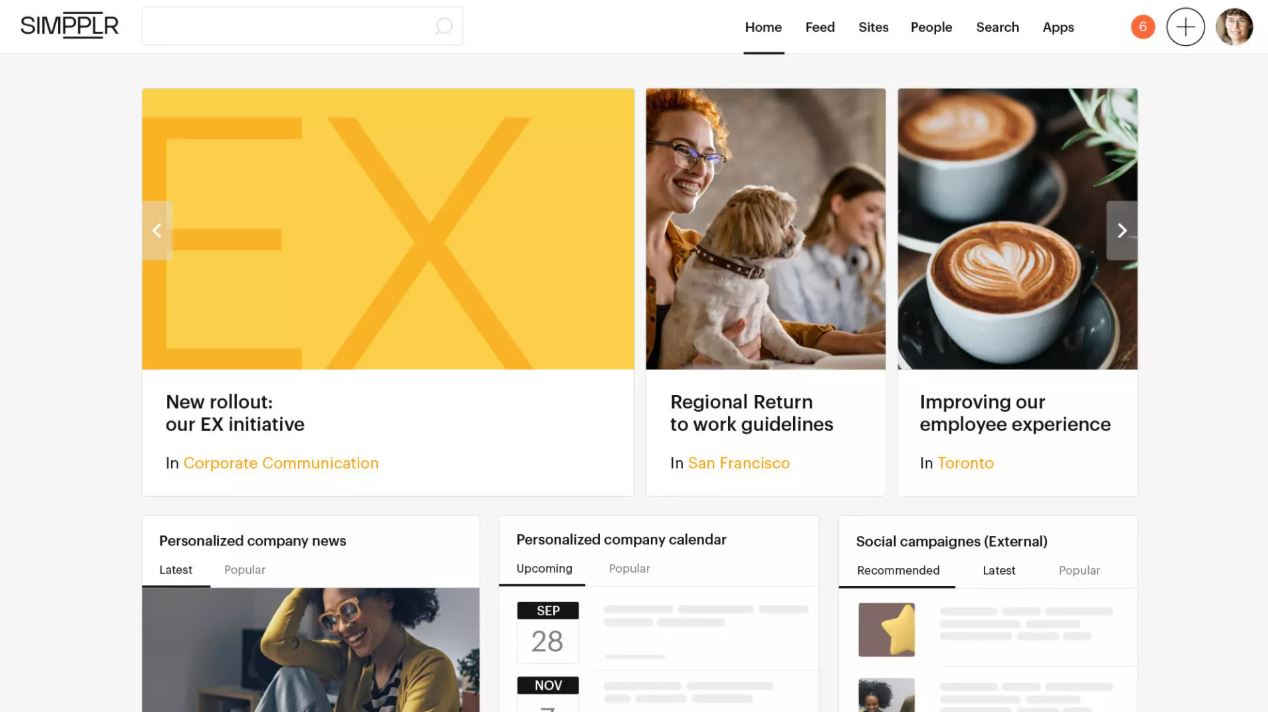
Simpplr positions itself as an employee experience platform with a strong emphasis on internal communications and announcements. Its news and announcement features are designed to surface important updates prominently within personalized employee feeds.
Announcements can be targeted, scheduled, and categorized, helping employees quickly identify what matters to them. Simpplr also integrates with collaboration tools, allowing announcements to coexist with social features, recognition, and employee-generated content.
Analytics play a central role, giving insight into reach and engagement. While Simpplr provides a polished user experience, organizations with complex governance or customization needs may find limitations compared to more configurable intranet platforms.
Key features of Simpplr
- Personalized announcement feeds: Surface relevant updates based on employee profiles and activity.
- Scheduling and categorization: Organize announcements for clarity and consistency.
- Engagement insights: Monitor views and interactions to improve communication outcomes.
Best for: Organizations focused on employee experience and streamlined internal communications.
4. LumApps
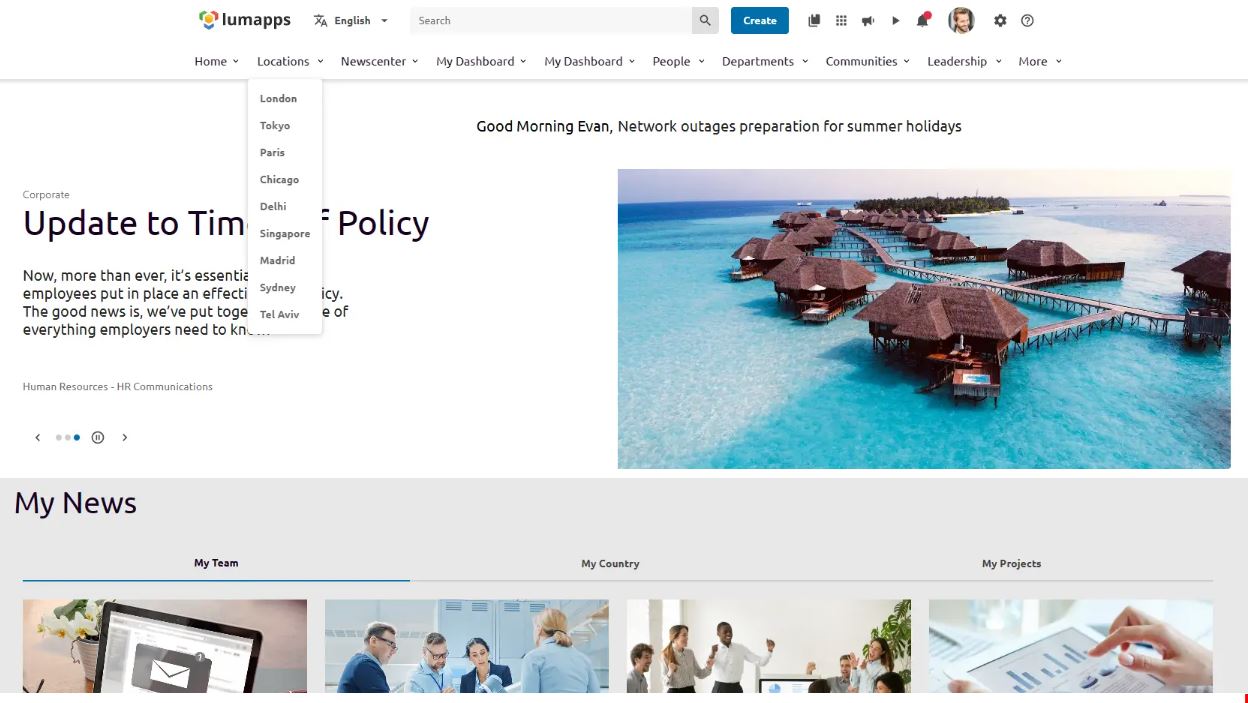
LumApps is a cloud-based intranet platform built with internal communication and announcements in mind. It integrates closely with Google Workspace and Microsoft 365, allowing organizations to align announcements with existing productivity tools.
Announcements appear within branded news feeds and can be targeted by department, region, or role. LumApps supports rich content, including images and videos, which helps leadership messages feel more engaging and visible.
The platform also offers analytics and governance controls, though customization and administration may require more setup. LumApps works well for organizations already invested in Google or Microsoft ecosystems.
Key features of LumApps
- Workspace integrations: Align announcements with Microsoft 365 or Google Workspace tools.
- Targeted news feeds: Deliver relevant updates without overwhelming employees.
- Rich media support: Enhance announcements with visuals and video messages.
Best for: Organizations using Microsoft or Google ecosystems that want integrated internal announcements.
5. Workvivo
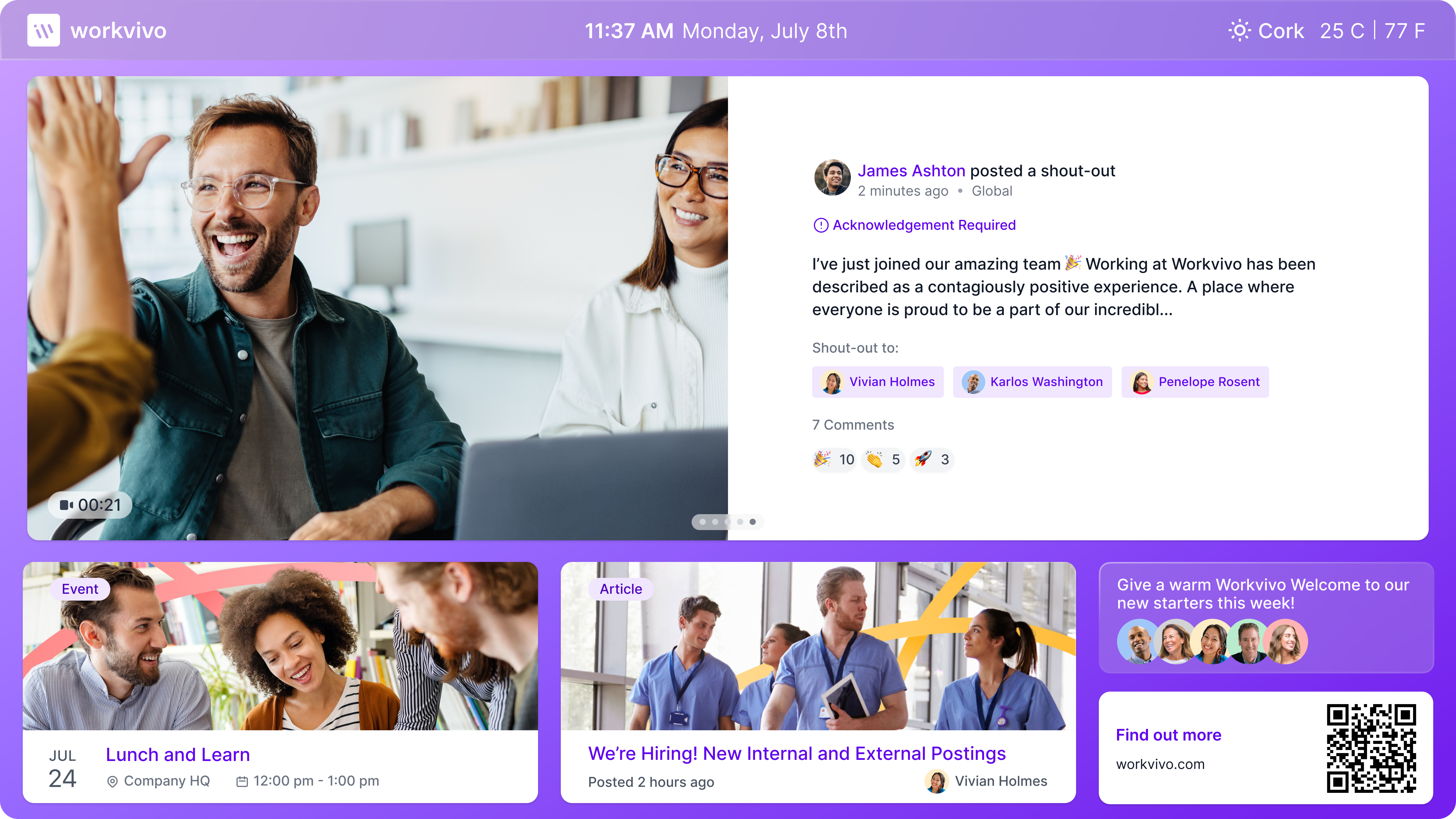
Workvivo is an employee experience platform with strong social and announcement capabilities. It presents internal announcements through a familiar, feed-based interface that encourages visibility and interaction. Leaders can share company news, updates, and priorities in a way that feels accessible rather than formal.
Announcements can include rich media, reactions, and comments, which helps reinforce culture and participation. Targeting ensures updates reach the right audiences, while notifications support timely visibility. Workvivo works well for organizations that value two-way communication alongside structured announcements.
However, teams seeking highly governed, documentation-driven communication may need complementary intranet functionality to support long-term knowledge and compliance needs.
Key features of Workvivo
- Feed-based announcements: Deliver updates in a familiar, social-style interface.
- Employee interaction tools: Enable reactions and comments to encourage engagement.
- Targeted messaging: Share relevant announcements with specific audiences.
Best for: Organizations that prioritize culture-driven communication and engagement.
6. Blink
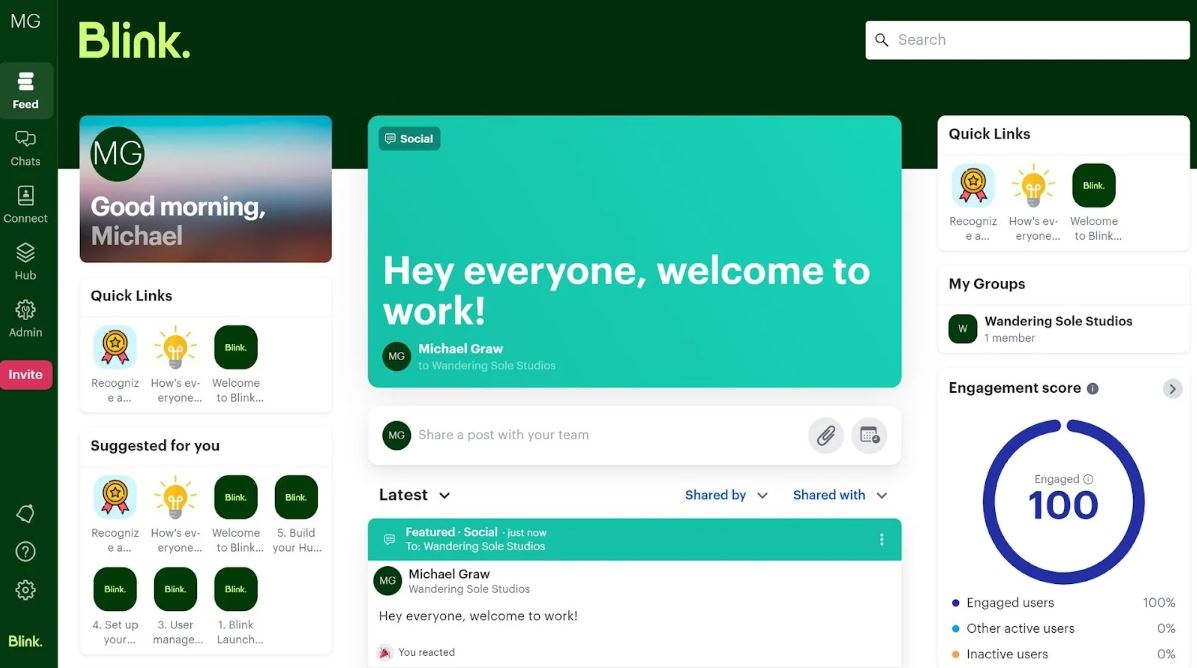
Blink is designed primarily for frontline and deskless workers, making internal announcements fast, mobile-friendly, and accessible. Announcements appear directly in the mobile app, ensuring critical updates reach employees who are rarely at a desk.
The platform supports targeting by location, role, or shift, which is particularly useful for operational announcements. Blink also includes confirmation features, helping managers verify that important messages have been seen.
While Blink excels in speed and reach, it focuses less on long-form communication and knowledge organization compared to intranet-centric solutions like Axero.
Key features of Blink
- Mobile-first announcements: Reach frontline teams instantly through push notifications.
- Read confirmationsy: Verify that critical updates have been seen.
- Audience targeting: Send relevant messages to specific roles or locations.
Best for: Frontline-heavy organizations that need rapid, mobile announcements.
7. Poppulo

Poppulo focuses on strategic internal communications, with announcement tools designed for leadership messaging and campaign-based communication. It supports creating polished announcements that align with broader communication strategies.
Advanced analytics help teams measure reach, engagement, and effectiveness over time. Poppulo also emphasizes governance and consistency, making it suitable for regulated environments where messaging control matters.
The platform is more communication-centric than collaborative, so organizations may need additional tools to support everyday knowledge sharing and teamwork.
Key features of Poppulo
- Leadership announcements: Support structured, high-impact executive messaging.
- Advanced analytics: Measure communication effectiveness across campaigns.
- Governance controls: Maintain consistency and compliance in messaging.
Best for: Organizations with formal internal communication teams and structured messaging needs.
8. Firstup

Firstup is built to deliver timely, personalized internal announcements across multiple channels. It emphasizes reaching employees where they already are, including mobile, email, and enterprise tools.
The platform uses automation and personalization to tailor announcements based on employee data, improving relevance and engagement. Analytics provide insight into reach and behavior, helping communication teams optimize delivery.
Firstup works well for broadcast communication at scale, though it offers limited intranet-style content organization compared to platforms like Axero.
Key features of Firstup
- Personalized delivery: Tailor announcements to individual employee profiles.
- Multichannel reach: Distribute updates across mobile, email, and enterprise tools.
- Engagement analytics: Track performance and refine communication strategies.
Best for: Large organizations needing personalized announcements at scale.
9. Unily
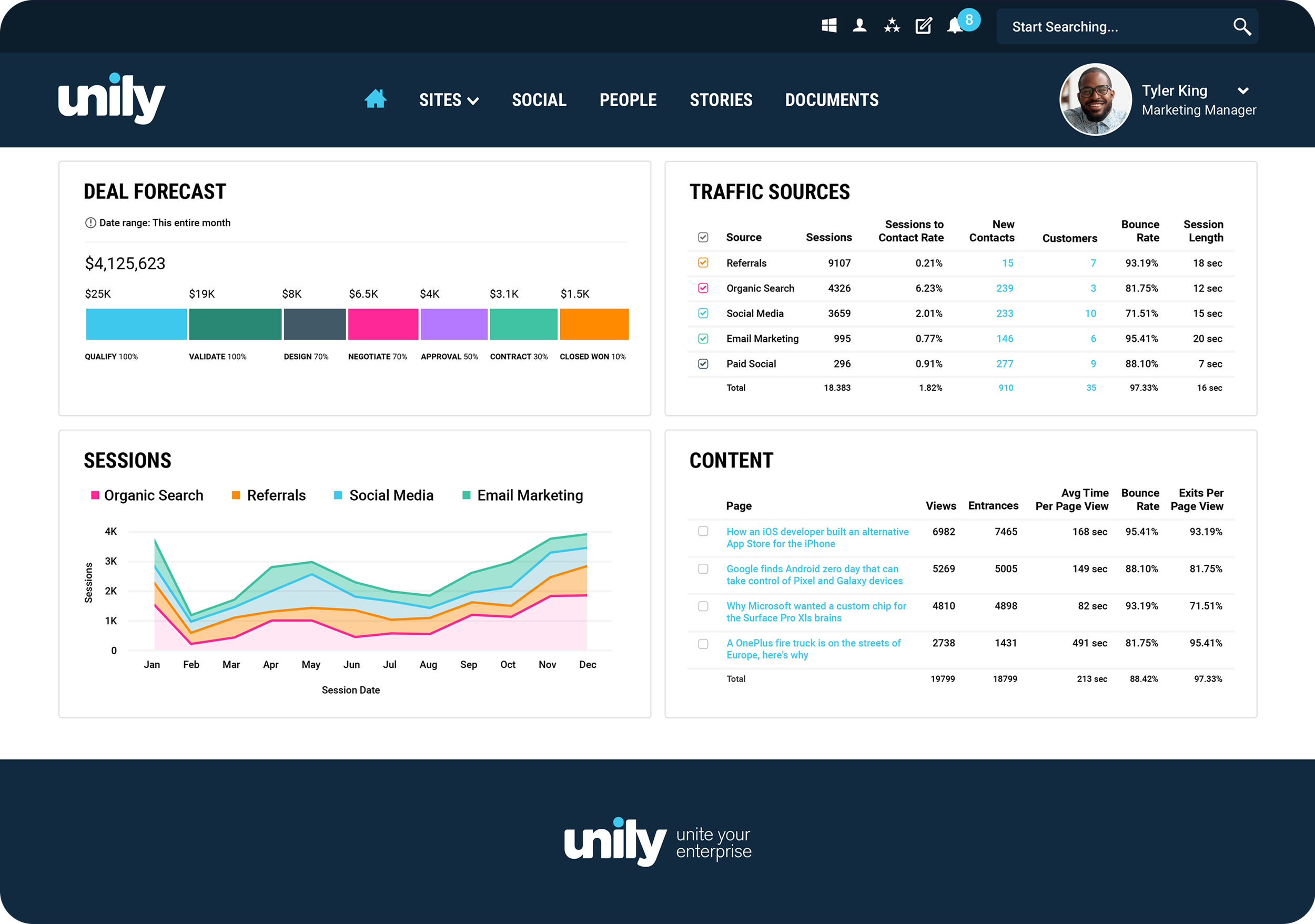
Unily is an enterprise intranet platform designed to support large organizations with complex internal communication needs. Its announcement capabilities sit within a highly customizable intranet environment, allowing organizations to deliver official updates alongside content, tools, and resources.
Announcements can be targeted by audience, location, or role, ensuring relevance at scale. Unily also supports rich media and personalization, helping messages feel more engaging without sacrificing structure. Governance controls allow communication teams to manage publishing rights and maintain consistency across the organization.
Unily’s strength lies in its flexibility and scale, though implementation and administration may require more planning and internal ownership compared to lighter-weight tools.
Key features of Unily
- Enterprise-grade targeting: Deliver announcements to precise audiences across large organizations.
- Highly customizable intranet: Align announcements with branded, role-based experiences.
- Governance and permissions: Maintain consistency and control at scale.
Best for: Large enterprises with complex communication and governance requirements.
10. Happeo

Happeo combines intranet functionality with internal communications, making announcements a central part of its employee experience. Built with Google Workspace users in mind, it allows teams to publish updates that integrate naturally with existing workflows.
Announcements appear in a news-style feed and can be segmented by team or department. Happeo also supports commenting and interaction, helping communication feel more conversational. Analytics provide visibility into engagement, though reporting depth may vary depending on use case.
Happeo works well for organizations that value simplicity and Google-native integrations, but may feel limiting for teams that require deeper customization or advanced governance.
Key features of Happeo
- Google Workspace integration: Align announcements with familiar productivity tools.
- Interactive news feeds: Encourage engagement through comments and reactions.
- Audience segmentation: Keep updates relevant and focused.
Best for: Organizations operating primarily within Google Workspace.
11. Jostle

Jostle is designed to make internal announcements approachable and easy to consume. Its platform focuses on clarity, using structured news streams to deliver updates without overwhelming employees.
Announcements can be targeted and scheduled, helping organizations maintain a steady communication rhythm. Jostle also emphasizes ease of use, which supports adoption across diverse teams.
While Jostle covers the basics well, organizations seeking advanced intranet functionality, deeper analytics, or extensive customization may find it better suited as part of a broader digital workplace strategy.
Key features of Jostle
- Structured announcement streams: Present updates in a clear, digestible format.
- Simple publishing tools: Enable quick creation and scheduling of announcements.
- Targeted communication: Share relevant updates with defined audiences.
Best for: Mid-sized organizations seeking straightforward internal announcements.
Bringing it all together
Internal announcement software plays a central role in keeping employees aligned, informed, and connected. When updates are scattered across emails and chat tools, messages lose impact and trust erodes. A dedicated platform brings clarity, consistency, and accountability back into internal communication.
The right solution depends on your organization’s size, workforce structure, and long-term goals. Some tools focus on broadcast communication, others on social engagement, and others on enterprise-scale governance. What matters most is adoption and trust. Employees need one place they can rely on for official updates.
This is where an intranet-first approach makes the difference. Axero combines internal announcements with knowledge management, collaboration, and governance in one platform employees actually use. By centralizing communication and context, we help organizations move beyond announcements and build lasting alignment.
Ready to see how Axero can support your internal announcements and broader digital workplace goals? Book a demo today.


















 info@axerosolutions.com
 1-855-AXERO-55