Internal Communications Software Built for the Way Your Company Works
One digital headquarters to reach, inform, and engage your entire workforce — without losing anyone along the way. Whether your team is 200 people in two offices or 5,000 across 30 locations, Axero gives you a highly customizable hub to deliver the right message, to the right people, and actually know it landed.
Internal communications software is a digital platform that gives organizations a centralized and controlled way to communicate with their workforce. Unlike chat tools like Slack or Microsoft Teams that are designed for instant messaging, an employee communications platform is built for structured, targeted, trackable messaging at company scale.
That means company-wide announcements, targeted updates by department or location, critical broadcast alerts, and the ability to confirm that employees have actually seen and acknowledged what you've sent. Internal communications software is the difference between hoping a message got through and knowing it did.
Axero's employee communications platform goes further by combining communication capabilities with a fully branded and customizable company intranet, knowledge management, and an employee directory — so all the infrastructure your communications live on is in one place, owned and controlled by your organization.
The communication problems Axero solves
Most internal communications problems aren't caused by bad communicators. They're caused by the wrong tools, like email threads that get ignored, Slack channels that no one checks, or SharePoint folders that no one can find. Here's how Axero addresses the most common ones.
Employees miss critical updates
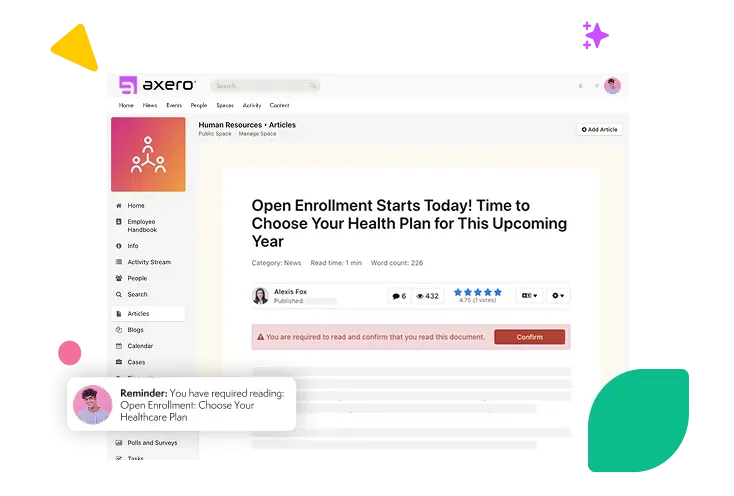
When an important policy change goes out by email, you have no way to know who's seen it. Axero's push notifications, required reading tracking, and broadcast ticker ensure critical messages reach employees — and give you confirmation they did.
Frontline or remote workers are disconnected
Distributed teams, multi-location organizations, and remote workers fall through the cracks when communications is primarily built for the office. Axero gives everyone a hub that's accessible on desktop or mobile, so no employee is siloed or left out when it comes to company information.
Communications aren't targeted and everyone gets everything
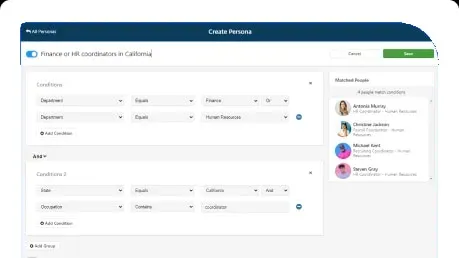
Blasting the same message to 2,000 employees creates noise and people stop reading it. Axero's Personas and Spaces lets you target by role, department, location, or custom group so each employee sees what's relevant to them, and nothing that isn't.
Your intranet doesn't feel like you
Most intranet platforms give you a template and call it done. Axero is built for organizations that want a branded, customized experience that reflects how the company actually works, not a generic employee portal someone else designed. Our drag-and-drop Page Builder, along with full HTML, CSS, and JavaScript control means your intranet can look and feel exactly like your organization.
You have too many tools
Employees are juggling five different platforms to do what one should handle, and no one can agree on where anything lives. Axero centralizes your communications into one single source of truth and can consolidate your tools with Axero App Manager, which builds custom tools on top of your Axero platform.
You're not sure what's working
If you can't measure it, you can't improve it. Axero tracks engagement natively with open rates, read receipts, content views, and search behavior so your communications team has real data to work with, not guesswork.
What's included in Axero's employee communications platform
Targeted announcements and broadcasts
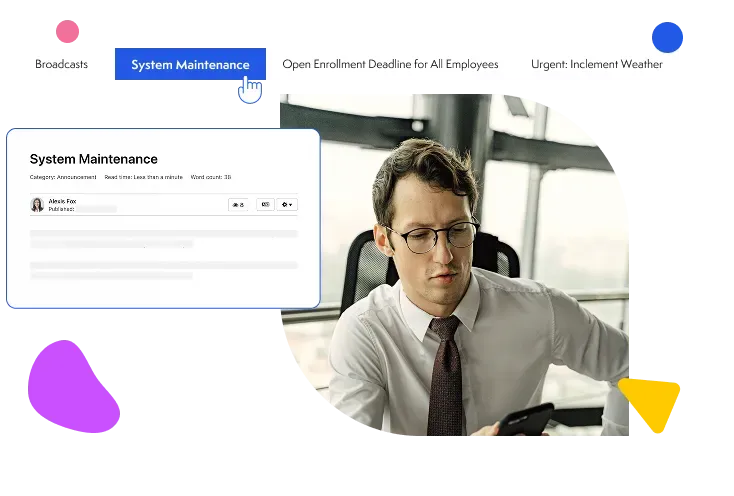
Publish announcements to your entire organization or to specific audiences by department, location, role, or custom attribute. For urgent messages, like emergency alerts, compliance-critical notices, or time-sensitive updates, the broadcast ticker keeps important content visible without requiring employees to go looking for it.
Branded company homepage
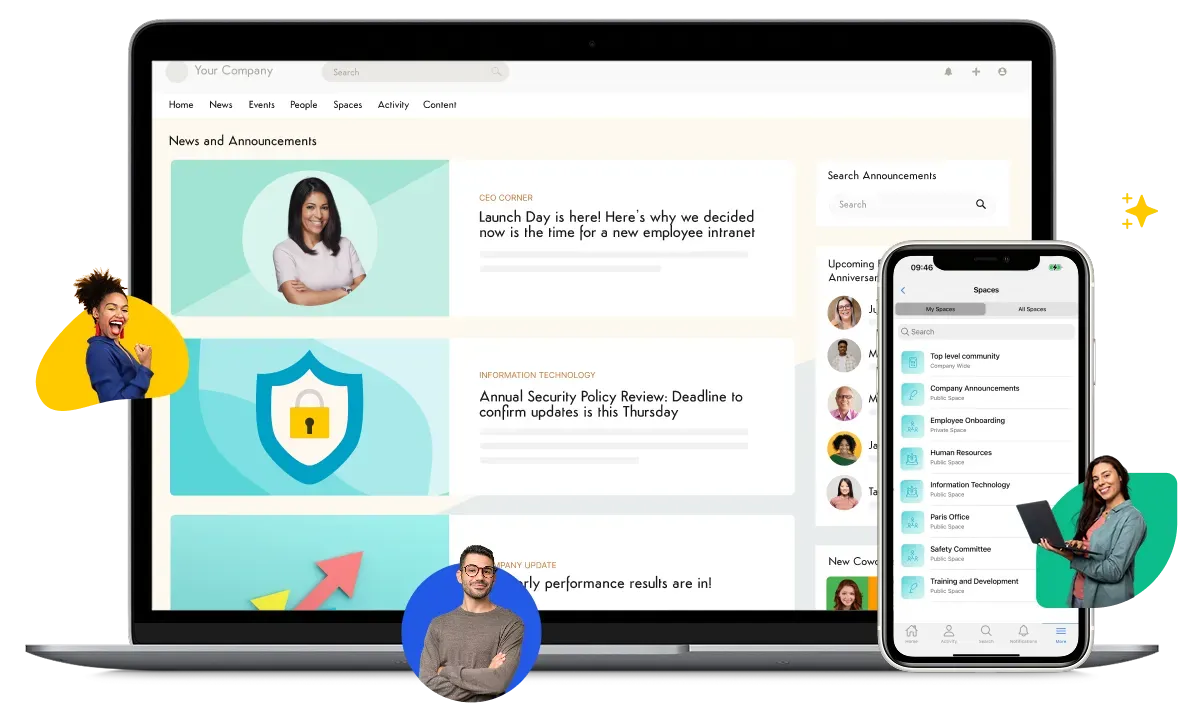
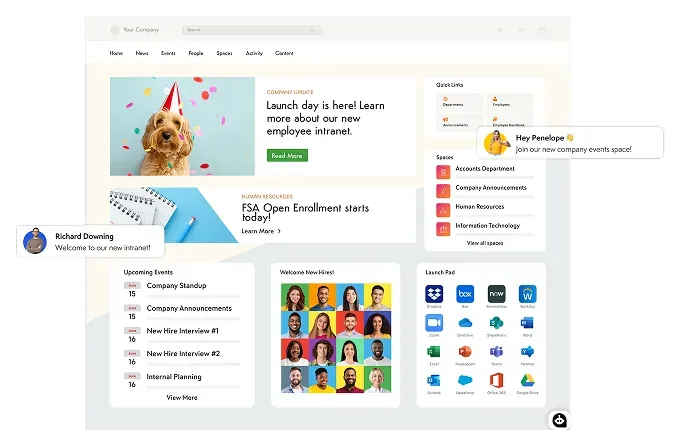
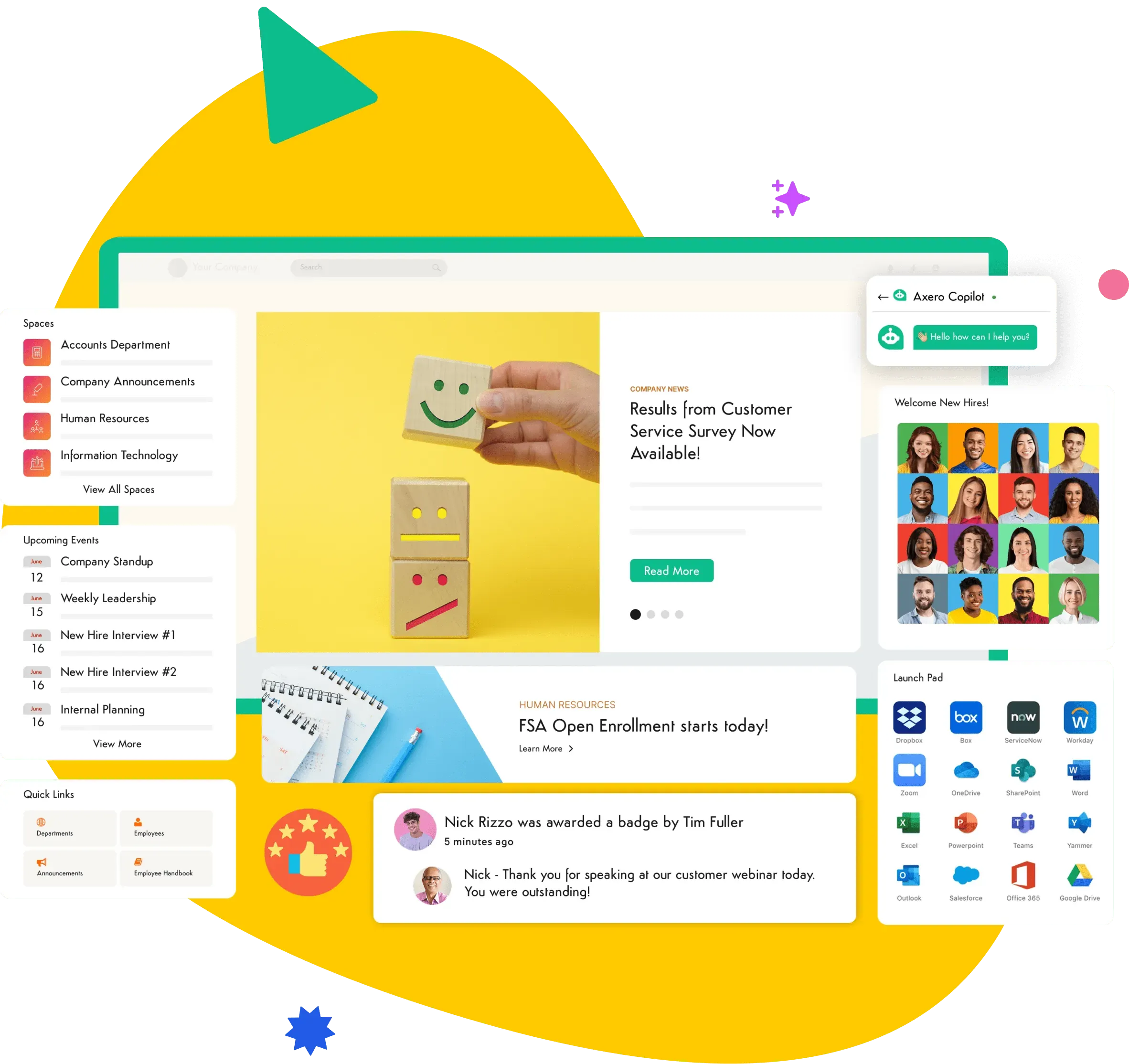
Every organization gets a fully customizable homepage that serves as the front door to company life: news, announcements, upcoming events, quick links, and recognition all in one place. Unlike out-of-the-box platforms, Axero gives you full control over the layout and design so it can look like yours, not ours.
Read-receipt and compliance tracking
Know who's seen your most important content. Axero's Required Reading is especially valuable for compliance-heavy communications, like policy updates, safety notices, and required acknowledgments, where documentation of receipt matters.
Enrich content with AI Assistant
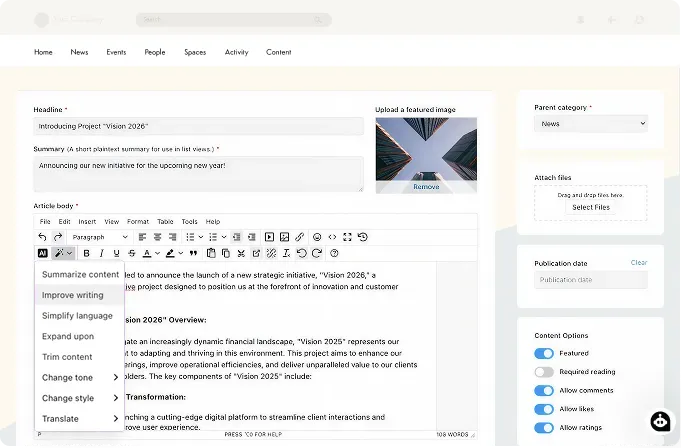
Lean on the power of AI to help you create content quickly and meaningfully. Seamlessly push out communications that combine the tone and information you want, without it being a time-drainer.
Push notifications
Keep employees in the loop without requiring them to actively log in and check. Push notifications bring time-sensitive updates directly to users, whether they're at their desk or on the go.
Audience segmentation
Build audiences based on any attribute in your HRIS or directory. Target by team, office, seniority, job function, or any custom field and ensure every communication reaches exactly the people it's meant for.
Newsletter Manager
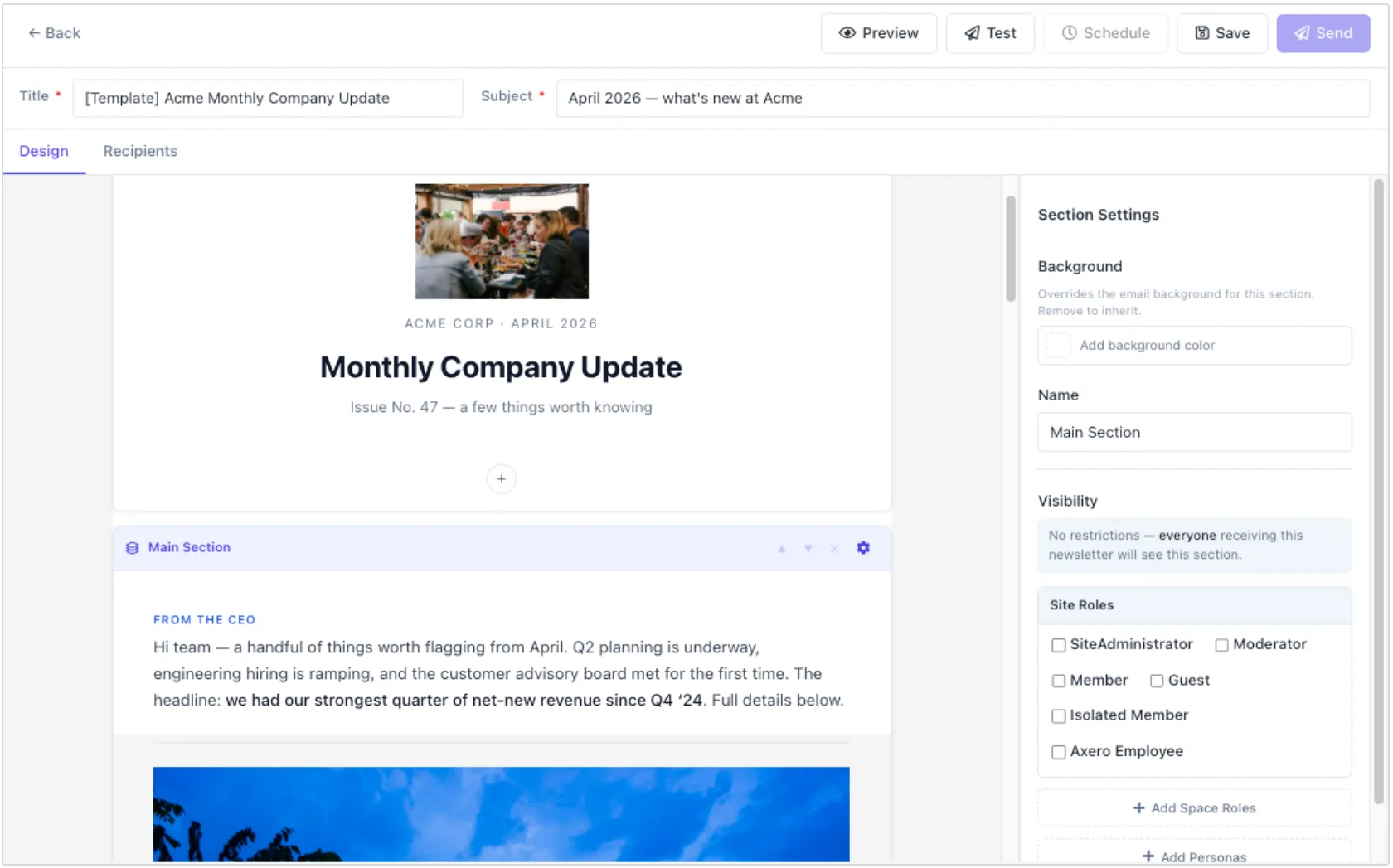
Create and send beautiful newsletters with Axero's Newsletter Manager — target the right people and give your communications strategy a multichannel approach.
Content pinning and highlights
Surface the right content at the right time. Pin announcements to the top of feeds or homepages, promote featured content in search results, and control the visual hierarchy so key information gets priority placement.
Keep your content accurate and your comms flowing
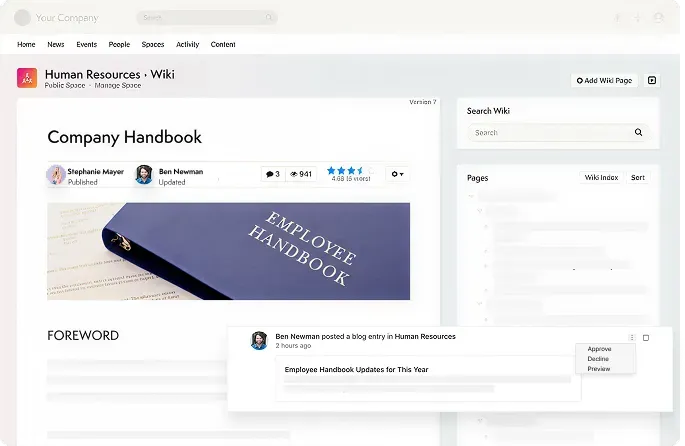
Nothing kills trust in an intranet faster than an outdated policy or an announcement that should've come down weeks ago. Axero's approval workflows keep unapproved content from going live, expiration dates automatically retire time-sensitive posts, and moderation tools keep comments and discussions on-brand — so what employees see is always current. See how Axero's content management system keeps everything in check.
Integrations with your existing stack
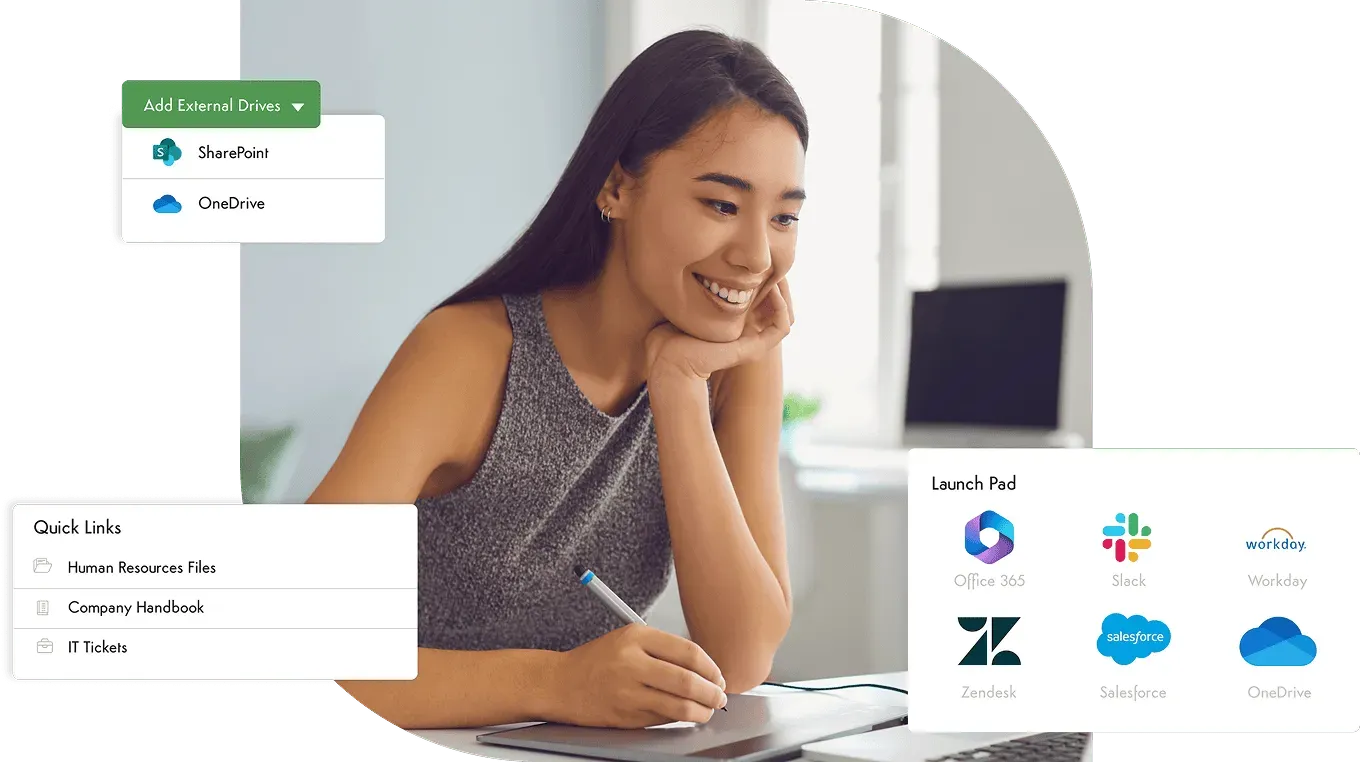
Axero connects with the tools your organization already uses like Microsoft 365, Google Workspace, Okta, Salesforce, and hundreds more through 500+ API endpoints. Communications don't have to live in a silo from the rest of your work.
“Axero has truly elevated our workplace communication game. The platform's design is highly customizable, allowing us to tailor our intranet to fit our unique needs.”
Matt S.
Intuit
“Having used Axero's intranet platform, I can confidently say it's a remarkable tool for enhancing teamwork and communication in our organization. It offers a highly customizable experience that perfectly suits our unique business needs.”
Jade M.
Anytime Mailbox
“The launch of our product with Axero has been nothing short of amazing thus far, and we absolutely could not have succeeded without both their product and their support.”
Sarah K.
VP Product, PSG
You name the app, we build it.
Axero App Manager lets us build custom internal tools directly on your Axero intranet. Cut costs. Consolidate tools. Work how you need to.
Designed for communication teams, flexible enough for IT
Axero is built so your communications team can own the day-to-day by publishing announcements, managing content, and keeping the intranet current, without filing a ticket every time something needs to change. But when IT does get involved, they'll find a platform that's actually worth their time.
Most employee communication platforms force a tradeoff: it's either easy enough for non-technical users, or powerful enough for enterprise IT. Axero doesn't ask you to choose.
Design and layout control without a developer
Axero's drag-and-drop Page Builder gives communications teams full control over how content looks, where it lives, and how employees experience it with no code required. For organizations that want to go further, Axero supports full CSS and JavaScript overrides, so your intranet can look and behave exactly like your brand. The result is a platform that feels in-house, because it practically is.
A flexible platform that grows with you
Axero's 500+ REST APIs give developers the building blocks to connect Axero to virtually any system in your stack — your HRIS, your SSO provider, your CRM, your ticketing system. Axero App Manager takes it further by letting you build custom tools and micro-applications directly on top of your intranet without standing up separate software. One platform with as much power as you need.
Enterprise-grade security and permissions
Audience segmentation isn't just a communications feature, it's a security architecture. Granular roles and permissions give IT and admins full control over who sees what, who can publish, and who can manage. Content is surfaced to the right people and kept from the wrong ones, across every space, document, and announcement on the platform. All data is encrypted at rest using AES-256 and in transit via SSL/TLS 1.3. Every Axero customer runs on a single-tenant architecture — your own independent database and instance, completely separate from other customers. For organizations with data residency or regulatory requirements that rule out shared cloud infrastructure, Axero offers on-premise deployment, one of the few intranet platforms to do so.
Built for regulated industries
Healthcare organizations, financial institutions, and nonprofit agencies operate under compliance requirements that most intranet vendors treat as an afterthought. Axero doesn't. Axero's cloud environment is SOC 2 Type II compliant and hosted in a SSAE 18 / ISO 27001 compliant environment. For healthcare organizations subject to HIPAA, Axero will execute a Business Associate Agreement, making Axero a joint custodian of protected health information. Axero is also GDPR compliant, ADA compliant, and Section 508 compliant. See Axero's full security and compliance documentation.
SSO, integrations, and a stack that actually connects
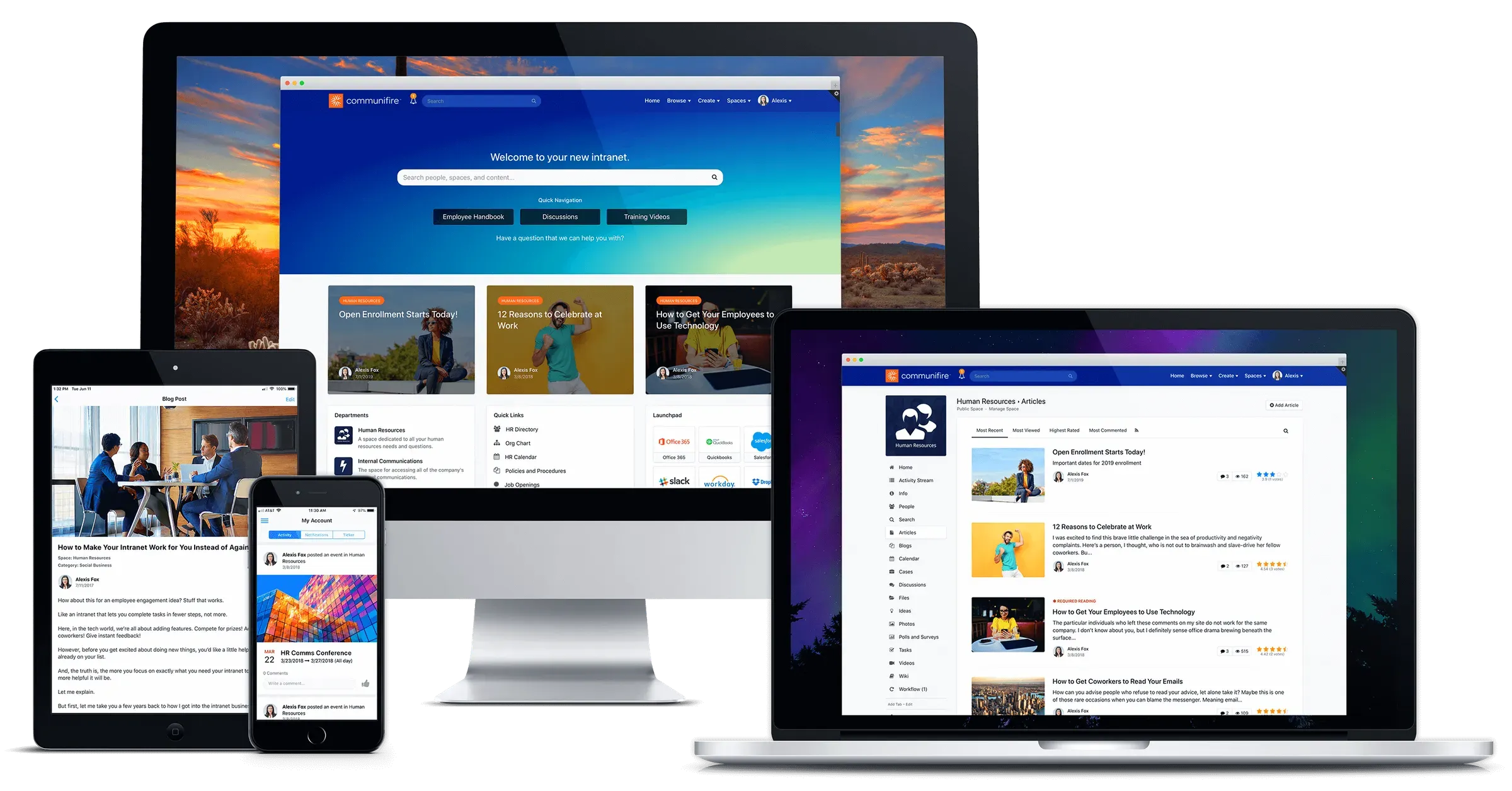
Axero integrates with the identity providers and SSO solutions your IT team already manages, such as Okta, Microsoft Entra ID, Azure AD, ADFS, OneLogin, Google, and SAML 2.0, so employees get a seamless login experience and IT retains central access control. Combined with deep integrations for Microsoft 365, Google Workspace, SharePoint, and hundreds of other tools, Axero fits into your existing environment rather than replacing it.
Implementation and support that feels like a partnership
Axero's implementation and customer success team makes us different from all the other intranet vendors. Our team works with you from day one: through content migration, information architecture, permissions mapping, training, and launch. After go-live, you have access to a support team that knows your platform specifically, not a generic help queue. Axero isn't just a vendor, we're a partner.
Reach every employee — including remote and mobile workers
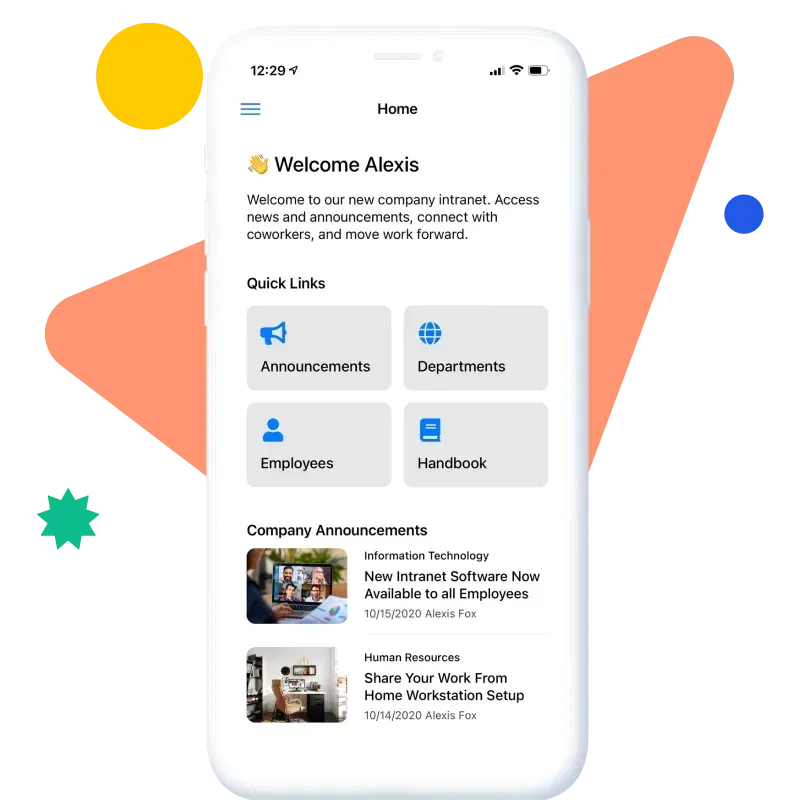
Whether your team is in the office, working remotely, or on-the-go, Axero keeps everyone connected through desktop and mobile. Employees can receive notifications, check announcements, access the directory, and stay connected to the intranet. Expand your internal communication efforts across all devices and ensure remote, hybrid, and distributed workers aren't left out of the loop.
Connect with the comms tools your teams already use every day.
Who Uses Axero for Internal Communications?
Distributed organizations with multiple locations
Financial institutions, healthcare services, real estate agencies, universities, and multi-site manufacturers run into some version of this issue: different locations develop different cultures, different information access, and different levels of alignment. Axero gives distributed organizations a single platform that reaches every location with targeted and relevant messaging, while still letting local teams have their own spaces that match their unique brand.
Remote and hybrid workforces
Teams that don't share a physical office need a digital headquarters. Axero becomes that headquarters by being the place employees go for company news, leadership updates, HR resources, and the information they need to do their jobs. Axero reduces the 'I didn't know about that' problem that plagues remote-first organizations.
Email is still the go-to for many communications teams, but it's a poor fit for company-wide messaging. Open rates are low, it's difficult to segment, there's no read receipts, and there's a complete lack of discoverability once the message is sent. Organizations moving away from email find that Axero gives them structure, targeting, and measurement that email never could. See where email, chat, and mobile fit alongside the intranet in this breakdown of internal communication tools.
Companies coming off SharePoint or a fragmented tool stack
SharePoint can technically be used for internal communications, but it wasn't built for it, and the gap shows in adoption rates and maintenance burden. Organizations that have tried to build communications infrastructure on SharePoint and found it falling short come to Axero for a purpose-built platform that doesn't require an IT administrator to update sites.
What makes Axero different
Support that feels like a partnership
The difference between Axero and most enterprise software vendors isn't just the features, it's the working relationship that happens after you sign. Axero's support experience is built on real relationships: you'll know the people helping you, and they'll know your platform. When something needs fixing, you won't be routed through a ticket queue for three days. Just read our reviews — practically every customer raves about our support and partnership experience.
Deep customization that doesn't require a developer for every change
Axero sits in a specific and valuable position because it's customizable enough for organizations with real technical resources (full HTML, CSS, and JavaScript access, 500+ API endpoints, on-premise deployment for organizations that require it), and opinionated enough that non-technical users can manage day-to-day communications without IT involvement. That balance is harder to find than it sounds.
On-premise deployment option
Axero is one of very few intranet platforms that offers on-premise hosting for organizations with data residency requirements, security mandates, or compliance obligations that cloud-only platforms can't meet.
Industry recognized by Gartner
Axero is one of a small number of intranet platforms recognized in Gartner's Magic Quadrant for Intranet Packaged Solutions. For buyers who need to justify a platform decision to a leadership team or procurement committee, that recognition carries weight.
Most Frequently Asked Questions about Internal Communications Software
What is an employee communications platform?
An employee communications platform is software that enables organizations to communicate with their workforce at scale through targeted announcements, broadcast alerts, push notifications, and engagement tracking. Unlike general messaging tools, an employee communications platform is built for structured, trackable, company-wide and segmented communication. Axero takes it a step further by combining these capabilities with a full company intranet, knowledge base, and employee directory.
What's the difference between an intranet and an employee communications platform?
An intranet is the broader digital workspace, which includes communications, but also knowledge management, document repositories, team spaces, directories, and more. An employee communications platform is either a standalone tool focused specifically on messaging and announcements, or, as in Axero's case, the communications layer of a full intranet platform.
How is Axero different from Slack or Microsoft Teams?
Slack and Teams are conversation tools designed for real-time messaging between individuals and small groups. Axero is a structured communications and intranet platform designed for company-wide announcements, policy distribution, knowledge management, and employee engagement. The two types of tools serve different purposes and many organizations use both.
Can Axero replace email?
Yes! While email to some extent still has its place, many organizations have significantly cut back on email by using Axero as their primary channel for company communications. Axero's targeted announcements, content highlighting, and push notifications give communications teams more control and better measurement. Plus, we have our native Newsletter Builder so you can still reach employees in their inboxes, but with a more targeted and multichannel approach.
Does Axero work for remote or frontline workers?
Absolutely. Axero is accessible from desktop and mobile, so remote and hybrid employees can stay connected to company communications and the intranet from wherever they work. For truly frontline or mobile-first use cases, Axero's mobile app covers the essentials, like notifications, the directory, announcements, tickets, and space access. White label is also available.
How long does it take to implement and launch Axero?
Implementation varies based on the complexity of your organization and how much customization you want at launch. But no matter what your goals are, Axero's implementation team works with you. We create a custom process, which includes content migration, information architecture, training, and launch planning. While every client is different, most organizations go live within a few months. Book a demo and we can give you a more specific estimate based on your situation.
What should IT look for in an employee communications platform?
IT teams should prioritize SSO compatibility, granular role-based permissions, and a security architecture that keeps your data isolated. Axero supports all major identity providers — Okta, Entra ID, Azure AD, ADFS, and SAML 2.0 — runs on single-tenant architecture, and is SOC 2 Type II compliant and HIPAA-compliant with BAA execution available. For ongoing management, the right platform should let communications teams handle day-to-day publishing without IT involvement, while still giving IT full API access, governance controls, and deployment flexibility when they need it.
Don't just take our word for it! Here's what our customers are saying.
“So far, we are loving the Axero platform. It has so much power and flexibility. Our team is happy with the employee engagement features we can provide through our intranet site.”
Susanne D.
UCOR
“Axero is a great platform that gives us multiple ways to communicate with customers, partners and staff. It is also integrated with our website. The future of business is a marriage between web site and customer interaction. This software allows us to move in that direction.”
Chuck V.
Managing Partner, CLEARIFY
“It serves as our central hub for companywide updates and provides access to a wide range of critical content—everything from SOPs and parts lists needed by field teams on active job sites to executive announcements and departmental resources for corporate functions.”
Anna A.
Corporate Communications Manager, Rain for Rent
“Our experience has been nothing but positive. Their support team is quick to address our tickets and overall their leadership team has been very supportive in providing guidance and best practices to support our goals.”
Thu V.
Project Manager, Amazon
Ready to see Axero in action?
Book a personalized demo and see how Axero's employee communications platform works for organizations like yours. No generic tour — a live walkthrough tailored to your team size, industry, and communication goals.