Digital workplace managers sit at the intersection of technology, people, and culture. They are responsible for ensuring employees can communicate effectively, access information easily, and collaborate without friction. As organizations grow more distributed and digital tools multiply, this role has become central to how work actually gets done.
Most teams already rely on a mix of platforms for communication, document management, collaboration, and employee engagement. The challenge is not a lack of tools, but a lack of cohesion. When systems feel disconnected, employees struggle to find information, managers lose visibility, and adoption drops. This creates inefficiencies that directly impact productivity and engagement.
This is where purpose-built software for digital workplace managers comes into play. These platforms act as a central layer that connects tools, content, and people into a single, organized experience. They help digital workplace leaders standardize communication, support governance, and create consistent experiences across departments and locations.
The best solutions go beyond basic intranet functionality. They support long-term scalability, integrate with existing systems, and provide insights into how employees actually use the digital workplace. In this guide, we break down the leading platforms designed to support digital workplace managers, what to look for when choosing one, and how each option fits different organizational needs.
Top 10 software for digital workplaces managers for 2026
What is software for digital workplace managers?
Software for digital workplace managers refers to platforms designed to centralize communication, collaboration, and knowledge across an organization. These tools help manage the digital environment employees rely on every day, including intranets, employee portals, internal communications, knowledge bases, and integrated workspaces.
Rather than focusing on a single function, this type of software brings multiple capabilities together in one governed platform. Digital workplace managers use it to align tools with business goals, improve employee adoption, and ensure information stays accurate, accessible, and secure.
At its core, this software supports consistency. It gives teams one place to find updates, policies, resources, and people, while allowing managers to control structure, permissions, and governance. It also supports change management by making it easier to roll out new initiatives, tools, and processes without overwhelming employees.
What to consider when choosing the right software for digital workplace managers
Choosing the right platform starts with understanding how your organization works today and how it plans to scale. Digital workplace managers need software that supports governance without slowing teams down.
Centralization and structure
A strong platform brings communication, documents, and tools into one organized hub. Clear structure helps employees find what they need quickly and reduces reliance on email and disconnected apps.
Customization and branding
The software should reflect your organization’s structure, language, and branding. Flexible layouts and templates help digital workplace managers create experiences that feel familiar and relevant to different teams.
Governance and permissions
Role-based access, content ownership, and approval workflows are essential. These features help maintain accuracy, reduce risk, and support compliance without creating bottlenecks.
Integrations with existing tools
The platform should connect seamlessly with tools your teams already use, such as Microsoft 365, Google Workspace, HR systems, and project management software. This reduces context switching and improves adoption.
Analytics and insights
Usage data and content performance insights help digital workplace managers understand what works and where improvements are needed. Analytics support continuous optimization.
10 best software for digital workplace managers
1. Axero
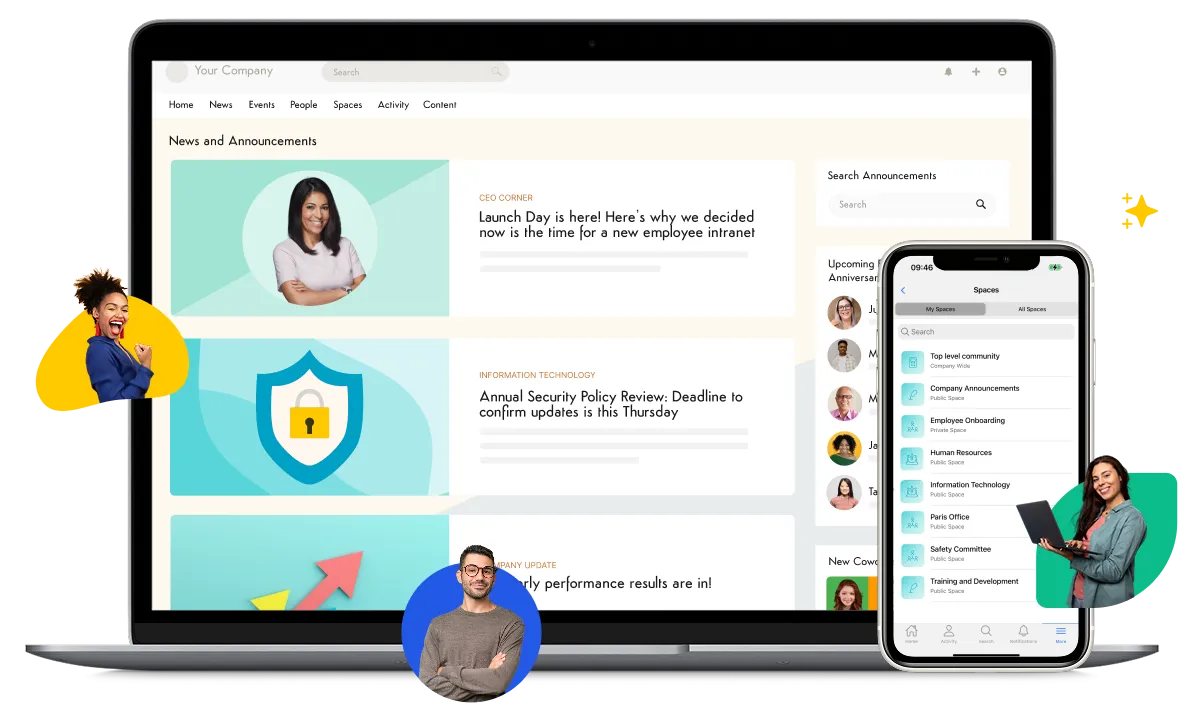
Axero is a comprehensive intranet and employee experience platform built specifically to support digital workplace managers. It provides a centralized hub where communication, collaboration, and knowledge live together in a structured and governed environment.
What sets Axero apart is its balance between flexibility and control. Digital workplace managers can customize layouts, navigation, and content types while maintaining clear governance through permissions, workflows, and ownership models. This makes it easier to scale the digital workplace without losing consistency or trust in the information shared.
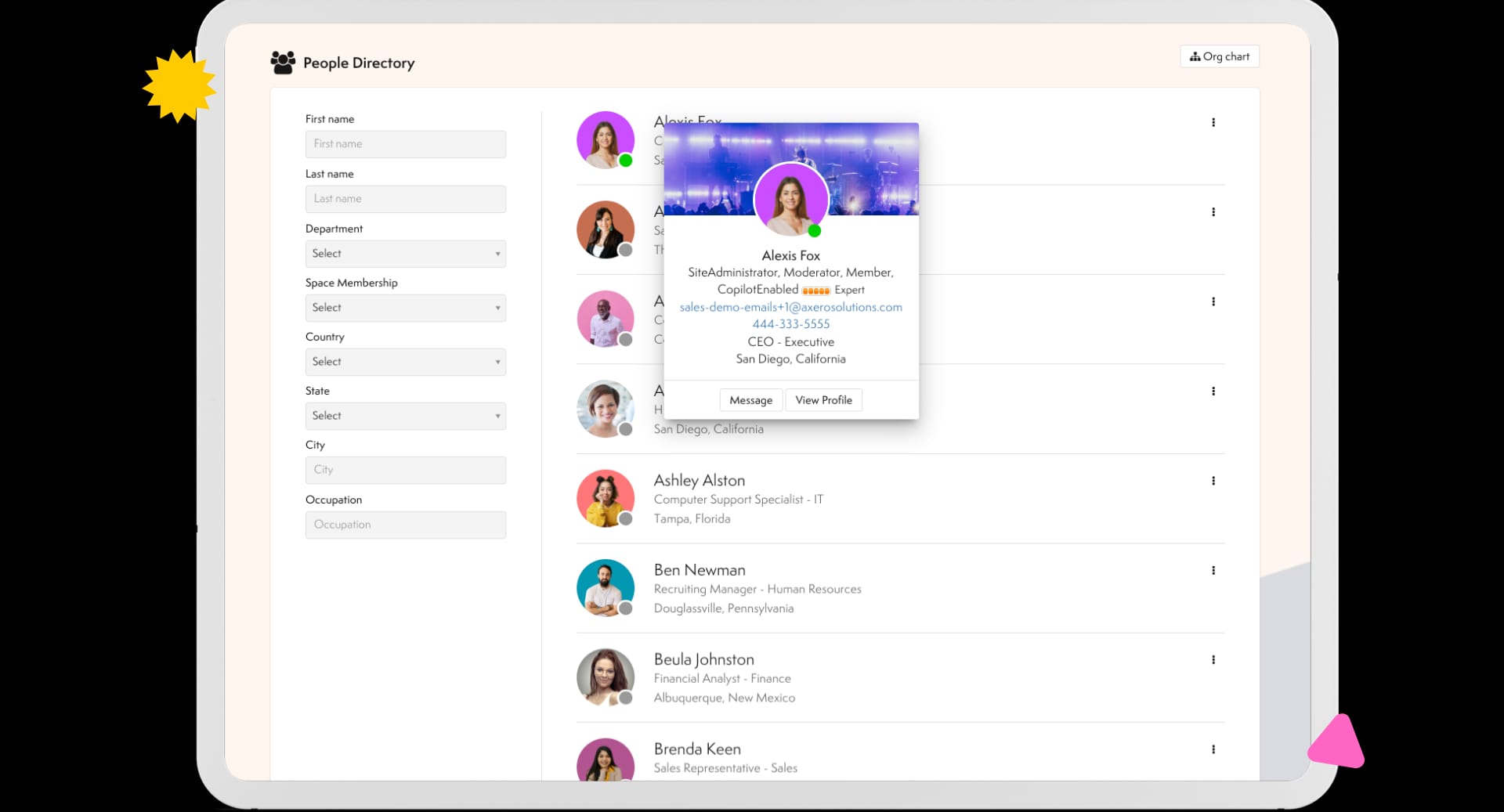
Axero supports internal communications, document management, employee directories, social engagement, and integrations in one cohesive platform. Built-in analytics give visibility into content usage and engagement, helping managers continuously improve the employee experience. The platform also emphasizes ease of adoption, ensuring employees can find value quickly without extensive training.
Key features of Axero
-
Centralized intranet and employee portal: Create one trusted source for news, resources, and collaboration across teams.
-
Governance and permissions controls: Manage access, ownership, and approval workflows to keep content accurate and secure.
-
Built-in analytics and insights: Track engagement and usage to optimize your digital workplace over time.
Best for: Digital workplace managers who need a scalable, governed platform that unifies communication, knowledge, and employee experience.
2. Microsoft SharePoint
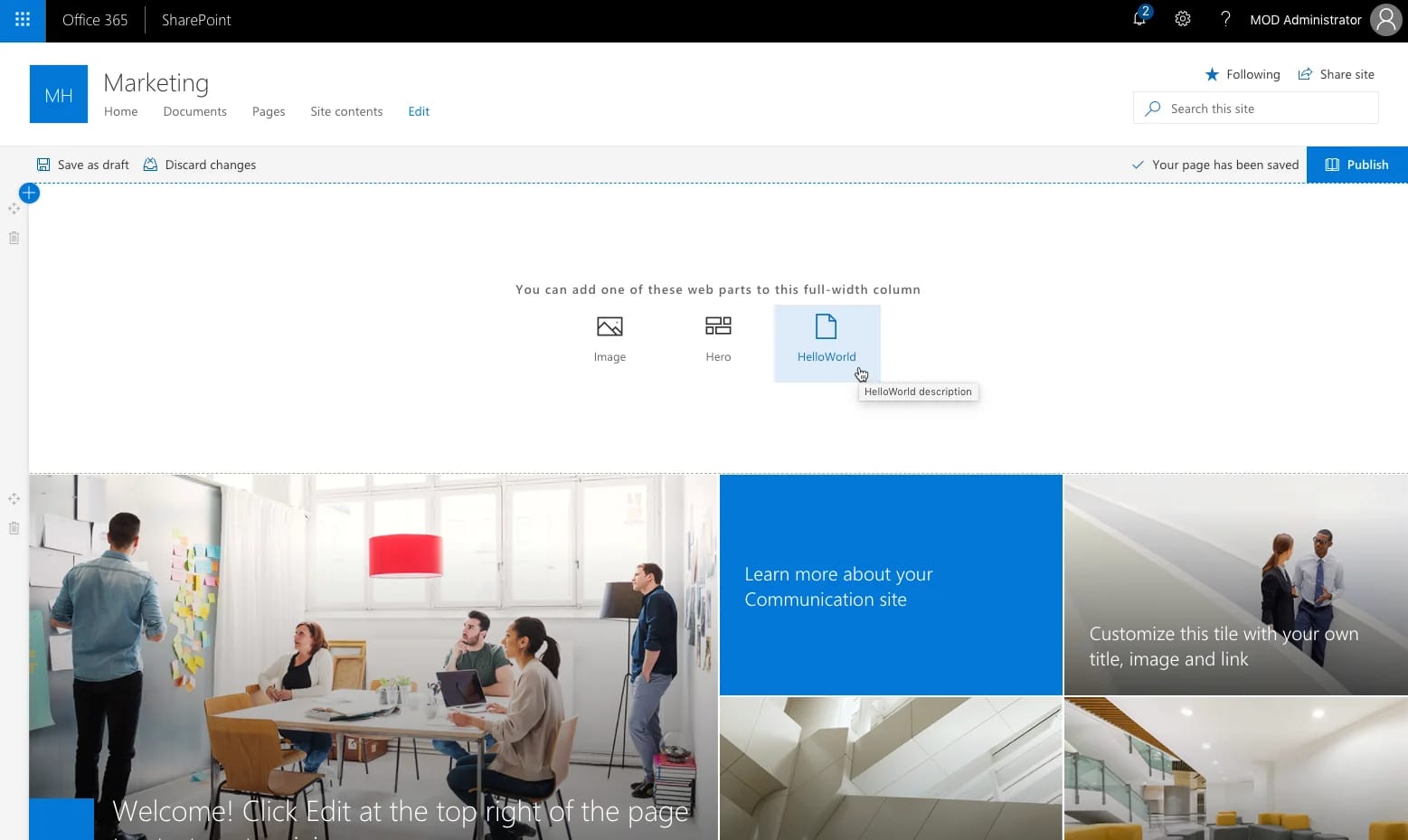
Microsoft SharePoint is a widely used platform for content management and collaboration, especially within organizations already invested in Microsoft 365. It provides tools for document storage, team sites, and internal portals that digital workplace managers can configure to support various business needs.
SharePoint offers strong integration with Microsoft tools such as Teams, OneDrive, and Outlook, making it appealing for organizations seeking a familiar ecosystem. However, managing structure, governance, and user experience often requires significant configuration and ongoing administrative effort.
For digital workplace managers, SharePoint works best when paired with clear governance models and internal guidelines. Without this, content sprawl and inconsistent experiences can emerge across sites and teams.
Key features of Microsoft SharePoint
-
Document management and version control: Store and collaborate on files with built-in compliance features.
-
Integration with Microsoft 365: Connect seamlessly with Teams, OneDrive, and other Microsoft tools.
-
Custom site creation: Build team and departmental sites tailored to different use cases.
Best for: Organizations deeply embedded in Microsoft 365 with technical resources to manage configuration and governance.
3. LumApps
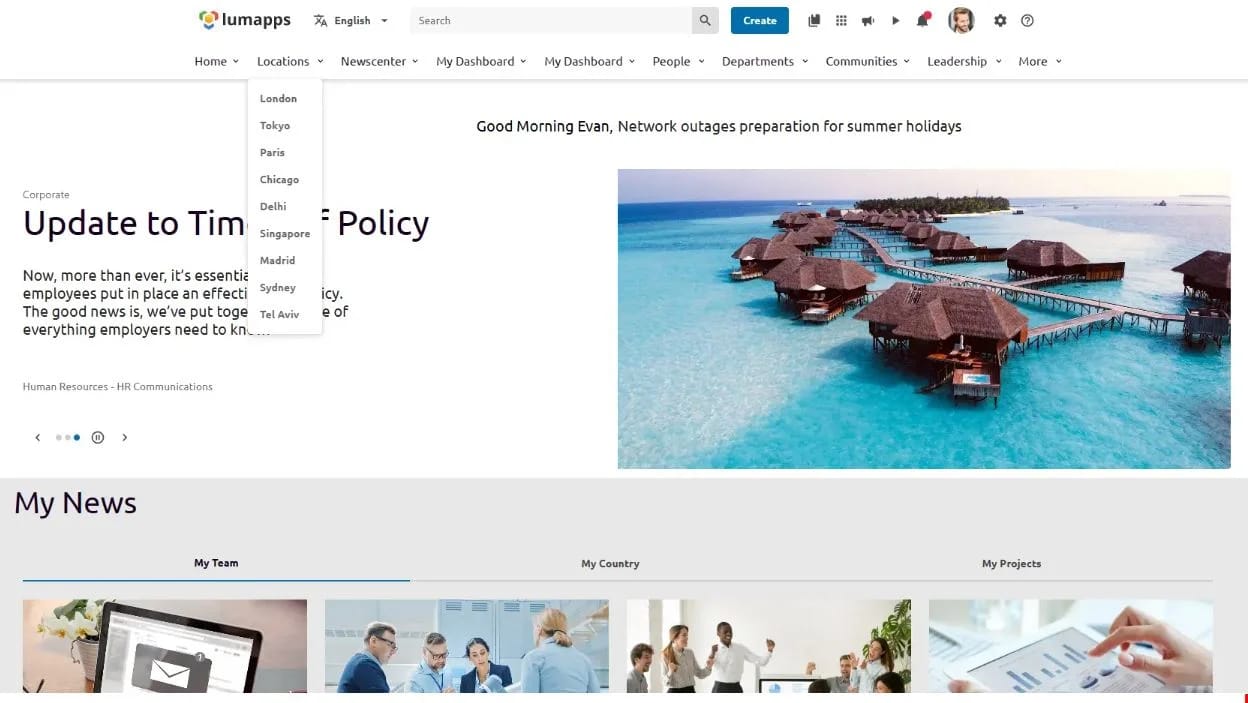
LumApps is a cloud-based intranet platform designed to sit on top of existing productivity suites. It focuses on internal communications, content delivery, and employee engagement through personalized experiences.
Digital workplace managers use LumApps to deliver targeted news, resources, and updates based on role or location. The platform integrates well with Google Workspace and Microsoft 365, allowing organizations to surface content within familiar tools.
While LumApps excels at communication and personalization, it often requires integration with additional systems to fully cover knowledge management and operational workflows.
Key features of LumApps
-
Personalized content delivery: Target communications based on role, location, or department.
-
Integration with productivity suites: Embed intranet experiences into Google Workspace and Microsoft 365.
-
Mobile-friendly access: Support employees across locations and devices.
Best for: Digital workplace managers focused on internal communications within Google or Microsoft environments.
4. Simpplr
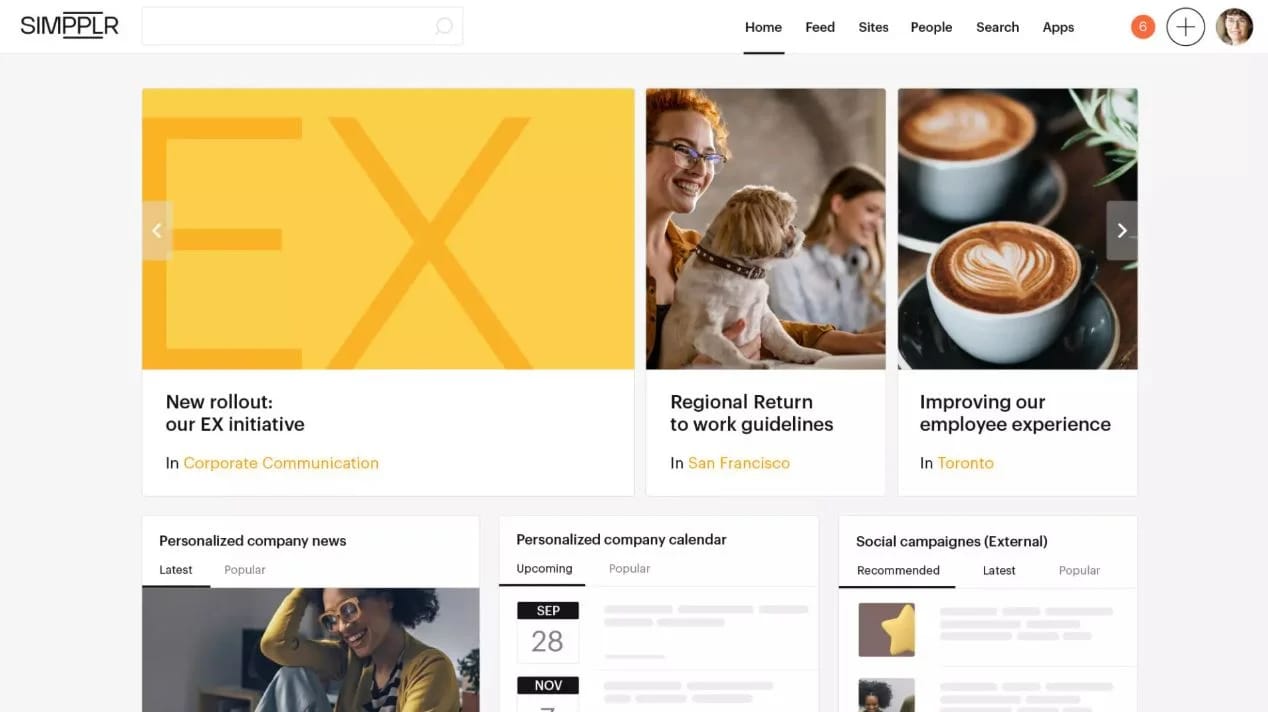
Simpplr is an employee experience platform designed to simplify internal communication and content discovery. It focuses heavily on usability, making it easier for employees to stay informed without extensive training or onboarding.
For digital workplace managers, Simpplr offers structured communication tools combined with personalization. Content is surfaced based on employee profiles, helping reduce noise and improve relevance. The platform also includes built-in governance features that allow managers to control publishing rights and content visibility.
Simpplr works well as a communication layer, though organizations with complex knowledge management or workflow needs may need additional tools alongside it. Its strength lies in driving adoption and keeping employees engaged with timely updates.
Key features of Simpplr
-
Personalized news and content feeds: Deliver relevant updates based on employee roles and attributes.
-
Content governance controls: Manage publishing permissions and content ownership with clarity.
-
Employee engagement insights: Track readership and interaction to refine communication strategies.
Best for: Digital workplace managers prioritizing internal communications and employee adoption.
5. Workvivo
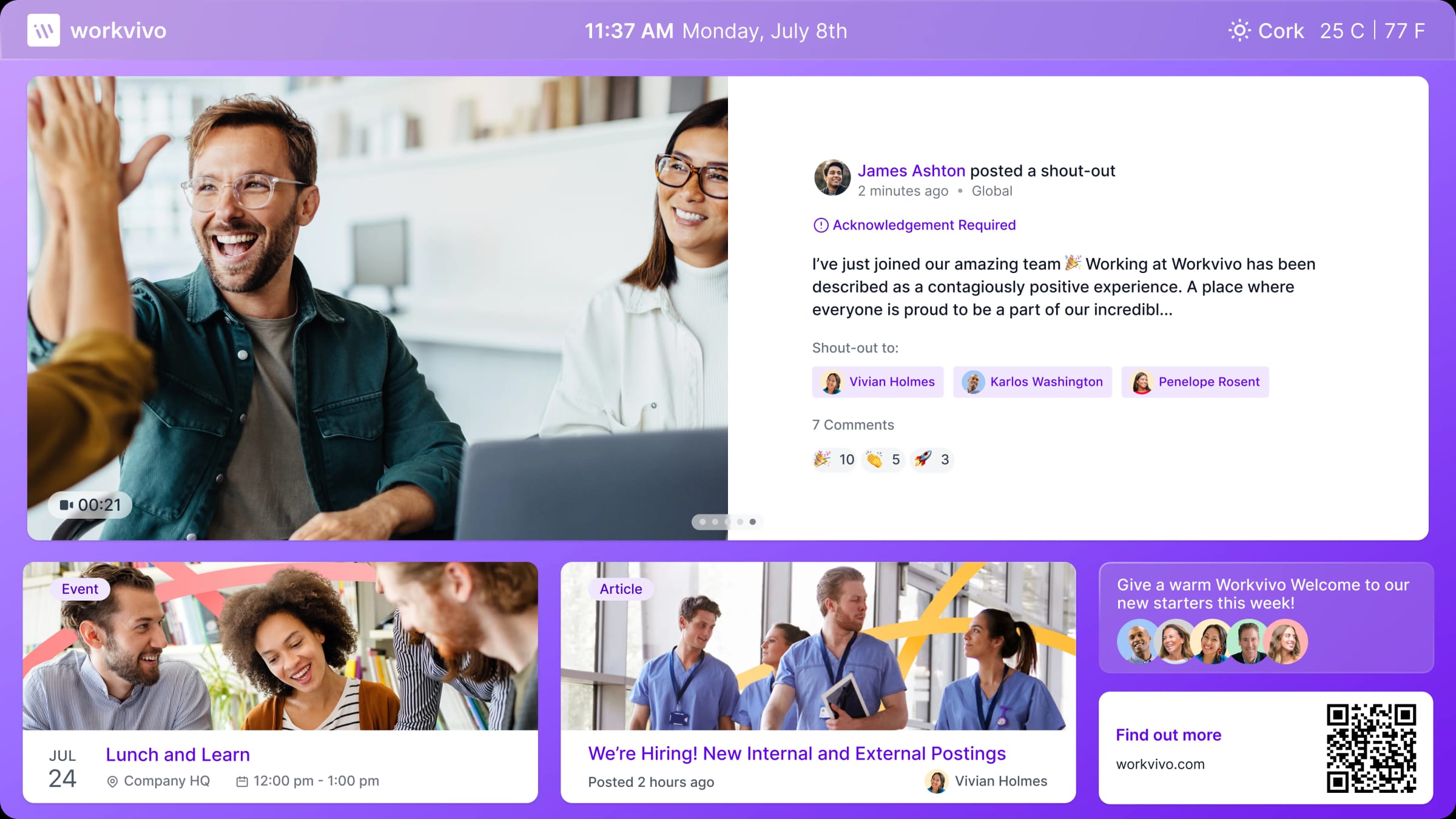
Workvivo positions itself as an employee experience and engagement platform with a strong social focus. It combines internal communication, recognition, and social interaction into a single interface.
Digital workplace managers often use Workvivo to foster connection and visibility across distributed teams. Features such as activity feeds, shout-outs, and company updates help create transparency and encourage participation. The platform integrates with several HR and productivity tools to enrich employee profiles and content relevance.
While Workvivo excels at engagement and culture-building, it may require complementary systems for structured knowledge management and formal documentation.
Key features of Workvivo
-
Social activity feeds: Encourage interaction and visibility across teams.
-
Employee recognition tools: Support peer recognition and cultural initiatives.
-
Integration with HR systems: Enrich profiles and personalize content delivery.
Best for: Organizations focused on engagement, culture, and social interaction in the digital workplace.
6. Unily
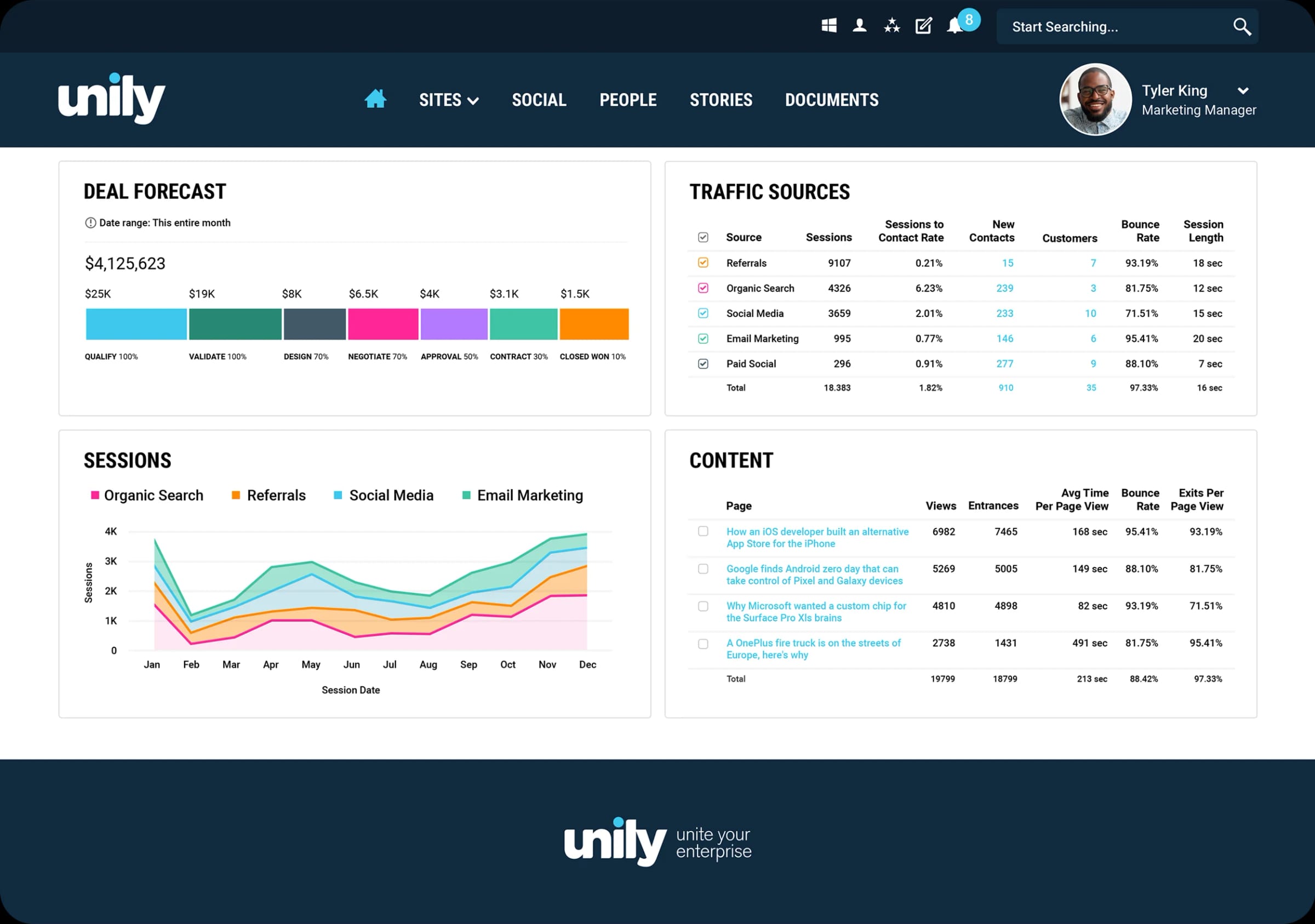
Unily is an enterprise-grade intranet platform designed for large and complex organizations. It offers extensive customization and scalability, making it suitable for global digital workplace initiatives.
For digital workplace managers, Unily provides strong governance, multilingual support, and advanced integrations. The platform allows teams to create tailored experiences for different regions, departments, or roles while maintaining centralized control.
Unily often requires dedicated resources to configure and maintain, which makes it a better fit for organizations with mature digital workplace strategies and internal technical support.
Key features of Unily
-
Enterprise-level customization: Build tailored intranet experiences at scale.
-
Advanced governance and security: Support complex permission models and compliance needs.
-
Global and multilingual support: Deliver consistent experiences across regions.
Best for: Large enterprises with complex governance and global digital workplace requirements.
7. Happeo
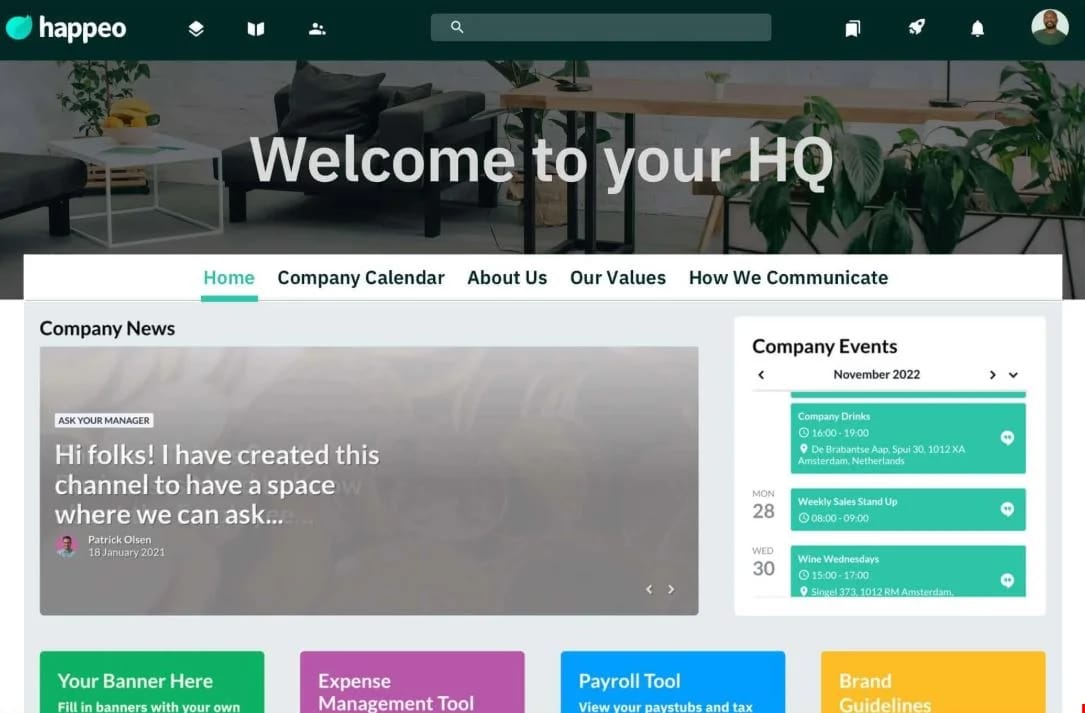
Happeo is a digital workplace platform built with a strong connection to Google Workspace. It combines internal communication, collaboration, and knowledge sharing in a modern interface that prioritizes usability.
Digital workplace managers use Happeo to centralize news, pages, and collaborative spaces while keeping employees connected through familiar Google tools. The platform supports structured content and social interaction, which helps teams stay aligned without relying heavily on email.
Happeo works best for organizations that already operate primarily within Google Workspace. Its feature set aligns well with communication and collaboration needs, though more advanced governance requirements may require additional configuration.
Key features of Happeo
-
Google Workspace integration: Seamlessly connect with Drive, Calendar, and Gmail.
-
Structured pages and channels: Organize content and collaboration by topic or team.
-
Employee engagement tools: Support interaction through comments and reactions.
Best for: Digital workplace managers in Google-centric organizations seeking a unified hub.
8. Igloo Software
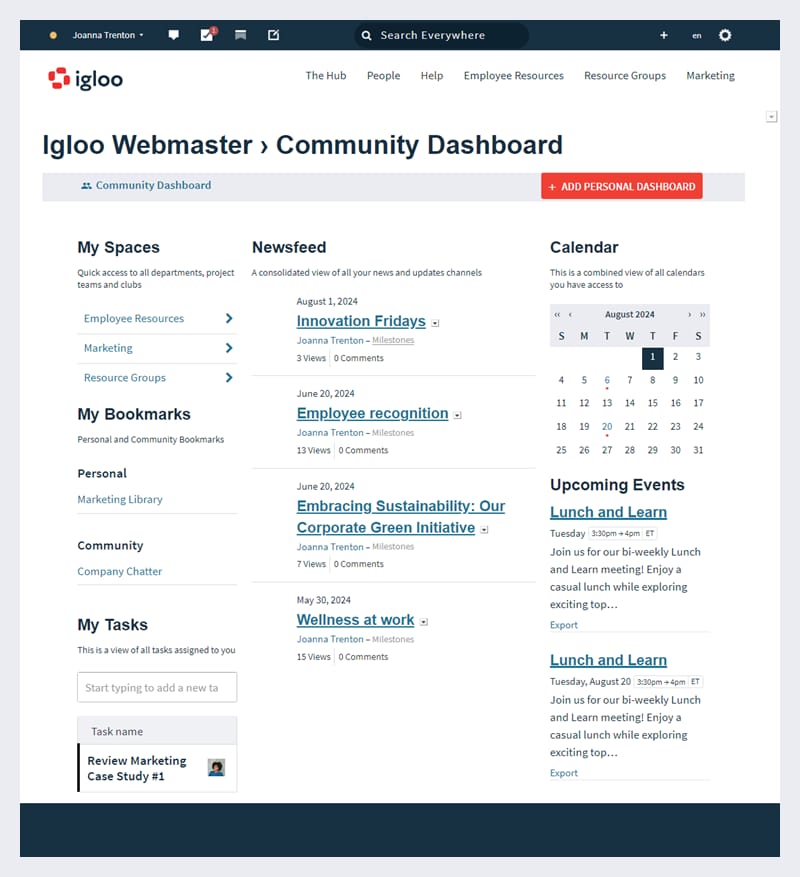
Igloo Software is a digital workplace platform focused on intranet, collaboration, and knowledge sharing. It provides tools to centralize content, discussions, and files in one accessible location.
For digital workplace managers, Igloo offers flexibility in how spaces are structured, allowing teams to create hubs for departments, projects, or initiatives. Governance features help control access and content ownership, supporting consistency across the organization.
Igloo is often used by organizations looking for a straightforward intranet solution that balances collaboration with structure. It may require additional integrations to fully support complex workflows.
Key features of Igloo Software
-
Collaborative workspaces: Create shared spaces for teams and projects.
-
Knowledge management capabilities: Store and organize documents and resources.
-
Permission and access controls: Maintain security and content ownership.
Best for: Teams seeking a flexible intranet with collaboration and knowledge-sharing features.
9. Jostle
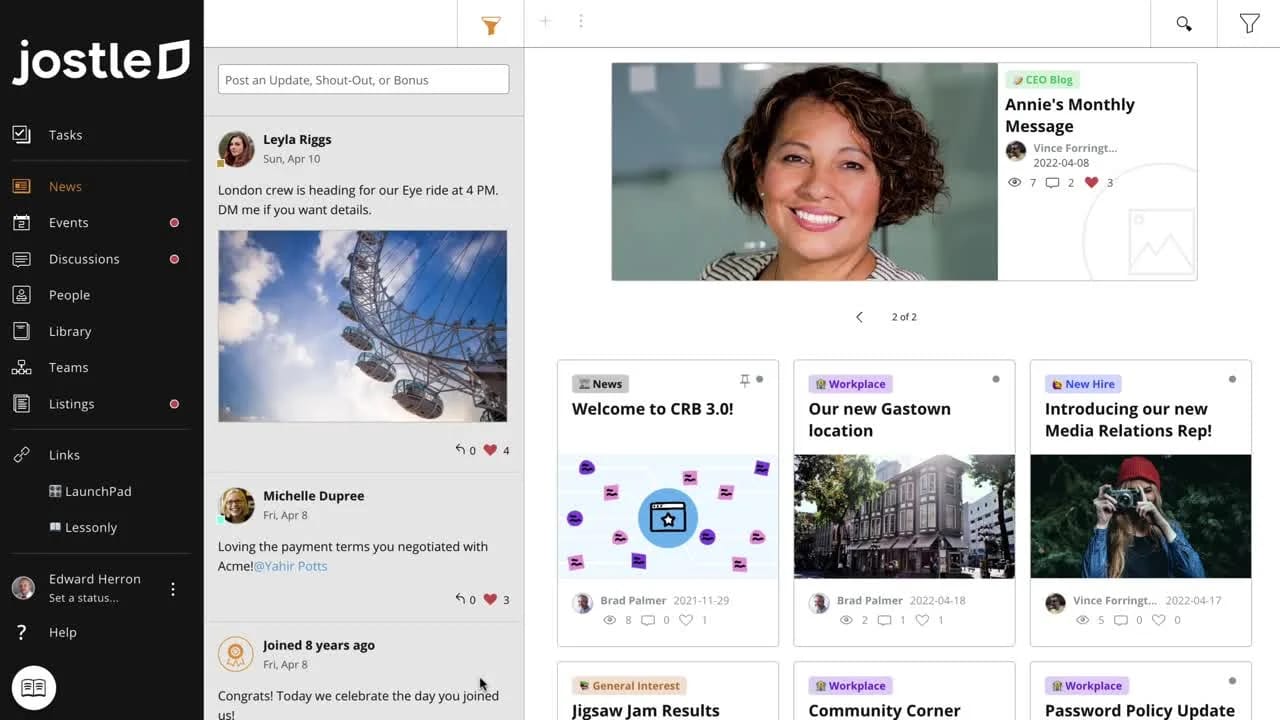
Jostle is an employee engagement and communication platform designed to improve alignment and visibility across organizations. It focuses on delivering company updates, resources, and connections in a simple, accessible format.
Digital workplace managers use Jostle to improve transparency and keep employees informed without overwhelming them. The platform emphasizes ease of use and quick adoption, making it suitable for organizations with limited technical resources.
Jostle works best as a communication and engagement layer rather than a full digital workplace platform with advanced knowledge management.
Key features of Jostle
-
Company news and updates: Share announcements in a centralized feed.
-
Employee directory and profiles: Help teams connect across the organization.
-
Simple navigation and onboarding: Encourage fast adoption.
Best for: Organizations focused on communication and alignment with minimal setup.
10. Staffbase
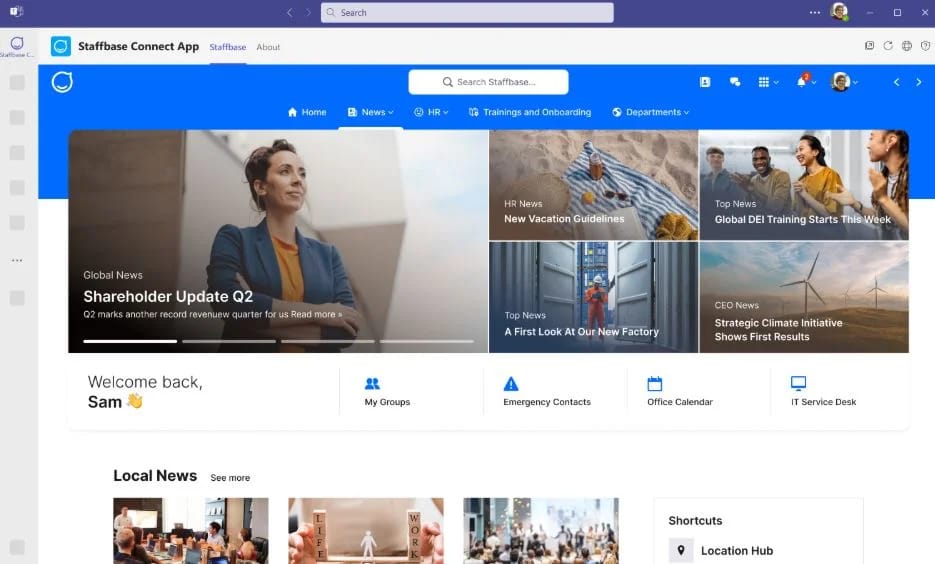
Staffbase is an internal communications platform designed to support multi-channel employee messaging. It focuses on reaching employees through intranet, mobile, and email experiences.
Digital workplace managers use Staffbase to manage large-scale communication campaigns and ensure messages reach desk-based and frontline employees alike. The platform offers targeting, scheduling, and analytics to measure communication effectiveness.
Staffbase excels in structured communication but may require additional platforms for collaboration and knowledge management.
Key features of Staffbase
-
Multi-channel communication: Deliver messages via intranet, mobile, and email.
-
Targeted messaging: Reach specific employee groups with precision.
-
Communication analytics: Measure reach and engagement.
Best for: Digital workplace managers responsible for large-scale internal communications.
Choosing the right platform for digital workplace managers
Software for digital workplace managers should simplify complexity, not add to it. The right platform helps you create consistency across tools, reduce friction for employees, and maintain clear governance as your organization grows.
As digital workplaces evolve, managers need solutions that adapt with them. This means supporting integrations, providing actionable insights, and offering flexibility without sacrificing structure. Platforms that prioritize usability and governance will see higher adoption and long-term value.
Axero is designed with digital workplace managers in mind. We help you bring communication, knowledge, and collaboration into one governed platform that scales with your organization. If you want to create a digital workplace your employees actually use, book a demo with Axero today.